
Ask a rigger, a plant manager, or a stage technician what a chain hoist is used for, and their answer would largely be the same: safe, controlled lifting where human strength alone won’t cut it.
A chain hoist multiplies input force, whether from a hand pull, a lever, an electric motor, or compressed air, into precise vertical movement. But what exactly are the application scenarios of this lifting tool?
Definition of Chain Hoist
To answer this question, we must first nail down the question “What is a chain hoist?” By definition, a chain hoist is a mechanical lifting device that lifts loads by converting a relatively small input into a much larger lifting force through the mechanical advantage of pulley blocks.
Inside the hoist, a gear train or pulley system works with a load chain and a lifting hook. When a hoist operator starts up the mechanical device by manual, hydraulic or electric force, the mechanism turns the load sprocket and advances the load chain over it, raising or lowering the attached load.
Aside from the universal components that every chain hoist shares, electric and air (pneumatic) chain hoists also add motors, speed controls, and sometimes variable frequency drives.
Where Chain Hoists Are Used
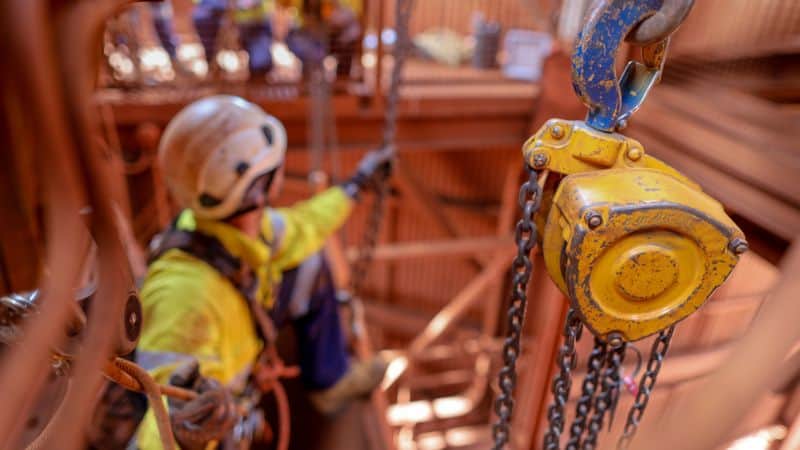
Manufacturing and Fabrication
On production floors, chain hoists transfer raw materials to machines, flip weldments, and load/unload fixtures. Fabricators use them to rotate and position parts at workstations, often beneath bridge cranes or jib cranes for quick, repeatable handling.
Construction and Steelwork
Crews at job sites hoist rebar bundles, set stair flights, and assist with steel beam placement. Hoists pair with beam trolleys to traverse along a beam, giving small teams the ability to lift and then inch components into final positions at height.
Automotive and Workshops
Chain hoists can also be used for holding items in place; mechanics in garages and maintenance bays lift engines, transmissions, and machine components for service. A compact hand chain hoist or lever hoist is portable, easy to rig from an I‑beam or gantry, and offers the fine control needed during removal and reinstallation.
Warehousing and Entertainment Rigging
Warehouses use electric chain hoists for frequent lifts, pallet breakdowns, and transferring heavy items where forklifts can’t reach. In live events, riggers rely on chain hoists to fly lighting trusses, scenery, and audio arrays, valuing precise height control, redundancy options, and quiet operation.
Marine, Mining, and Utilities
In harsh or remote environments, ships, offshore platforms, mines, water treatment plants, pneumatic or corrosion‑resistant chain hoists handle pumps, valves, and other heavy equipment. Air hoists are preferred where explosive atmospheres or wet conditions make electric equipment risky.
Chain Hoists for Different General Applications
In the last chapter, we review the specific industrial scenarios of chain hoist usage, but what if the industries you work in are not included, and would chain hoists still be indispensable? To answer this, we need to formulate a list of applicable general situations.
1. Lifting and Lowering Loads
This is the primary function of any hoist. Chain hoists are versatile tools that excel at raising and lowering loads with minimal effort. The loads can be a huge variety of things within the hoists’ load limit. No matter if it is a factory with tons of cargo to transport or a small workshop that needs an extra helping hand in lifting, so long as the situation requires lifting, a set of chain hoists will always be helpful.
2. Positioning Equipment for Service and Maintenance
Maintenance crews heavily rely on hoists to suspend and precisely position equipment for inspection or repair. They are commonly used for pulling a pump from its base, lifting a gearbox clear of its housing, or holding a machine subassembly while fasteners are aligned.
This saves the crews the hassles of flipping equipment, aligning machine parts, or disassembling a machine completely just to gain easier access to a certain part. Also, the hoist’s integral brake reliably holds the load, so technicians can work with both hands free, significantly enhancing safety and efficiency.
3. Precise, Inch-by-Inch Assembly
What may not occur to many is that chain hoists, especially ones with fine-control pendant stations or variable frequency drives (VFDs), can conduct precision operations. During critical assembly phases or final fit-up operations under a crane or monorail, chain hoists provide the millimeter-level adjustments needed for perfection. An operator can gently “bump” a lever or jog an electric hoist to align bolt holes, set machinery onto locating pins, or square up a frame before final torquing—all without the risk of overshooting the target position.
4. Tensioning and Controlled Pulling
While designed primarily for vertical lifts, chain hoists (especially lever hoists) can be used to horizontally tension lines or perform controlled pulls.
However, it is critical to understand the limitations. Side-loading a hoist or dragging loads off-axis is unsafe and can damage the equipment. Always use proper rigging to maintain a straight, vertical load path. For significant or frequent horizontal pulling, use equipment specifically designed for that purpose, like tirfors or pulling hoists.
Selecting the Right Tool: Types of Chain Hoists
Manual Chain Hoists (Chain Falls/ Hand Chain Hoist)
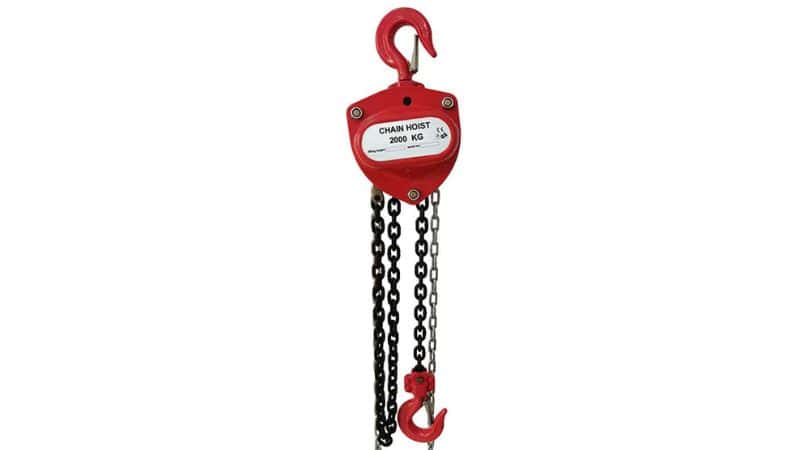
- Best For: Infrequent lifts, situations where power is not available, or for applications where portability is key.
- Applications: Manual chain hoists are ideal for general maintenance, field service, commissioning new equipment, and quick lifts in tight spaces. Their manual operation, portability, and simple setup make them a versatile and reliable choice.
Lever Chain Hoists (Come-Alongs)
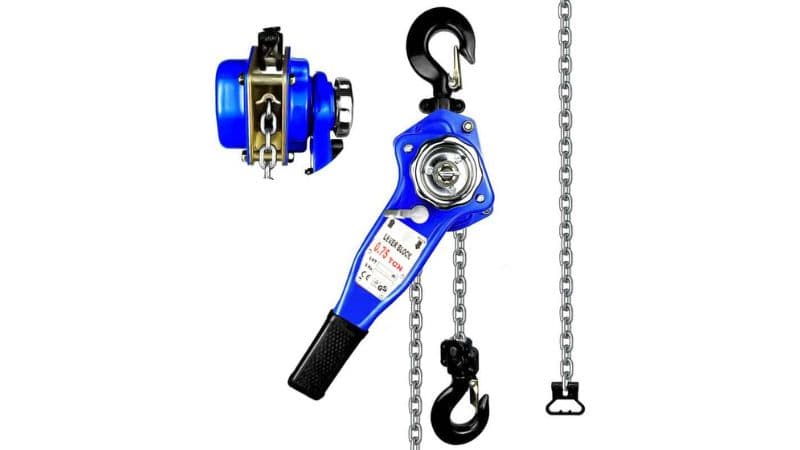
- Best For: Applications requiring both lifting and pulling, especially where precise, small strokes are needed.
- Applications: Lever chain hoists are excellent for tensioning lines, pulling equipment or structural members into alignment, and performing vertical or angled lifts in confined areas. Their ratcheting handle offers great control and flexibility.
Electric Chain Hoists
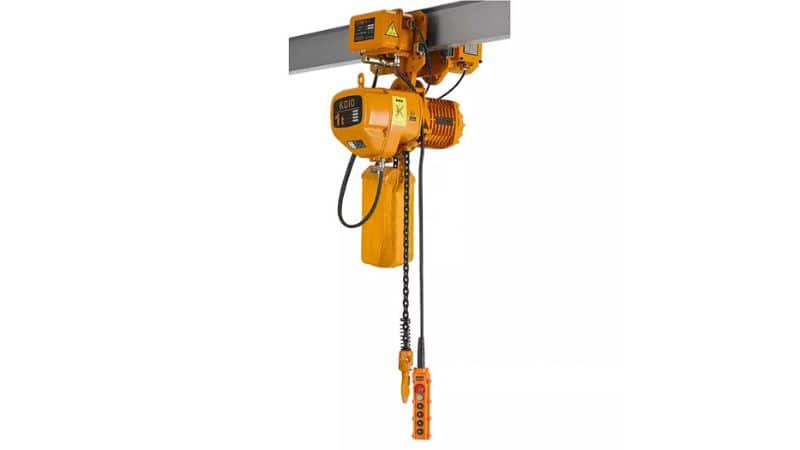
- Best For: Frequent lifts, high-throughput production, and reducing operator fatigue.
- Applications: Electric chain hoist is the workhorse of production environments, as they provide speed and consistency. With options like dual speeds, variable frequency drives, and integration with overhead cranes or monorails, they dramatically increase productivity in machine shops, assembly lines, and warehouses.
Air/Pneumatic Chain Hoists
- Best For: Hazardous or harsh environments where sparks or electricity pose a risk.
- Applications: Built to be spark-resistant, these hoists are ideal for locations like refineries, chemical plants, paint spray booths, and offshore platforms. They can also run continuously without overheating and tolerate moisture and dust better than many electric models.
Trolley-Mounted and Low-Headroom Variants
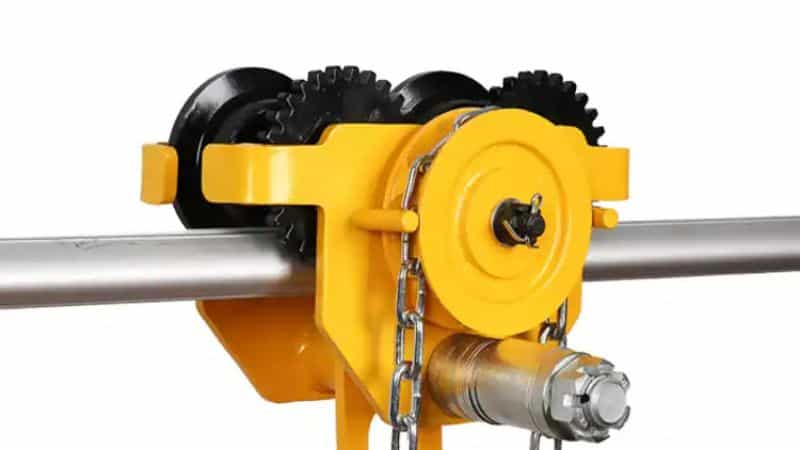
- Best For: Maximizing workspace coverage and lift height.
- Applications: Mounting a hoist on a push, geared, or motorized trolley allows it to travel along a beam, providing greater coverage in a work cell or bay. Low-headroom designs are engineered to tuck the hoist as close as possible to the beam, maximizing the available lift height in facilities with limited overhead clearance.
Conclusion
From inch‑perfect assembly to safe equipment maintenance, the chain hoists, provided that they are properly selected, rigged, and maintained, turn difficult, risky handling into controllable work.
With the knowledge of what chain hoists are used for, you are now properly prepared for your next project, and you will need a reliable, experienced equipment supplier. We at Grandlifting can fill the gap and provide you with all the hoisting equipment you need!
Frequently Asked Questions
Can a chain hoist be used for permanent, suspended installations?
We would not recommend you do this. Despite being used as temporary suspension occasionally, chain hoists are inherently designed as lifting equipment, not as permanent suspension devices. For applications where a load needs to be suspended for extended periods (like a mezzanine or platform), dedicated load-holding devices or latches should be used to prevent the hoist from possible malfunctions.
What does “duty cycle” mean for an electric or pneumatic chain hoist?
The duty cycle refers to the operating time versus rest time over a 10-minute period. A hoist with a low duty cycle (e.g., 25%) is designed for intermittent use and needs significant cool-down time, while a hoist with a high duty cycle (e.g., 60%) can run more frequently without overheating. Exceeding the duty cycle can damage the motor.
Is it safe to use two chain hoists to lift a single, very long load?
It is a viable option, but the operation is relatively complex, and should only be performed under a qualified rigger’s supervision. It requires special equipment like an equalizing beam or a coordinated lifting system to ensure the load is distributed evenly between the hoists, preventing dangerous side-loading and overload.
Why does the rated capacity of a hoist sometimes decrease when it’s used on a trolley?
It is because the trolley, beam, and supporting structure become part of the total lifting system, and their maximum capacities limit the full load capacity of the hoist. This is the reason why you should always check the trolley and structural ratings.