
Pulling ropes or cables across long runs or through conduit can turn cumbersome and dangerous without the right tool. Therefore, many crews rely on cable socks for firm grips on the cable and preventing slippage.
Here, we will explain to you what a cable sock is, how it works, and why proper selection matters for better safety in safe rigging with ropes and wires.
What is a Cable Sock? Composition and Mechanism
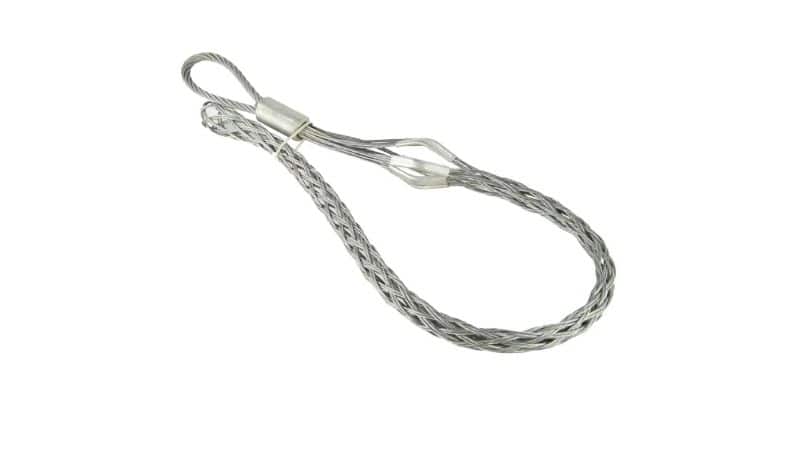
Key components of Cable Socks
A cable sock is composed of three parts:
- Pulling eye or loop: Connects to a rope, winch, or pulling line.
- Flexible mesh body: Fits a range of cable diameters securely.
- Tapered shape: Tightens evenly to improve grip under load and prevent slippage.
Most cable socks use wire mesh grips made from steel. Many heavy-duty models use stainless steel wire rope for strength and corrosion resistance. Lighter models may use galvanized steel for dry or indoor work.
Cable socks are also addressed with other names like cable grips, pulling grips, or cable stockings. The names change, but the core design stays the same.
Types of Cable Socks
This rigging hardware comes in several styles to match the job. Each type supports a specific operation or cable layout.
Common types include:
- Closed-end cable socks for pulling from one end
- Open-end pulling socks for long or continuous runs
- Split-lace cable stockings for mid-span installs
- Offset-eye grips to control pull angle
Special versions support overhead lines, underground power cables, and fiber or control cables. Some designs also support vertical loads, not just pulling force.
How Cable Socks Work
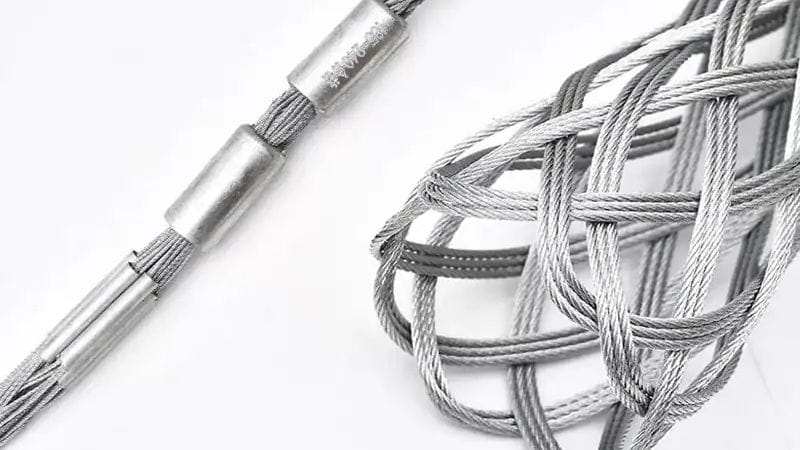
Think of a cable sock as a specialized, self-tightening sleeve. The essential principle at work is similar to that of a woven finger trap. When you apply pulling force to the sock’s eye or loop, the entire woven mesh sleeve responds by tightening uniformly around the circumference of the cable, which holds the cable in place.
The brilliance of this design is that it achieves a firm grip without relying on sharp teeth, clamps, or high-pressure pinch points that could compromise the cable jacket, and the pulling force is not concentrated in one spot but is instead transferred from the pulling eye.
By spreading the stress, the sock prevents localized damage such as cuts, crush marks, or jacket deformation that could lead to conductor failure.
Once the pulling operation is complete and tension is released, the process reverses seamlessly. The mesh relaxes and expands back to its original, loose diameter. This allows the sock to be slid off the cable end effortlessly and without causing any harm, making it a fully reusable tool ready for the next installation.
How to Choose the Right Cable Sock
Selecting Based on Cable Type and Size
The cable sock must match the cable type and outside diameter. A sock that is too small can damage the jacket. A sock that is too large can slip during the pull.
Different cables need different grips. Electrical cables, power cables, HV cables, underground cables, and overhead conductors all vary in weight, stiffness, and jacket material. Wire mesh socks work well for most round cables, while closed-end socks suit straight pulls.
Key checks before selection:
- Measure the actual cable diameter, not the nominal size
- Match the sock range to that diameter
- Confirm the sock type fits the pull method
Correct sizing helps the grip tighten evenly and reduces stress on the cable.
Understanding Working Load and Factor of Safety
Every cable sock lists a working load and a minimum breaking load. The working load shows the safe weight the sock can handle during use. The minimum breaking load shows when failure may occur.
The factor of safety (FOS) links these two values. Many cable grips use a FOS of 5:1 or higher. This means the breaking load is at least five times the working load.
Before use, the user should:
- Calculate the total pull weight, including friction
- Choose a sock with a working load above that value
- Verify the stated FOS meets site rules
This step protects both the crew and the cable during high-tension pulls.
Application Environments and Compatibility
The job environment affects cable sock performance. Underground cables face moisture, dirt, and tight bends. Overhead conductors face wind, vibration, and long pulls. Each condition demands the right material and build.
Galvanized steel socks resist corrosion and suit wet or outdoor work. Indoor pulls may allow lighter designs. Swivels help prevent twists during long runs.
Compatibility with sheaves, ducts, and rollers also matters. A slim profile supports smooth passage and reduces pull resistance.
Step-by-Step Guide: How to Use a Cable Sock
Preparation and Safety Measures
Before any pull, a thorough inspection is critical. This includes checking the cable sock for broken wires, stretched mesh, or corrosion, and verifying it matches the cable’s diameter and the job’s load rating to prevent slippage or damage.
Before operation, the path should be reviewed and confirmed for sharp bends or obstructions. During the pulling process, the crew wears gloves and eye protection, and any onsite personnel should stay clear of the line of pull and never stand under tensioned cable.
Fitting the Cable Sock
The pulling starts with the worker sliding the cable sock over the cable end until the cable reaches the closed end of the mesh. straightens the sock so the weave sits evenly around the jacket.
For a lace up cable sock, workers center the open sock around the cable, thread the lacing in a crisscross pattern, and pull it tight from end to end.
It is important to avoid twisting the cable while fitting the sock, as it can weaken the grip and affect alignment during cable installation.
Securing Attachments and Swivel Links
The crew then attaches a rated swivel link to the pulling eye. The swivel allows rotation and reduces torsion during cable movement. This step protects both the cable and the socks.
Before applying full force, workers apply light tension. This seats the cable sock and confirms a firm hold. Once confirmed, the workers proceed with the operation.
Best Practices for Safe & Efficient Pulling
Using Cable Rollers and Ducting
Cable rollers reduce friction and limit drag during cable laying. Installers should place rollers at straight runs and add more at bends, tray edges, and trench entries. Too few rollers force the cable to scrape surfaces and raise pulling tension.
In conduit and ducting, the installer should confirm the path is clear. Dirt, water, or sharp debris can damage the jacket even when a cable sock is used.
Key placement points for cable rollers:
- Entry and exit of conduit
- Every change in direction
- Long straight runs over flat surfaces
Proper spacing keeps the cable supported from start to finish.
Managing Cable Bends and Obstructions
Sharp bends create stress that a cable sock cannot fix. Installers should guide cables around corners using large-radius sheaves or grouped cable rollers. This approach spreads force and protects the conductors.
Obstructions inside ducting cause sudden tension spikes. The team should stop if resistance increases and investigate the cause. Forcing the process can stretch the cable or collapse the conduit.
Common risks to manage:
| Risk | Control Method |
|---|---|
| Tight bends | Use rollers or sheaves |
| Edge abrasion | Add corner protection |
| Snags in ducting | Clear path before pulling |
Proper Maintenance and Storage
After use, the installer should clean the cable sock with a dry cloth or mild cleaner. Dirt trapped in the mesh can scratch cable jackets during the next pull. Moisture should be removed to limit corrosion.
Storage affects tool life. Cable socks should hang or lie flat without twists. Heavy items should never rest on them. Swivels and connectors should stay attached or labeled to prevent loss.
A clean and organized storage area supports safe cable management. It also saves time on future jobs by keeping pulling gear ready and reliable.
Conclusion
This guide has walked you through what you need to know as a customer that seeks cable sock supplies or an on-site worker that wants to know more about this rigging hardware. Now, you ensure not just a successful operation, but also the knowledge to make sound choices for your cable management needs.
Frequently Asked Questions
Can a cable sock be reused, and if so, for how long?
Yes, cable socks are designed for reuse. Their lifespan depends entirely on proper care and adherence to load limits. Regular pre- and post-use inspections for broken wires, stretched mesh, or corrosion are mandatory. A well-maintained sock can last for many projects, but it should be retired immediately if any damage is found that compromises its structural integrity.
Is pulling lubricant compatible with cable socks?
Use caution. While lubricant may be necessary for the conduit, it can reduce the sock’s grip if it coats the cable section under the mesh. If lubricant is required, apply it judiciously to the conduit path rather than the cable end, and ensure the cable jacket where the sock will grip is clean and dry.