
Wire rope clips are an integral part of wire rope sling systems; its installation is pivotal because even a small mistake can weaken the entire connection.
The sections ahead break down the terms, tools, and clip types that affect performance, while also covering the whole installation process and common limits, so you can meet the practical safety needs without guesswork.
Key Components of Wire Rope Clip
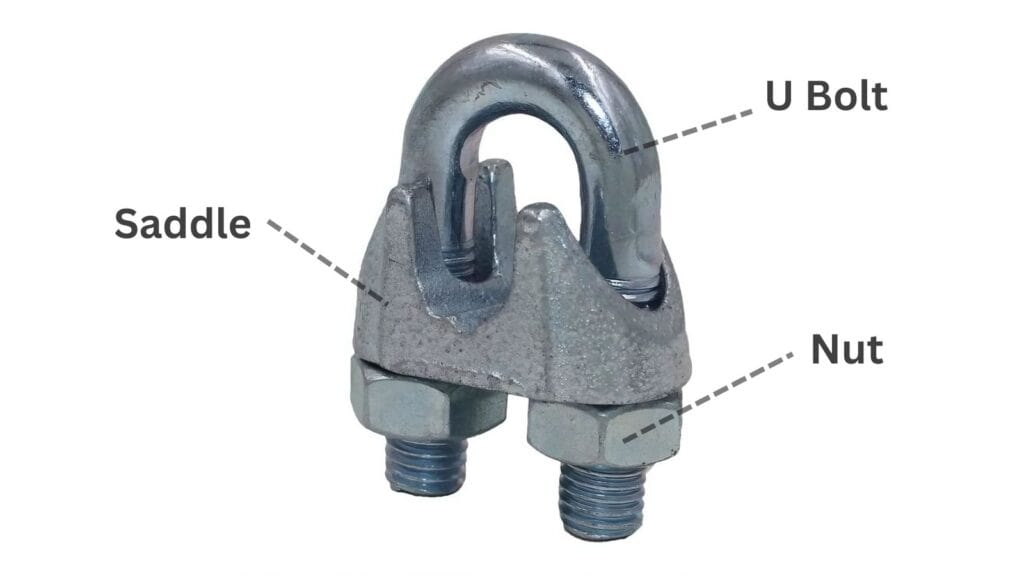
Parts of a Wire Rope Clip
A standard wire rope clip has three main parts: the U-bolt, the saddle, and two nuts.
| Part | Purpose |
|---|---|
| U-bolt | Wraps around both rope sections and applies clamping force |
| Saddle | Supports the rope and prevents crushing |
| Nuts | Tighten the assembly to the required torque |
Some clips use a double saddle design, which removes orientation concerns, but torque and spacing still matter.
Live End and Dead End Explained
The live end of the wire rope carries the load. The dead end of the rope is the short tail that turns back after forming an eye or loop. These terms matter because clip orientation depends on them.
The saddle always goes on the live end, and the U-bolt goes on the dead end. This rule is known as never saddle a dead horse. Placing the saddle on the dead end can crush the load-bearing strands, weakening the whole system.
The dead end should extend past the last clip by the required length. Too little length reduces grip. Too much length adds clutter and can catch on nearby objects.
Types of Wire Rope Clips and Their Uses
U-Bolt Wire Rope Clips
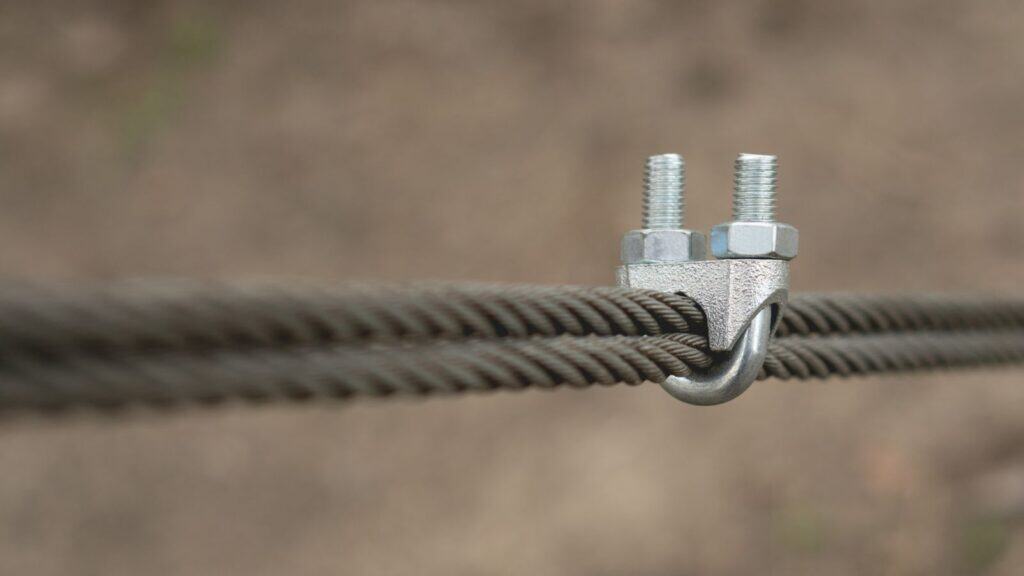
U-bolt clips are the most common style in fieldwork. They include a U-shaped bolt, a saddle, and two nuts. U-bolt clips work well for winch lines, guy lines, and general rigging when installed and torqued correctly.
Forged versions handle higher loads and critical tasks. Lighter stamped cable clamp versions suit light-duty uses, such as fencing or temporary barriers.
Double Saddle Clips and Fist Grip
Double saddle clips, often calledfist grip clips, use two saddles instead of a U-bolt. This design applies even pressure on both rope ends. Installers can mount them in either direction without risk. They perform well in applications that need frequent inspection or adjustment.
Fist grip clips often appear in crane lines, support cables, and other demanding setups. They usually cost more than U-bolt clips. The higher price reflects better load distribution and easier inspection. Many crews prefer them for safety-critical work.
Forged vs. Malleable Clips
The manufacturing method affects clip strength. Forged wire rope clips are formed from heated steel shaped under force. This process creates a strong grain structure. Forged clips suit overhead lifting, towing, and support lines.
Malleable wire rope clips come from cast iron. They cost less but handle only light loads. These clips can crack under shock or heavy tension.
Key differences include:
- Forged clips: high strength, critical loads, higher cost
- Malleable clips: light duty, non-critical uses, lower cost
Malleable clips should be avoided where failure could cause injury or damage.
Choosing Material: Stainless Steel, Carbon Steel, and Finishes
Material choice also affects corrosion resistance and service life. The environment often drives this decision.
| Material | Best Use | Key Traits |
|---|---|---|
| Stainless steel wire rope | Marine, food areas | Resists rust, clean finish |
| Carbon steel | General rigging | High strength, lower cost |
| Galvanized finish | Outdoor exposure | Added corrosion protection |
Preparation Before Wire Rope Clip Installation
In this chapter, our focus moves from the clips to operation. We will explain in detail how you should install a wire rope clip safely, starting with the preparation.
Inspecting Wire Rope and Clips
To properly use a wire rope clip, you should begin with inspecting the wire rope along the full length used for the eye or termination. Look for broken wires, flat spots, rust, or crushed strands.
Wire rope clips themselves also need inspection before use. You should check the U-bolt, saddle, and nuts for cracks, bent parts, or damaged threads. Avoid unmarked clips and mixing different manufacturers in one assembly.
You must confirm the rope type and construction, such as IWRC or fiber core. This information affects spacing, torque values, and the minimum number of clips required.
Selecting the Right Clip Size and Quantity
The clip size must match the wire rope diameter exactly. A clip that is too large will not grip the rope. A clip that is too small can crush and damage the strands.
By pulishing on official websites or offering product catalogues, manufacturers will provide you with tables or regulatory standards that list the minimum number of clips, required turnback length, and spacing for each rope diameter. You should always follow them rather than guessing. Adding extra clips does not increase strength and can actually reduce rope life.
Required Tools and Materials
You will need the correct tools to install wire rope clips safely. A calibrated torque wrench is critical. Hand-tightening does not provide reliable clamping force and increases failure risk.
Basic tools and materials include:
- Proper size wire rope clips
- Nuts and saddles from the same manufacturer
- Torque wrench set to the specified value
- Standard wrench or socket for initial tightening
- Thimble, if the eye will see wear or movement
You should also have the manufacturer’s instructions on hand. These instructions list torque values, spacing, and retorque steps after the initial load is applied.
Wire Rope Clip Installation Step-by-Step
Forming the Loop or Eye
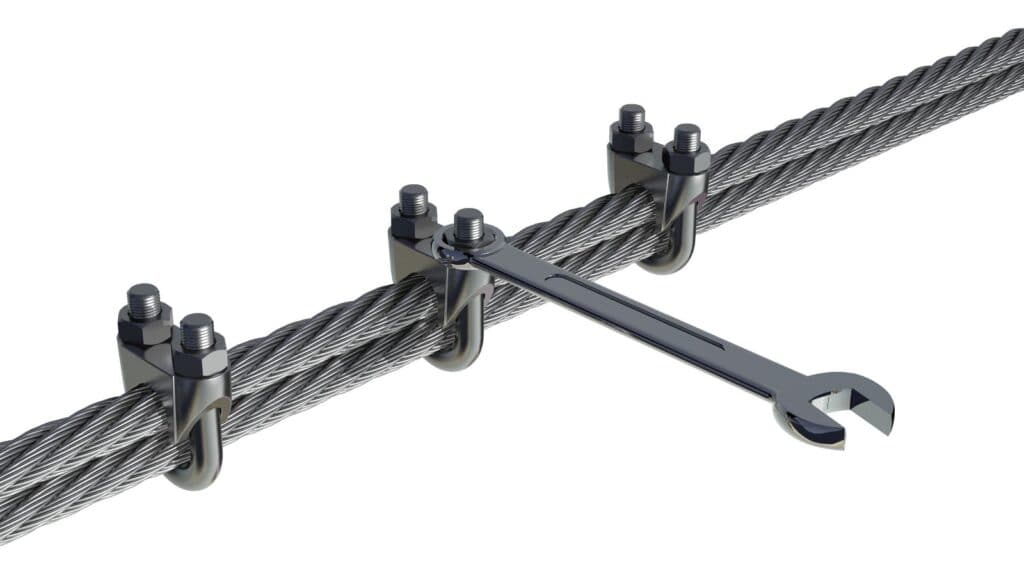
The first step for you is to form the loop by turning the wire rope back on itself to create an eye. It is common practice to place a thimble inside the loop to protect the rope from wear and crushing. Thimbles work best for eye termination assemblies that see repeated loading.
The turnback is the length of rope you fold back to form the eye, and it must allow room for the required number of clips plus extra tail.
For a lap splice, which is a method of joining two pieces of wire rope by overlapping them and securing that overlap, the same rules apply. The rope must lie flat, with no twists or kinks.
Positioning and Spacing of Clips
Correct spacing keeps the rope from slipping under load. You should place the first clip one saddle width from the dead end. He places the second clip close to the thimble or loop.
If the job needs more than two clips, it is recommended to space them evenly between the first two, as even spacing spreads force across the live end of the rope.
Basic spacing rules:
- Use the clip count listed for the rope diameter
- Keep clips in a straight line
- Tighten nuts evenly with a torque wrench
After the first load test, you need to recheck torque. Rope strands can settle, which can loosen nuts.
Inspecting and Adjusting Clips After Installation
Regular inspection keeps cable clamps working as intended; look for movement, bent U‑bolts, cracked saddles, or crushed rope strands. Any of these changes can signal loss of grip or damage.
Confirm clip spacing and orientation, and adjust or retighten any shifted clips. Use this quick inspection checklist:
- No visible slippage or gap changes
- No broken or flattened wires
- Nuts remain at specified torque
If defects appear, unload the line before making corrections, because adjustments under load increase risk and can damage the wire rope assembly.
Applications and Limitations
Common Uses in Rigging and Lifting
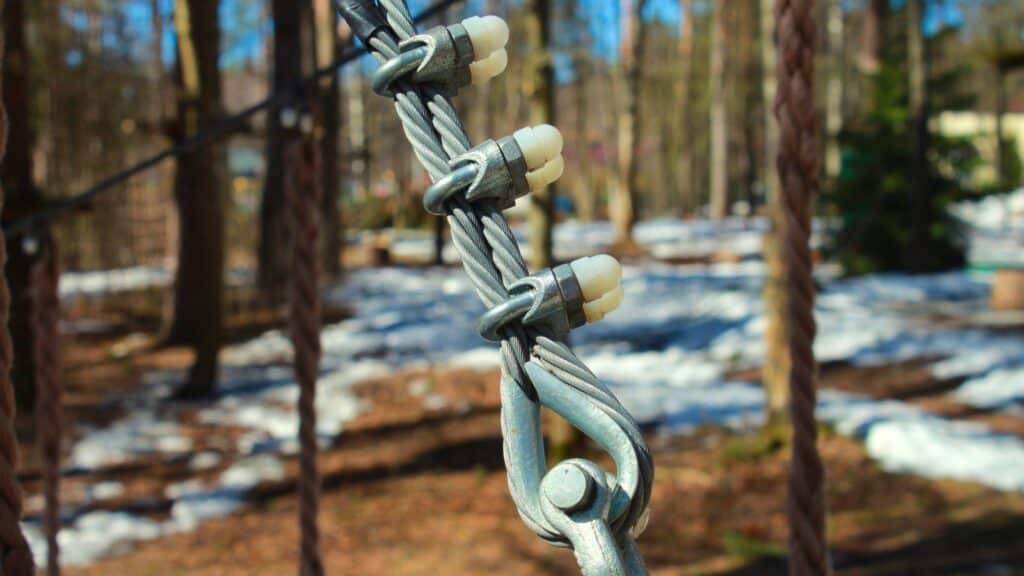
Crews often use wire rope clips to form an eye at the end of a wire rope or to join two ropes in a lap splice. These setups appear in lifting and rigging applications where field installation matters.
Typical uses include:
- Support lines and guy lines for towers and poles
- Towing lines and tie-downs
- Perimeter cables on docks and lots
- Temporary lines on scaffolds
Use forged clips for critical rigging; reserve malleable clips for non‑critical, low‑load applications as noted above. The clip to the rope size and type must match, including regular lay wire rope, to maintain holding strength.
Limitations and Common Installation Mistakes
Wire rope clips reduce the strength of a rope assembly compared to other terminations. Even when installed correctly and using high-quality clips, the terminations typically achieve about 80–90% of the rope’s rated strength. For this reason, standards often heavily restrict making slings for overhead lifting by demand very high standard for clips, installation, and maintenance.
Common limits and risks include:
- Lower efficiency than swaged or socketed ends
- Need for regular retightening after load cycling
- Chance of error during installation
Frequent mistakes during wire rope clip installation include placing the saddle on the dead end, using too few clips, or skipping torque checks. These errors can cause rope slip or uneven load transfer, which raises the risk of failure.
Comparing Termination Methods
Wire rope clips compete with other end fittings used in wire rope assemblies. Each option fits a different need.
| Method | Strength | Field Install | Typical Use |
|---|---|---|---|
| Wire rope clips | Medium | Yes | Temporary or adjustable rigging |
| Swaged fittings | High | No | Permanent lifting lines |
| Wedge sockets | High | Yes | Cranes and heavy lifting |
Clips work best when flexibility matters and loads stay within limits. For permanent or high-risk lifting, other termination methods provide better strength and consistency.
Conclusion
Wire rope clips are essential for secure terminations in wire rope systems. While they may not match the efficiency of permanent swaged or socketed fittings, their adjustability and field-installable nature make them invaluable for countless rigging, lifting, and support applications.
The safe and efficient solutions require you to adhere to guidelines and carry out regular inspections, and more importantly, source high-quality wire rope clips from a reputable rigging hardware manufacturer.
Frequently Asked Questions
Can I reuse wire rope clips?
You should avoid doing so in any case. Once a clip has been torqued and loaded, the metal components can experience fatigue, threads may be worn, and the saddle may have deformed to the rope’s shape. For safety-critical applications, always use new, certified clips.
What is the purpose of a thimble, and do I always need one?
A thimble is a grooved metal insert placed inside an eye loop. It protects the rope from wear, crushing, and tight bending, greatly extending the rope’s life. It is highly recommended for any eye that will see repeated use, movement, or connection to shackles or pins.
Can I mix clips from different manufacturers in one assembly?
No. Components (U-bolts, saddles, nuts) are engineered to work together as a matched set. Mixing parts from different manufacturers or using unmarked, generic clips can lead to mismatched tolerances, improper clamping force, and unpredictable failure. Always use a complete, matched set from a reputable manufacturer.