
Wire ropes are constantly involved in the most demanding rigging and lifting operations, which highlights the importance of securing wire rope.
Mastering wire rope security starts here. We will explain its core mechanics, demonstrate why termination choice is a primary safety factor, and outline installation steps that preserve system integrity. The following sections provide a practical guide to clamp types, selection tips, and vital safety protocols for maintaining tight connections.
Basics of Wire Rope and Its Applications
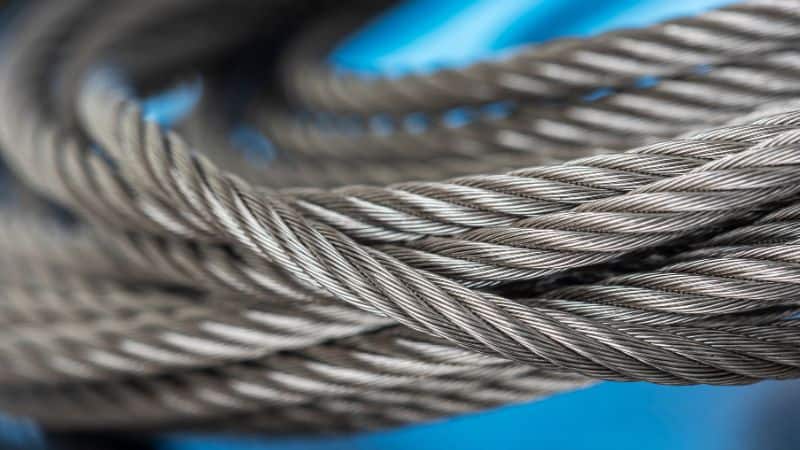
Wire rope is a strong cable made from many metal wires twisted into strands around a core. This design lets it handle heavy loads while staying flexible. There are many types of wire rope, categorized in part by their core: fiber core (FC), independent wire rope core (IWRC), and wire strand core (WSC). The core type is selected based on required strength, flexibility, crush resistance, and suitability for the operating environment.
Key Uses and Load Requirements
People use wire ropes where chains or straps may not work well. These settings often involve lifting, lowering, or pulling over long distances. They serve many tasks in construction, marine, and outdoor applications. Cranes, hoists, elevators, and winches rely on them every day. They also appear in fencing, railings, and safety barriers where strength and tension matter.
Each of these jobs has clear load requirements. The rope must support the working load with a wide safety margin. Factors such as shock loads, movement speed, and bend radius affect the final choice. Understanding the working load limit and breaking strength is essential for safe use.
Core Principles of Securing Wire Rope
Proper Termination Matters
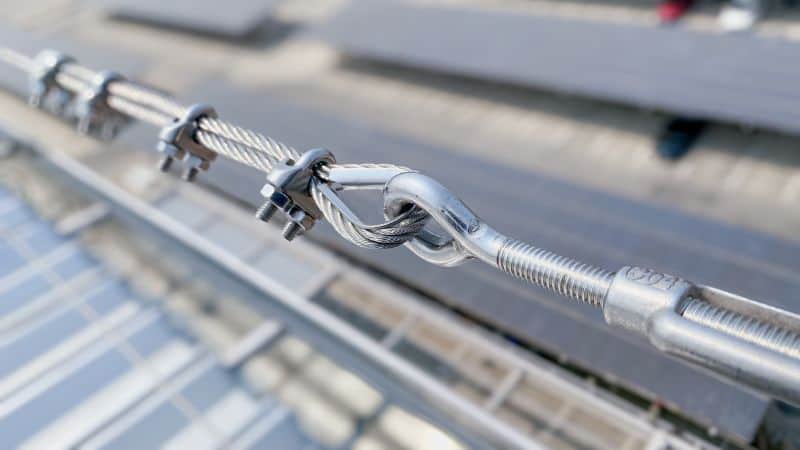
Wire rope terminations are placed at the end of the wire ropes, and they control how the rope transfers force to rigging hardware. A correct termination keeps the rope from slipping, crushing, or pulling apart under load.
Common termination methods include wire rope clamps, swaged fittings, and spliced eyes. Each method suits different tasks, load levels, and environments. For example, clamps allow field installation; swaged fittings offer a permanent factory-made connection; and a spliced eye creates a permanent loop at the rope end. Separate splicing techniques, such as a lap splice, are used to join two rope ends together.
Key goals of proper termination:
- Maintain the rope’s rated strength
- Distribute load evenly across strands
- Prevent movement at the connection point
Dangers of Improper Securing
Improper securing creates hidden risks that grow over time. Slippage, uneven pressure, and frayed strands weaken the wire rope long before visible damage appears.
Common mistakes include:
- Placing clamps backward on the live end
- Using too few clamps for the rope diameter
- Skipping tightening after initial loading
These errors often cause sudden load failure rather than slow wear. In lifting or rigging operations, this means dropped loads, damaged scaffolding, or even severe health hazards for workers. This is a critical precaution for overhead lifting applications.
Improper securing also shortens rope life. Bent wires, broken strands, and internal wear increase replacement costs and downtime. Safe rigging depends on correct setup from the start.
Safety Standards and Regulations
The installation and use of wire rope terminations are governed by mandatory safety regulations and industry standards. In the United States, for example, OSHA regulations often incorporate standards set by ASME (e.g., ASME B30.9, B30.26). In the European Union, the Machinery Directive and relevant EN standards apply. Compliance with these legally enforceable rules is mandatory for safety-critical applications like lifting. Manufacturer certifications must align with these standards.
Key requirements often include:
- Matching clamps and fittings to rope size
- Following manufacturer torque values
- Inspecting terminations before each use
Regulations also require trained personnel to install and inspect rigging equipment. Documentation and inspection logs support compliance and accountability.
Types of Wire Rope Clips and Clamps
Selecting the correct clamp type is a critical safety and performance decision. The three main types are defined by their manufacturing process and intended use of wire rope.
| Type | Material & Build | Best For | Important Limitation |
|---|---|---|---|
| U-Bolt Clips | Steel bolt & saddle | General rigging, winch lines, guy wires. | Requires correct orientation, spacing, and re-tightening. |
| Forged Clips | Steel forged under heat/pressure | Overhead lifting, cranes, safety-critical systems | Higher cost; requires proper torque like all clips. |
| Malleable Clips | Cast iron (malleable) | Light-duty, static applications. | Not for critical overhead lifting. Lower strength; can crack under shock loads. |
For detailed, step-by-step instructions on installing wire rope clips, see our dedicated guide.
Alternative Termination: Swage and Socket
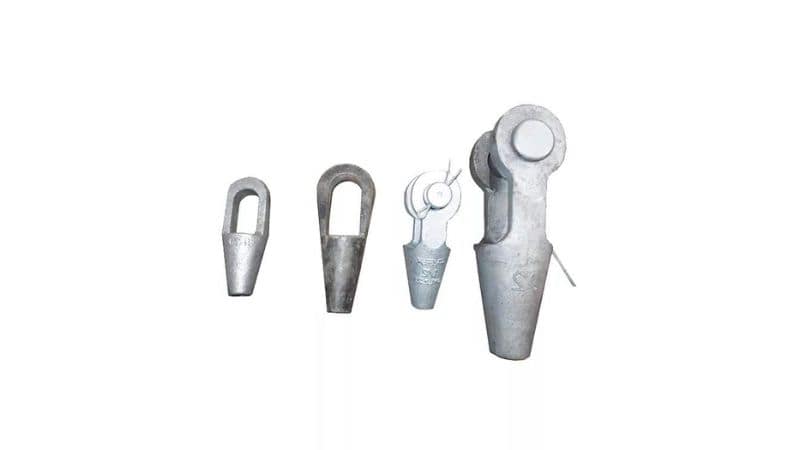
Some jobs need stronger or permanent connections than cable clamps can provide. In those cases, installers use other termination methods such as such as swaged fittings (using a ferrule or sleeve).
A swage fitting compresses a metal sleeve onto the rope using a press. This method creates a clean, strong end but needs special tools. Wedge sockets and poured sockets also offer high strength for heavy rigging.
These options cost more and limit field adjustment. They work best when loads stay constant and safety margins matter most.
Comparison
| Method | Adjustability | Strength | Tools Needed |
|---|---|---|---|
| Wire rope clips | High | Medium | Hand tools |
| Swage fitting | None | High | Swaging press |
| Socketing | None | Very high | Specialty tools |
Selection Criteria of Clamps and Accessories
Diameter Matching
Every clamp is engineered for a specific wire rope diameter. A mismatch compromises the entire assembly’s integrity—an oversized clamp will slip, while an undersized one crushes and weakens the rope core.
Always refer to the manufacturer’s specifications to pair your rope diameter with the correct clamp size and the minimum required quantity for a termination.
Loads and Environments
Load capacity guides clamp selection. The clamp, rope, and accessories must all support the same working load, and the weakest part sets the limit.
Static loads, such as fixed supports, stress clamps differently than lifting or towing. Therefore, moving loads require higher safety margins and more frequent checks.
Environmental factors also matter. Outdoor use exposes clamps to moisture, dirt, and temperature changes, while marine or coastal settings increase corrosion risk. To prevent corrosion in accessories, manufacturers offer options such as galvanized steel or stainless steel. For the wire rope itself, vinyl-coated or stainless steel ropes are options for corrosive environments.
Match materials to conditions:
- Galvanized steel for general outdoor use
- Stainless steel for wet or corrosive areas
- Forged clamps for higher loads and repeated stress
Choosing the right type reduces wear and extends service life.
Wire Rope Thimbles and Accessories
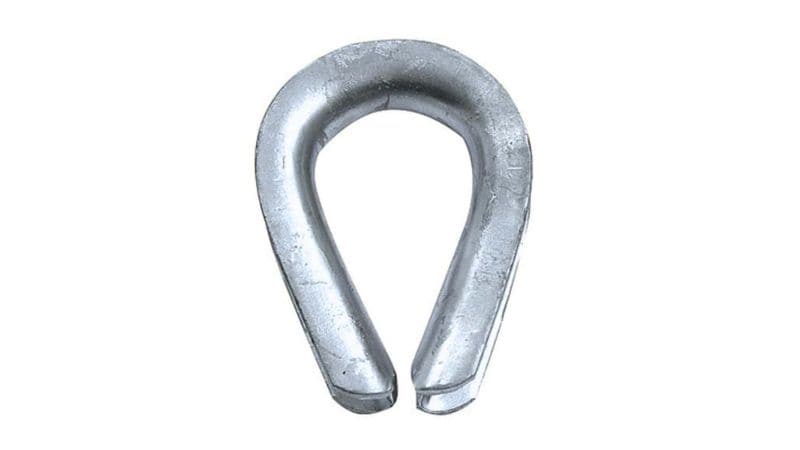
A wire rope thimble supports the wire rope loop and keeps its shape under load. It is mainly used to terminate a rope back to form an eye, which spreads force across a wider area and prevents sharp bends.
Without a thimble, the rope rubs against hardware. This contact causes faster wear and reduces strength over time.
Other useful accessories include:
- Swivels to reduce twisting
- Shackles rated for the same load capacity
- Protective sleeves in high-abrasion areas
It is crucial that each accessory meet the same load and environment requirements as the clamps.
Best Practices for Maintenance, Inspection, and Safety
Routine Maintenance Procedures
Crew should clean wire rope on a regular schedule. Dirt, grit, and old grease increase wear and reduce grip strength. A stiff brush or compressed air works well for surface cleaning.
Wire ropes should be lubricated according to the manufacturer’s recommendations and based on service conditions. They should be stored off the ground on racks or pallets if they remain unused for a long period of time, as doing so prevents moisture contact and flat spots.
Basic maintenance tasks
| Task | Purpose | Frequency |
|---|---|---|
| Cleaning | Removes abrasive debris | As needed |
| Lubrication | Reduces friction and corrosion | During inspections |
| Storage check | Prevents moisture damage | Monthly |
Signs of Wear and When to Replace
Wire ropes must be inspected before heavy use. Visual checks catch damage that can lead to load failure.
Common warning signs include broken wires, crushed strands, and uneven diameter. Corrosion pits and rust stains also signal weakness.
Many standards call for replacement when several broken wires appear in one rope lay. Severe bends, birdcaging, or long service hours also require removal from service.
Key inspection points
- Count broken wires in one lay
- Look for flat spots or kinks
- Check end fittings for cracks
- Review load history and cycles
They should record findings to track changes over time.
Adapting to Environmental Conditions
Environmental factors change how wire rope wears and fails. Outdoor applications face rain, dirt, and temperature shifts. These conditions speed up corrosion and fatigue.
Marine applications add saltwater exposure, which poses a significant threat to metal, so wire ropes need to be rinsed with fresh water and use marine-grade lubricants. Temperature changes and chemical exposure also affect the strength and durability of steel.
Environment-based actions
- Increase inspection frequency outdoors
- Use corrosion-resistant rope near water
- Shield rope from direct chemicals
- Adjust lubrication for heat or cold
Conclusion
In conclusion, securing wire rope is a critical discipline that blends technical knowledge with practice. This overview aims to expand upon the correct selection, installation, and care of the entire termination system.
Ultimately, long-term safety depends on the combination of inspection, maintenance, and certified products from a reliable wire rope manufacturer. By treating wire rope securing as a fundamental skill, professionals ensure not only the success of their operations but, most importantly, the protection of people and property.
Frequently Asked Questions
How do temperature extremes affect my wire rope and clamps?
Extreme cold can make steel brittle and reduce rope flexibility, increasing the risk of cracking. Extreme heat can anneal (soften) the steel, reducing its strength, and degrade lubricants. Always consult manufacturer specifications for temperature ratings and adjust inspection frequency accordingly.
Besides visual inspection, are there tests to check a termination’s integrity?
For critical applications, non-destructive testing (NDT) methods like magnetic particle inspection can detect surface cracks in fittings. Proof testing—applying a load above the working limit in a controlled setting—is another method, but it must be performed by qualified personnel under strict safety protocols.
How do I tell if a clamp or accessory meets a specific safety standard?
Look for the standard’s marking stamped or labeled on the product itself or its certification paperwork. Reputable manufacturers provide this traceability. Never use unmarked or uncertified components for lifting.
Is there a chance that using a thimble is not recommended?
Thimbles are strongly recommended for almost all eye terminations. If an installed thimble would contact a structure and cause wear, the preferred solution is to redesign the connection point to provide adequate clearance. If this is impossible, a qualified engineer must assess the application and specify an approved alternative termination method (e.g., a proprietary swaged eye fitting) that is rated for the load without a thimble. Never simply omit the thimble without professional authorization.