
A hand winch makes lifting, pulling, or positioning heavy loads easier and safer when used correctly. Using this piece of equipment may sound simple, but proper setup, rigging, and operation have their own nuanced details and precautions, which determine both safety and efficiency.
The following sections will explain to you what a hand winch is, how to select the right type and accessories, how to prepare a safe setup, and the exact steps for operating and maintaining it for long-term reliability.
What Is a Hand Winch?
Key Components: Lever, Gear, and Drum
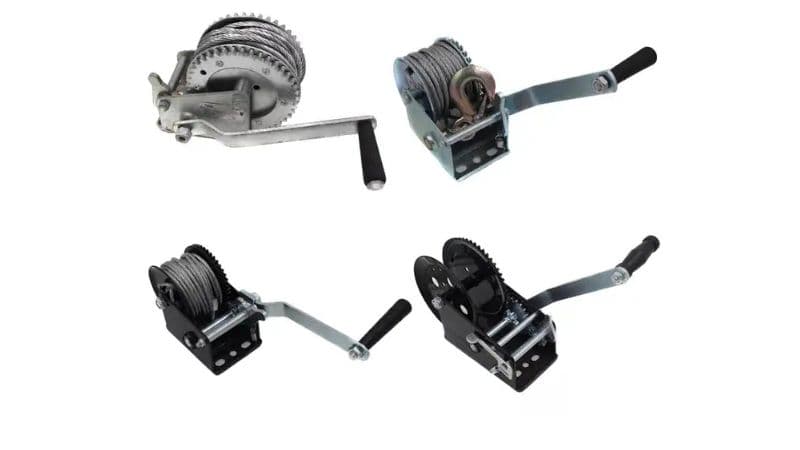
A hand winch is manual mechanical lifting equipment that consists of a few essential parts. The crank handle provides input force, while the gear system multiplies that force through mechanical advantage. The drum or spool holds the cable or rope that wraps in or out as the handle turns.
Most winches also have a ratchet or braking mechanism to prevent the load from slipping backward. A hook attaches to the object being moved, and a mounting base secures the winch to a stable surface.
Types of Hand Winches
Common types include ratchet winches, worm gear winches, and brake winches.
- Ratchet winches use toothed wheels and pawls that allow motion in one direction, which is ideal for short, quick pulls. They are simple and low-cost but not suitable for hoisting vertically.
- Worm gear winches use screw-like gears that drive another gear at a 90-degree angle. This setup offers strong load-holding ability and smoother control, making them suitable for lifting and maintaining tension safely.
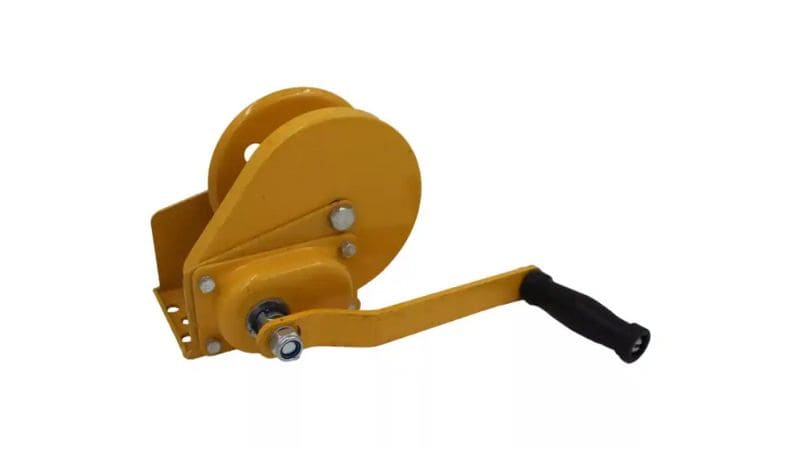
- Brake winches include an automatic brake that locks the drum when the handle stops turning. These are often used for boat trailers and overhead lifts because they provide added security and control.
How Mechanical Advantage Works
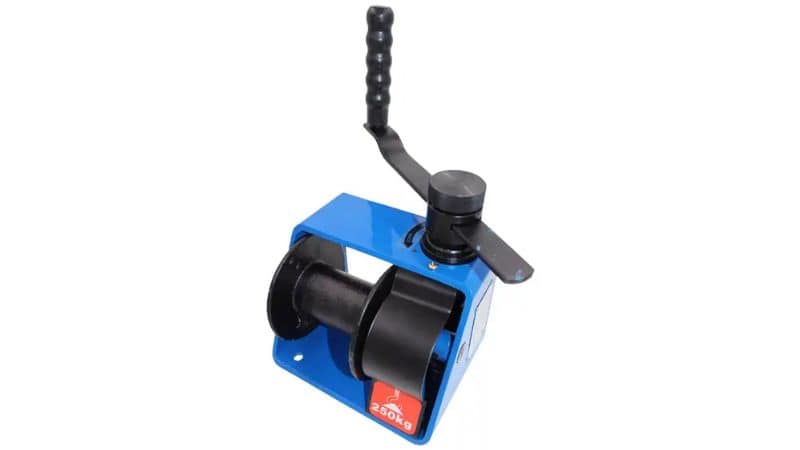
Mechanical advantage in a hand winch comes from the ratio between the handle length, gear size, and drum diameter. Turning the handle transfers a small input force through the gear system, producing a larger output force on the cable.
For example, if a winch has a 4:1 gear ratio, each full turn of the handle rotates the drum one-quarter turn but multiplies the pulling power four times. The longer the handle, the more torque the operator can apply with less effort.
Worm gear winches increase this effect because their screw-type gear requires many handle turns for one drum rotation, allowing controlled, precise movement. This efficiency lets users lift or pull significant weight without powered equipment.
Selecting the Right Hand Winch and Accessories
Choosing Between Steel Cable and Synthetic Rope
Thewinch cable material determines strength, handling, and maintenance needs. A steel cable or wire rope offers high durability and resistance to abrasion, making it suitable for rugged or sharp environments. It handles heat and friction well but can develop burrs that require gloves for safe handling.
A synthetic rope is lighter and easier to spool, reducing the chance of recoil if it snaps. It floats, resists kinking, and is safer to handle with bare hands. However, it’s more vulnerable to UV rays and chemicals, so periodic inspection and cleaning are necessary.
Users working in off-road, recovery, warehouse, and personal settings often prefer synthetic rope for its easier handling, while those in industrial or marine environments may rely on steel for its toughness under strain.
Matching Winch Capacity to Load Requirements
The load rating determines how safely a hand winch can pull or lift weight. Manufacturers typically list a rated line pull, which refers to the maximum load a winch can move on a single layer of cable. To estimate the proper capacity, the load weight should not exceed 75% of the winch’s rating to account for friction and uneven surfaces.
Heavier loads or long pulling distances benefit from a gear-reduction hand winch or one with multiple pulleys to increase mechanical advantage. Checking the pulling direction—horizontal or vertical—is important because not every model is designed for both. Ensuring the anchor point and mounting system can handle equal or greater stress levels prevents structural failure during operation.
Essential Accessories for Winching
Using the correct accessories reduces risk and improves control. Key items include:
- Winch Hook with Safety Latch: This crucial component securely fastens the cable to the load itself, and the integrated safety latch snaps closed to prevent the hook from accidentally disconnecting from the load point, especially when the cable goes slack.
- Shackles (D-Shackles): These are high-strength, load-rated metal connectors used to link the winch cable to anchors, tree straps, and other hardware, forming a secure and reliable connection in your rigging system.
- Snatch Blocks: This versatile pulley is designed to be opened on one side, allowing you to easily reeve your winch line through it to change the pulling direction or create a double-line setup, which effectively doubles your winch’s pulling power and provides greater control.
- Tree Trunk Protectors: This wide strap wraps around a tree or other fragile anchor point to distribute the winch cable’s pressure and prevent damage to the bark, the tree’s root system, or the cable itself from sharp edges.
Installation of Hand Winch
Selecting and Securing Anchor Points
The installation of a hand winch begins with a sturdy anchor. It must support the full load without shifting. Depending on the environment, operators can use a solid object like a ground anchor or metal post.
Attaching the Winch to the Anchor
Since the anchor must handle the full pulling force without shifting or breaking, it would be safer to use a mounting plate to help distribute the load evenly and prevent damage.
Before mounting, the user checks that the surface is level and free of rust, cracks, or debris. The winch base plate should sit flat, and bolts or fasteners must match the winch specifications. Tightening bolts in a cross pattern improves grip and reduces stress on the frame.
Proper alignment between the winch and the load path is essential. A misaligned setup can cause the winch cable to spool unevenly or slip off the drum. When working on trailers or fixed rigs, marking alignment lines can help maintain a straight pull.
Connecting the Winch Cable or Rope
When threading the cable, it should follow the spool groove evenly from side to side. Uneven layers can jam the drum under tension. Attaching the winch hook to the load requires using rated hardware such as a shackle or loop connector. The hook’s latch should close completely to prevent accidental detachment.
How to Use a Hand Winch: Step-by-Step Guide
Operating the Crank Handle
Turn the handle slowly and smoothly rather than using quick or jerky turns. This steady motion helps maintain even pressure on the drum and prevents uneven cable stacking. If resistance increases suddenly, stop cranking and inspect the setup before continuing.
Controlling Tension and Motion
Effective winching depends on keeping proper cable tension throughout the operation. Too little tension allows slack that could snap tight later, while too much tension strains the winch components.
Cranking speed should stay consistent, especially during lifting or pulling. Sudden starts or stops may cause the load to swing or rebound. When lifting, always pause briefly every few turns to check the cable’s position on the drum.
If the winch uses a ratchet mechanism or brake, engage it before releasing the handle. This prevents rollback or load drop.
Unrigging the Winch
Before ending the operation, the operator should verify that the load is fully secure and tension is relieved gradually. Controlled release avoids shock on the drum or anchor system.
Then, operators should disconnect the hook from the anchor point. If a shackle was used, it must be unpinned or detached carefully to avoid sudden shifts. Once the line is free, rewind it neatly onto the drum using steady pressure to prevent tangles or uneven layers.
Proper Maintenance and Storage Practices
Routine maintenance keeps the winch reliable and safe. Cleaning the drum, rope, and housing removes dirt or salt that can trap moisture and cause corrosion. Moving parts like gears and bearings should be lubricated.
Between operations, the winch should be stored in a dry, covered space with the line fully rewound and tension removed. If used outdoors often, a fitted cover helps shield the winch from moisture and UV exposure. Taking these small actions keeps the tool ready and reduces long-term wear.
Frequently Asked Questions
Why would I choose a hand winch when an electric winch is much more convenient?
Hand winches excel at reliability and independence: they require no power source, meaning they will never fail due to a dead battery, electrical fault, or water immersion. It’s also significantly more portable, lightweight, and compact, making it ideal for vehicles with limited space or for jobsites without power. For occasional use, emergency preparedness, or scenarios where reliability is valued more than anything else, a hand winch is the better tool for the job.
My winch has a “No-Load” line pull specification. What does this mean?
The “No-Load” specification refers to the speed at which the cable is retrieved when the winch is not under tension (i.e., not pulling a load). It’s a measure of retrieval speed, not power. A winch with a high no-load line pull will re-spool cable quickly, saving time between operations. This is separate from its rated pulling capacity under load, which is always much slower.