
Securing cargo is by no means an easy task, and many variables could negatively affect your securement efforts. In some cases, it would be a slack chain that refuses to do its job, which is keeping items from moving around during transportation. Fortunately, there is a kind of simple yet ingenious tool that could prevent this altogether: load binders.
This guide will explain to you how to properly apply tension and release chains using them, as well as some other questions about load binders that may interest you. Let’s make sure your load stays put from start to finish!
What Are Load Binders & Their Importance
A load binder is a mechanical device used to tighten and secure chains or straps holding cargo in place during transport.
They serve three critical functions in cargo securement:
- Applying tension to chains or straps
- Maintaining consistent pressure during transit
- Allowing for quick release when unloading
Using them correctly prevents cargo from moving, which protects both the load and everyone on the road. Federal regulations require securement devices that meet specific strength standards, making load binders essential for legal compliance.
Types of Load Binders
There are two primary types of load binders to secure cargo: ratchet binders and lever binders. Each type offers distinct mechanisms and safety features.
Ratchet Binders
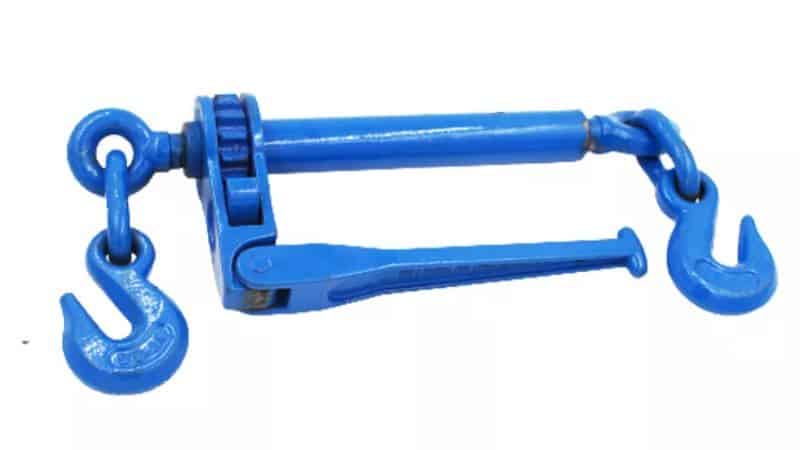
A ratchet binder is operated using a geared handle that tightens the chain incrementally. This design provides a mechanical advantage of approximately 50:1, enabling high tension to be generated with minimal effort.
Safer operation is achieved due to reduced recoil risk and steady, controlled tightening. Hooks are attached to the chain, and the handle is turned repeatedly until the load is secure.
To release the ratchet load binder, disengage the ratchet mechanism and unwind carefully. Although ratchet binders take longer to secure and unsecure than lever binders, they offer superior control and safety.
Lever Binders
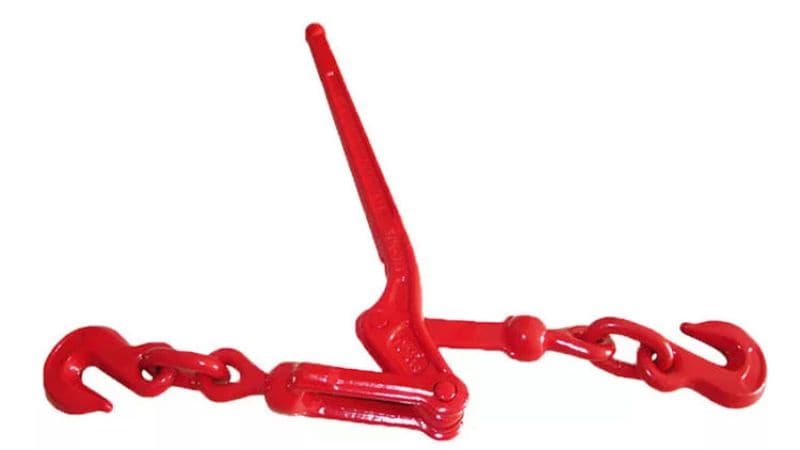
A lever binder is operated by pulling the handle downward until it locks at a 180-degree position. This type of lever load binder provides a mechanical advantage of about 25:1, requiring more physical strength from the operator. Stable footing is maintained, and gloves are recommended for better grip during operation.
Faster operation and simpler maintenance are advantages of lever style binders, but rig operators must remain cautious to prevent stored energy in the handle from bursting the binder. Only one person should operate the binder at a time due to the high force involved.
Step Guide & Safety Tips on Using a Load Binder
You use a load binder to tighten chains that secure cargo during transport. Proper operation ensures safety and compliance with regulations.
Inspection Before Attachment
Before you even attach the binder, you must conduct a thorough inspection of all equipment. Check the load binder itself for visible wear, cracks, deformation, rust, or damaged pins and welds. Inspect the chains and hooks for defects like excessive wear, stretching, or deformation.
Safety precautions:
- Verify the Working Load Limit (WLL): Ensure the WLL of the binder matches or exceeds both the cargo weight (kgs or lbs) and the chain’s rating.
- Discard Damaged Equipment Immediately: Never use equipment that shows any signs of compromise. Equipment failure under tension is extremely dangerous.
- Select the Appropriate Binder Type: Choose a ratchet binder for safer, controlled tightening. Reserve lever binders for heavy-duty applications, but acknowledge their higher kickback.
Attachment
Attach the chains to secure, rated anchor points on the trailer or truck, ensuring the load is evenly distributed on all sides. Avoid twisted chains, as this prevents uniform force. Position the load binder so its handle has a clear path to operate without hitting the ground, the cargo, or other equipment.
Safety Concerns:
- Use Certified Hardware: Only use hooks that are designed to lock under tension and have a compatible rating with your binder and chain.
- Plan Your Position Beforehand: Before tensioning, steer clear of the path the handle will travel and make sure you are in a safe position that is less likely to be hit even if a binding failure happens.
Applying Tension
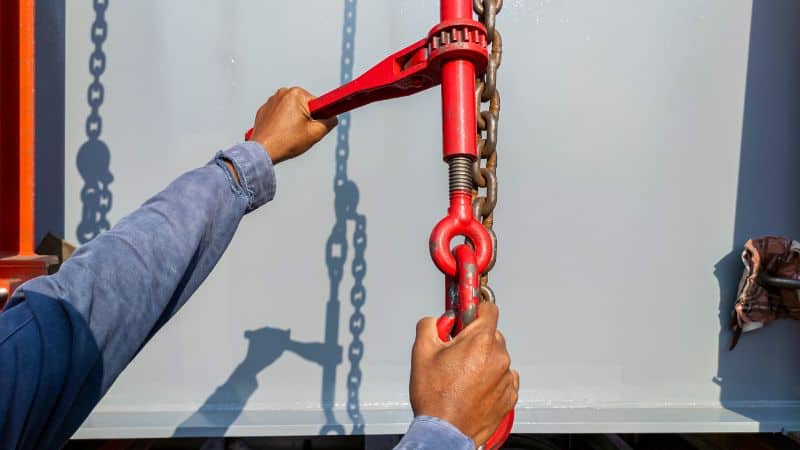
- For Ratchet Binders: Ratchet the binder slowly and evenly until the chain is taut and secure.
- For Lever Binders: Pull the handle down firmly and smoothly until it locks into the 180-degree position.
For safety issues:
- Wear PPE: Always wear heavy-duty gloves so you can have a better grip and won’t hurt your hands.
- Maintain Stable Footing: Operate from the ground if possible. Never stand on the cargo to gain leverage.
Locking and Final Check
Ensure the handle is in its fully locked and secured position. For lever binders, this often means the handle is tight against the chain. For ratchet binders, ensure the pawl is fully engaged.
Safety tips:
- Secure Loose Handles: Use built-in latches and wraps, or even a zip tie to secure the handle and prevent it from vibrating loose.
- Final Visual Check: Walk around the load one last time to confirm everything is secure before beginning travel.
Releasing the Mechanism
Releasing the binder is one of the most dangerous phases. Do it with extreme caution.
- For Lever Binders: Pull the release latch and gradually pull the handle upward to control the rapid energy discharge.
- For Ratchet Binders: Engage the release mechanism and slowly unwind the handle, allowing the tension to ease gradually.
For safety issues:
- Prioritize Controlled Release: The goal is to release stored energy slowly and predictably. Modern safety-release lever binders that rotate the body (not the handle) are highly recommended to minimize snapback.
- Maintain a Safe Position: Even during release, stay out of the handle’s potential path. Keep your grip firm and your body to the side.
Conclusion
Load binders are industry-proven tools. By applying this knowledge—prioritizing consistent inspection and correct operation—you ensure safety on the road. Your attention to detail protects what matters most!
Frequently Asked Questions
What grade of chain should I use with different binders?
You must match the grade of your binder to the grade of your chain. Using a higher-grade binder on a lower-grade chain can overload and break it.
Grade 70 (Transport Chain): The most common standard for trucking and cargo securement.
Grade 80 (Alloy Chain): Used in more demanding lifting and rigging applications.
Grade 100/110: High-performance chain that is paired with a higher working load limits binder, designed for severe service. Never mix these components with lower-grade hardware.
Where can I buy load binders in large quantites?
Load binders are often sold at retailers, but they lack the scale and transport methods to satisfy buyers from industrial companies and factories. In this case, a lifting equipment manufacturing company is the perfect choice for buying load binders in bulk.
Can I use a load binder for lifting?
No, in fact, never do that. Standard lever and ratchet binders are designed solely for tensioning and cargo securement and they are not rated for overhead lifting. You should use hardware specifically designed for that purpose, such as ratchet loaders or lever hoists.
What is a cheater bar for a load binder?
A “cheater bar” is a pipe or bar used to extend the handle of a load binder for extra leverage. This is extremely dangerous because it allows you to apply far more force than the binder is designed to handle, which can cause it to snap suddenly and violently, sending metal parts flying. Therefore, you should not use a cheater bar on a load binder.