
In our previous blogs on slings, namely the one about endless slings, we introduced the concept of “sling hitch,” which, in plain language, is the method of fastening a sling to the load so a hoist could lift it safely and efficiently.
There are several sling hitch types, which greatly affect your lifting and rigging operations from many aspects, and that is why in this article, we at Grandlifting will explain how these hitch types work, how the angles affect capacity, and how to match the right hitch to the sling and load, as well as necessary safety practices.
Basics of Sling Hitches
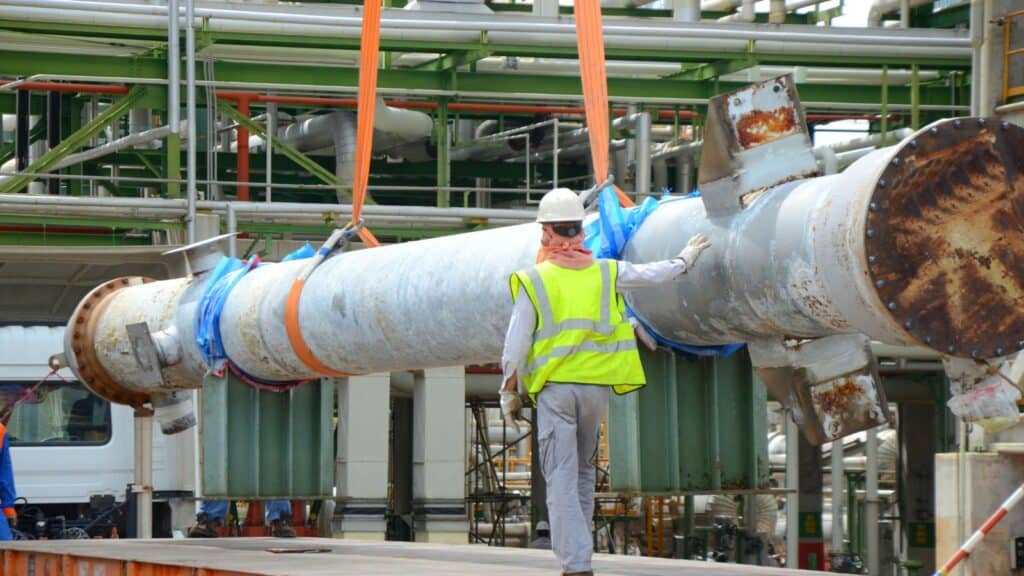
A sling hitch is the way a sling connects a load to a crane or hoist. It defines how the sling wraps, supports, or tightens around the load.
The hitch type affects the lifting by changing how forces move through the sling and into the load, and workers need to choose sling hitches according to the load shape, weight, and balance.
A good choice improves control and reduces movement during the lift and also helps keep the lift within the sling’s rated limits and supports safer handling.
Overview of Common Sling Hitch Types
Before we move on to the detailed analysis of the four main sling hitch types. Here is a chart to offer you basic principles on how to differentiate them.
| Hitch Type | How It Works | Key Use |
|---|---|---|
| Vertical Hitch | One sling leg connects straight to the load | Best for balanced loads with one pick point |
| Basket Hitch | Sling passes under the load with both ends on the hook | Spreads weight and increases capacity |
| Choker Hitch | Sling tightens around the load | Improves grip on loose or round items |
| Bridle Hitch | multiple slings with their legs attaches to separate pick points on the load | Provides maximum stability and control |
Key Sling Hitch Types and Configurations
Each sling hitch type controls a load in a specific way and changes how much weight the sling can safely lift. Load balance, sling angle, and contact with the load all affect capacity and stability.
Vertical Hitch
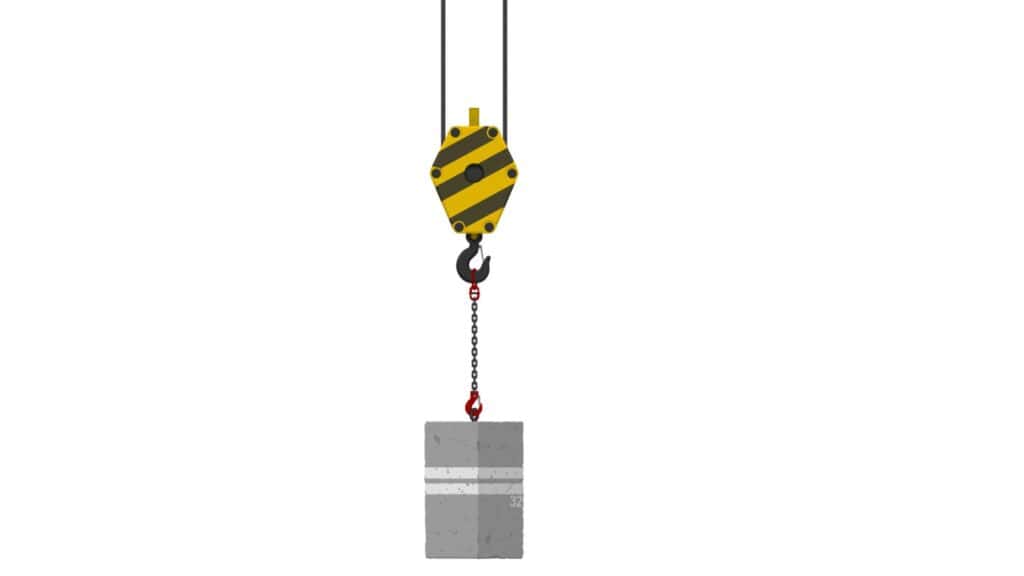
A vertical hitch connects one end of a single sling to the hook and the other end to the load. The sling hangs straight, and the load stays directly below the hook.
This hitch uses 100% of the sling’s rated vertical capacity. It works best for loads with a single, secure lifting point. Operators often add a tagline to reduce spinning during the lift.
A single vertical hitch should not lift loose items, long objects, or unbalanced loads. These loads can rotate or shift, which raises risk.
Basket Hitch
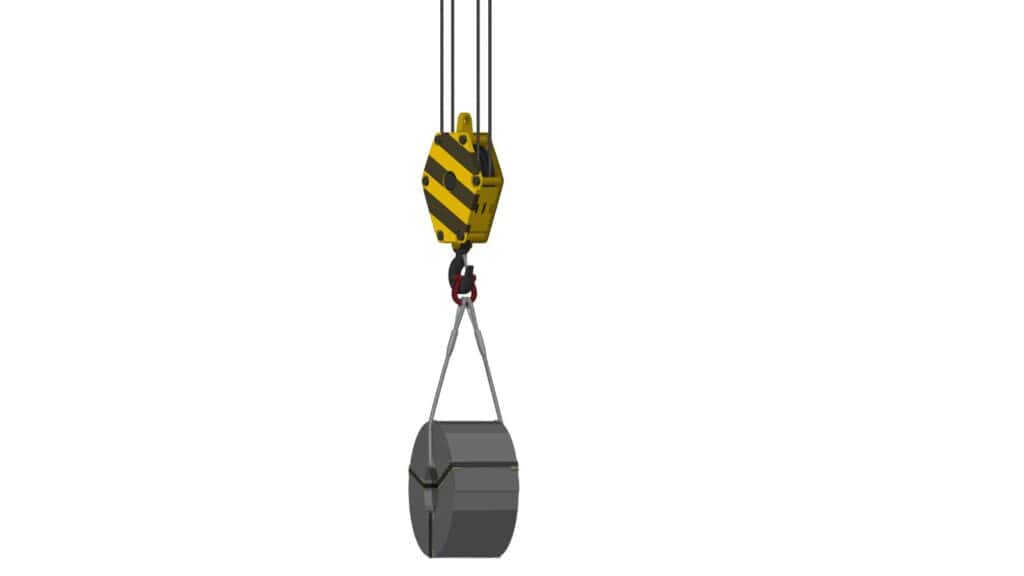
A basket hitch cradles the load by passing the sling under it and attaching both eyes to the hook. The load rests between two sling legs.
When each leg stays at a true 90° angle, the basket hitch can lift up to twice the capacity of a vertical hitch. As the sling angle decreases, capacity also drops.
This hitch does not grip the load. It relies on balance. Operators should avoid unbalanced or hard-to-center loads unless they use multiple slings or a spreader bar.
Capacity affected by angle
| Sling Angle | Approx. Capacity |
|---|---|
| 90° | 200% |
| 60° | ~170% |
| 45° | ~140% |
Choker Hitch
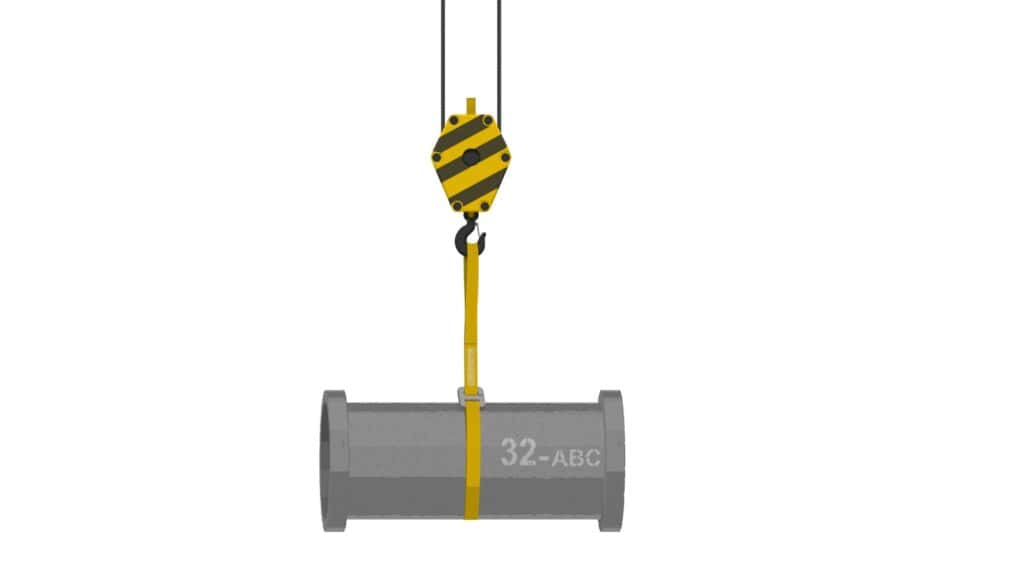
A choker hitch tightens the sling around the load by passing one eye through the other. The sling grips the load instead of cradling it.
This grip improves control, but it reduces capacity. Most choker hitches lift 75–80% of the vertical rating. Tighter choke angles reduce capacity even more.
Choker hitches work well for rigid loads like pipes or bundles. They do not work well for loose or soft items unless the sling wraps fully.
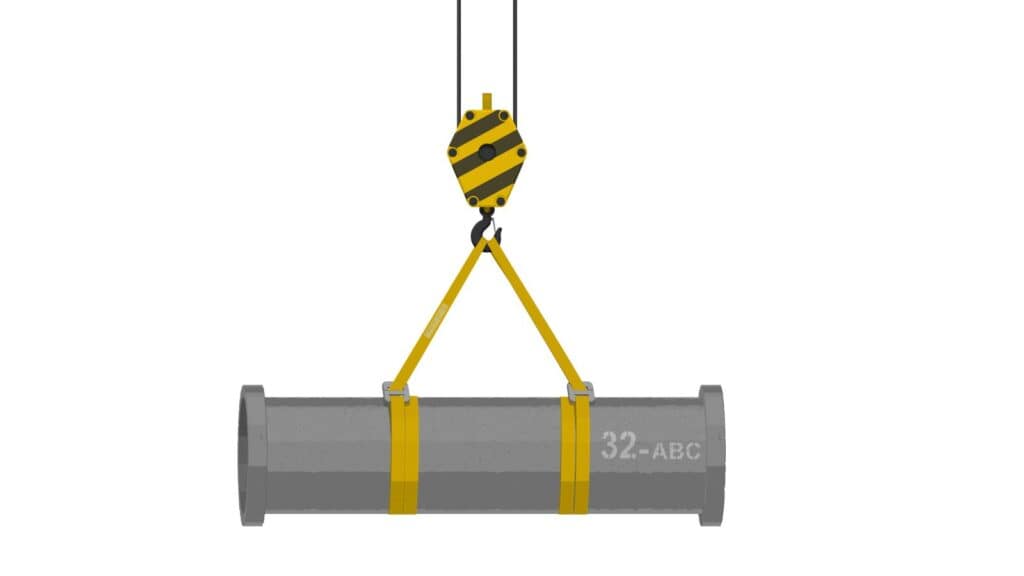
A double choker hitch increases contact and control. This setup helps keep the load from slipping.
Multi-Leg Bridle Hitch
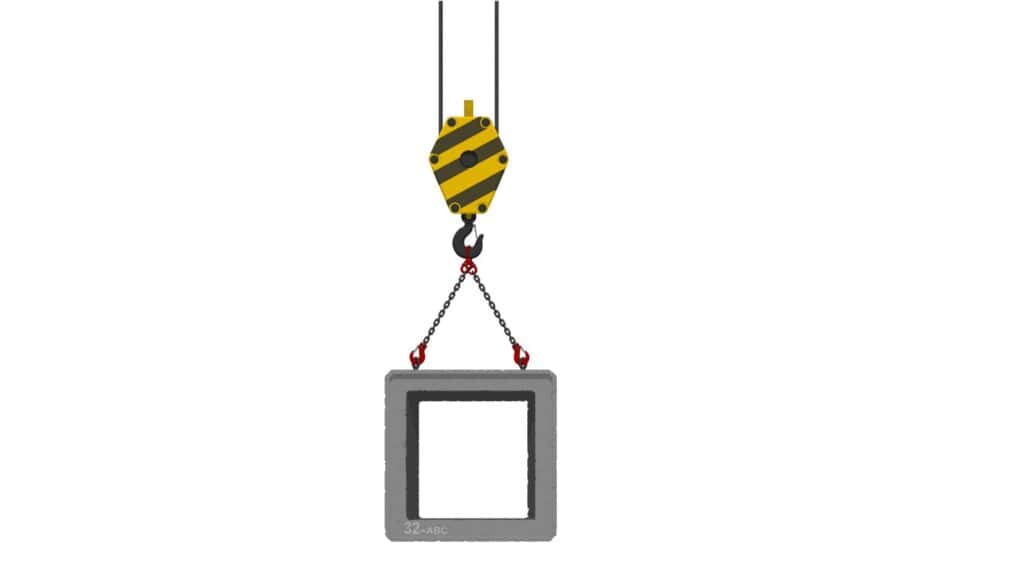
A multi-leg bridle sling uses two, three, or four straight sling legs connected to a master link. Each leg attaches to a separate lifting point on the load.
This hitch spreads weight across several points and improves balance. A multi-leg bridle sling works well for large or shaped loads with fixed lugs.
Capacity depends on sling angle and equal loading. All legs must share the load evenly to reach the rated capacity. Adjustable legs help level uneven loads.
Matching Lifting Hitches to the Right Sling Types
Although the vertical hitch is almost a universal practice for all slings, other hitch types suit types of slings differently. Rather than restating how each hitch functions, we must examine how synthetic web, wire rope, and alloy chain slings behave when applied to these configurations.
Web Slings and Hitch Compatibility
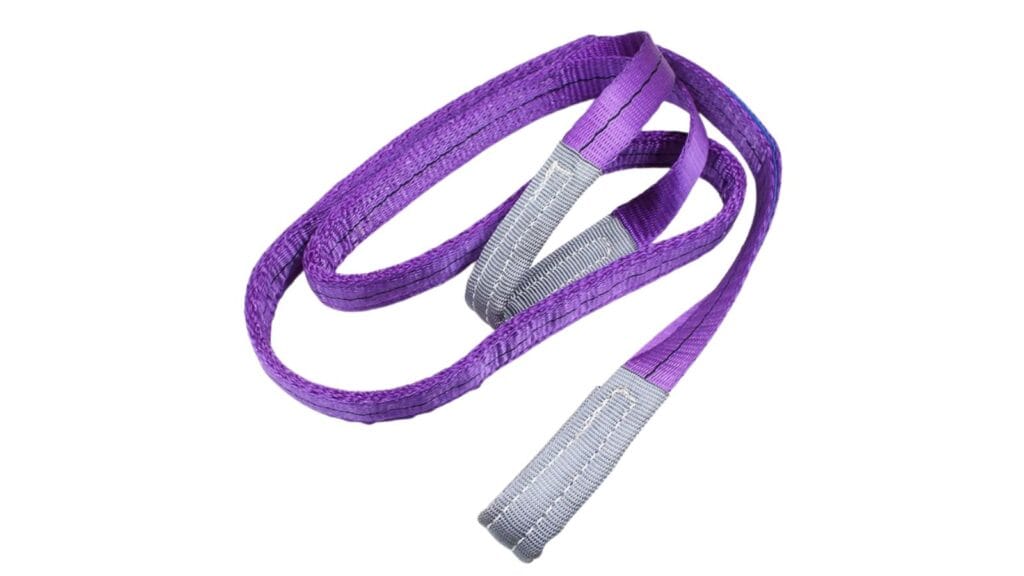
Web slings, manufactured from nylon or polyester, are prized for their soft, pliable nature. They are the ideal choice when a load has finished, painted, or fragile surfaces that could be marred by metal slings.
When used in a basket hitch, web slings are able to conform to the load’s shape, distributing weight evenly across their wide surface area.
They can also be rigged in a multi-leg bridle hitch, operators must carefully account for material stretch. Synthetic fibers elongate under heavy tension, meaning if a load is slightly unbalanced, the heavier side will cause that specific leg to stretch more, potentially tilting the load dangerously.
However, their primary vulnerability becomes apparent in choker hitches. Because the material grips tightly, sharp edges on the load are more prone to slice through the synthetic fibers than other materials like steel wire rope, thus requiring proper protection during operation.
Wire Rope Sling Applications
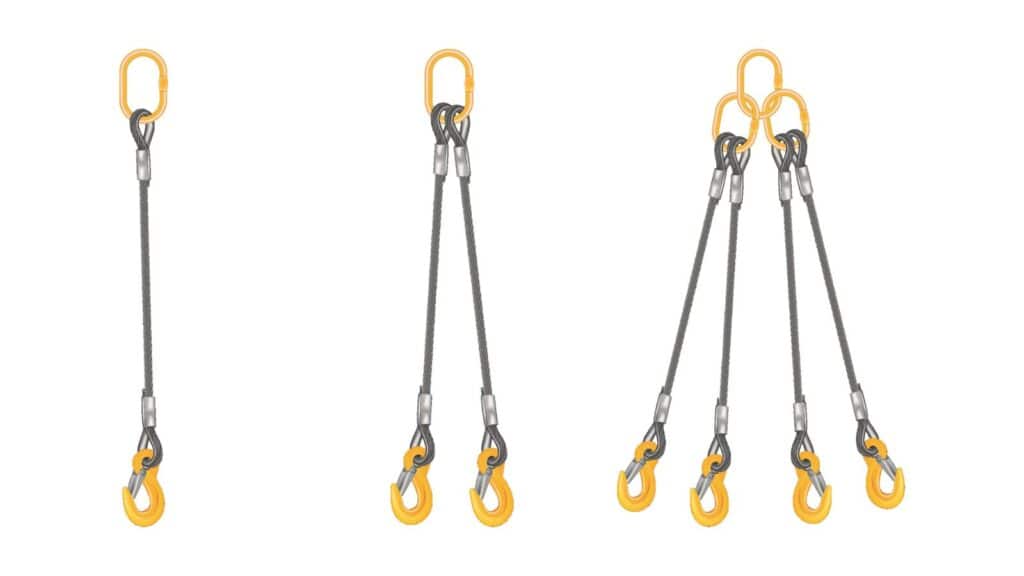
Wire rope slings, made of steel wire rope, provide a robust middle ground, offering greater resistance to heat, abrasion, and crushing forces than synthetic webs, while maintaining more flexibility than heavy chain.
When rigging a wire rope in a basket hitch, operators must pay close attention to the D/d ratio (the ratio of the load’s diameter to the wire rope’s diameter) to prevent permanent kinking or bending of the wire.
Wire ropes excel in multi-leg bridle hitches because they offer excellent rigid stability with very minimal stretch, making them perfect for lifting machinery or shipping containers with fixed lifting points. To protect the wire, the sling eyes must be reinforced with metal thimbles where they attach to the master link.
In a choker hitch, wire rope is excellent for gripping long, rigid loads like metal pipes or lumber bundles. The critical safety factor here is ensuring the choke point rests entirely on the flexible body of the wire rope, because allowing the choke to bear down on heavy splices, swaged fittings, or the sling eye will drastically reduce its structural integrity.
Chain Slings with Hitch Methods
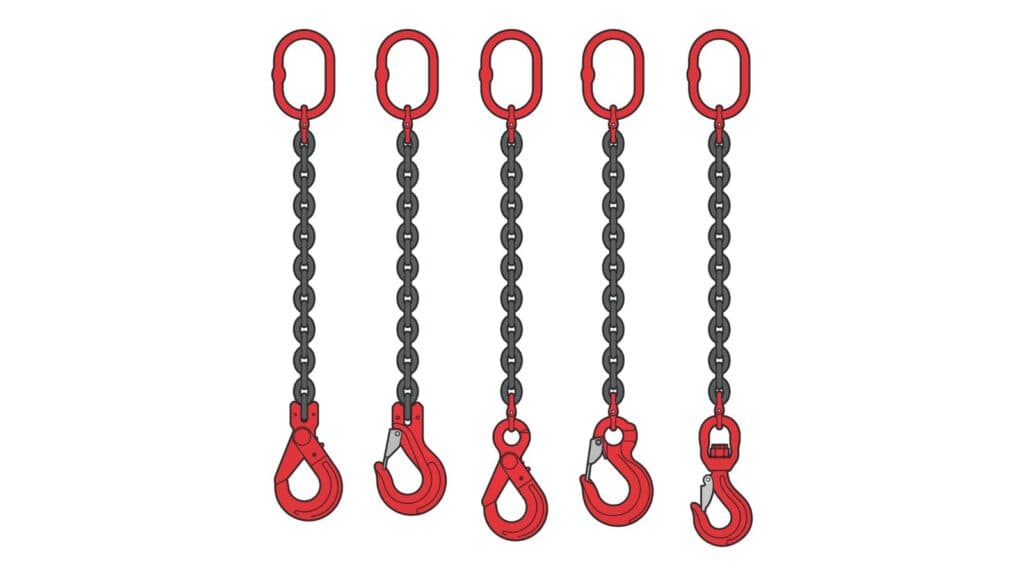
Chain slings are the best choice for extreme environments, offering unmatched strength, durability, and resistance to high temperatures and sharp edges. Vertical hitch and multi-leg bridle take perfect advantage of a chain’s linear strength.
However, choker hitches require specific attention to the physical links. When choking a chain sling, the links must seat properly against one another and the load. If a link becomes twisted or gets caught on a corner, it introduces side-loading—a dangerous condition where the force is applied to the weaker side of the link rather than along its length.
Load Considerations and Sling Angles
Load weight, sling angle, and balance control how much force each sling leg carries. Small changes in angle or balance can raise tension fast and reduce safe capacity.
Sling Angle Impact on Capacity
Sling angle has a direct effect on capacity. As the sling angle drops closer to horizontal, tension in each sling leg rises. This increase can overload a sling even when the load weight stays the same.
Choker hitches add another limit. The angle of choke matters. A choke angle of 120° or greater keeps more capacity. Smaller angles reduce capacity sharply and can drop it below half of a vertical rating.
Center of Gravity and Load Balance
The center of gravity controls how the load hangs. When the hook sits over the center of gravity, the load stays level. When it does not, the heavier side pulls down and raises tension on that sling leg.
Rigging plans should account for shape and weight shifts. Irregular loads may move during the lift, which changes the center of gravity and increases stress.
Adjusting sling leg length helps level the load. Shortening one leg or lengthening another can bring the hook back over the center of gravity and reduce uneven force.
Share of the Load in Multi-Leg Hitches
Multi-leg hitches do not always share the load equally. To achieve the ideal setup, all sling leg lengths must match, and the hook must sit directly over the center of gravity.
Common planning steps include:
- Divide load weight by the number of legs only for balanced lifts
- Check each sling angle from the horizontal
- Verify each leg can carry its share with angle limits applied
Best Practices for Hitch Rigging and Safety
Beyond matching hitch and sling types, safe rigging also depends on correct load ratings, stable load control, and proper protection of slings.
Working Load Limit and Rated Capacities
Every sling hitch must stay within its working load limit (WLL). The rigger checks the sling tag to confirm rated capacities for the exact hitch used. Here, we will revisit our previous chapters on how hitch types and angles affect WLL.
- A basket hitch carries more weight than a vertical hitch.
- A choker hitch reduces lifting capacity.
- Sling angles matter: as the sling-to-load angle decreases, the tension in each sling leg increases.
- The increased tension can exceed the WLL even if the load’s total weight seems acceptable.
Taglines for Load Control
A tagline, which is a rope attached to a lifted load for purposes of controlling load spinning and motions, can limit rotation, swinging, and sudden shifts. The rigger attaches the tagline so it stays clear of pinch points and moving parts.
Only trained workers should handle taglines. The safety code demands them to stand in safe positions, never wrap lines around hands or bodies, and make clear communications with the crane operator to support smooth movement.
Protective Devices and Wear Pads
As mentioned above, it is very possible for certain slings to fail early when sharp edges or rough surfaces cut into them. That is why the crew use wear pads and corner protectors to shield the sling body, especially in basket and choker hitches.
The operator places protection at all contact points, not just at visible edges. These pads must fit the sling width and stay in position during the lift. They protect synthetic web slings, round slings, and wire rope slings.
Summary
Selecting the correct sling hitch types is a critical decision in any lifting operation, as they fundamentally dictate how force travels from the hoist to the load, impacting both capacity and stability.
Frequently Asked Questions
How do I calculate the actual tension on each sling leg when using an angled basket or bridle hitch?
You cannot simply divide the load weight by the number of sling legs. You must use the load angle factor (the reciprocal of the sine of the sling angle measured from horizontal). For a two-legged bridle, the tension per leg is calculated as: (Load Weight / 2) x (1 / sin of sling angle).
For example, a 1,000 lb load with a 45° sling angle results in approximately 707 lbs of tension per leg, not 500 lbs.
Can I use different types of hitches on the same load?
Yes, it is possible but requires extreme caution and expert planning. This is often called a “multi-hitch” or “combination” rigging. For example, you might use a choker hitch on one end of a long load to prevent sliding and a basket hitch on the other end.
However, this creates a highly complex scenario where load distribution is unpredictable, as each hitch type handles force differently. It should only be done under the direction of a qualified rigger or engineer.
What should I do if my load is not level in a multi-leg bridle hitch?
An uneven load indicates the hook is not directly above the center of gravity. If your bridle uses adjustable legs (like chain slings with hooks or turnbuckles), you can shorten the leg on the high side and lengthen the leg on the low side to bring the load level. If the slings are fixed-length, the lift must be aborted and the pickup points or crane position must be reevaluated. You should never attempt to “walk” a load level while it is suspended.
How do I choose between a web sling and a wire rope sling for a choker hitch?
The choice depends on the load’s surface and the environment. If you are lifting finished pipe or tubing and need maximum grip to prevent slipping, a wire rope sling is often the better choice for its rigidity and grip.
However, if the load has a delicate, finished surface that cannot be scratched, you must use a web sling, but you will also need heavy-duty corner protectors and wear pads to shield the synthetic material from the load’s edges and the friction of the choke.