
Stainless steel is one of the most resilient materials for equipment in lifting, securing, and supporting loads. From boats to building structures, it plays a key role in safe and stable systems.
As we explore this topic, you will learn what stainless steel rigging encompasses, the types of hardware available, and how the systems work, along with practical tips for proper installation and maintenance.
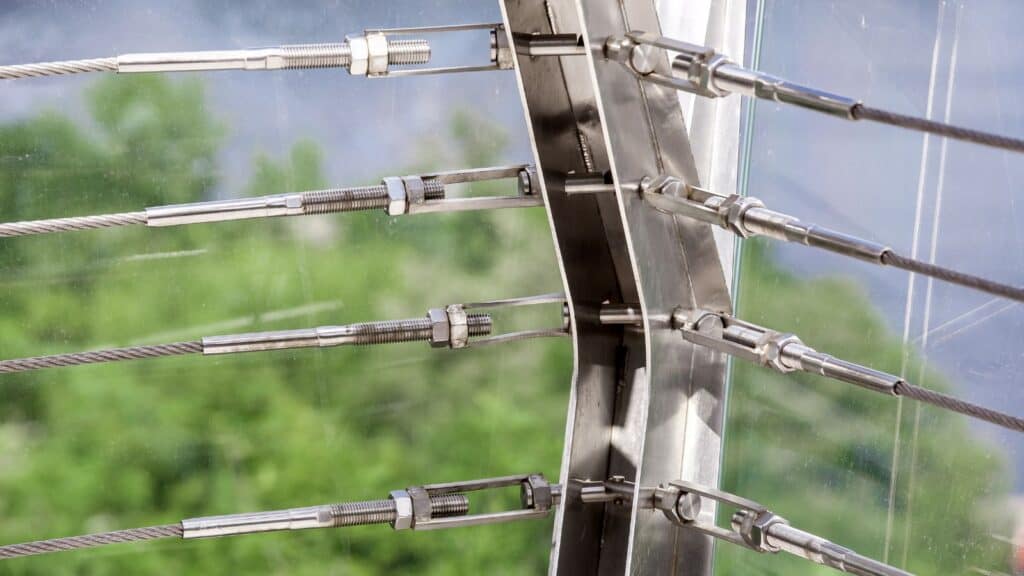
Features of Stainless Steel Rigging
Stainless steel rigging hardware is the standard choice for demanding environments because it offers exceptional durability.
By combining a compact design with reliable performance, these manufactured components easily handle heavy loads in tight spaces and, with routine inspection for fatigue or crevice corrosion, can provide years of safe operation.
- Superior Corrosion Resistance: Naturally withstands rust and pitting in wet or salty conditions.
- High Strength-to-Size Ratio: Handles high loads with smaller diameters, keeping hardware compact and reducing wind resistance.
- Dimensional Stability: Offers low stretch under load, ensuring components like turnbuckles and shackles hold adjustments without slipping.
- Long Service Life: Delivers lasting reliability with only basic cleaning and maintenance.
Comparison With Traditional Rigging Materials
Compared with traditional materials like galvanized carbon steel and synthetic fibers, the benefits of using stainless steel rigging stand out perfectly.
Coated with zinc, galvanized steel can also withstand elements and costs less at first. However, the coating wears down over time, especially in harsh conditions. Once the coating fails, rust forms quickly.
Synthetic rigging weighs much less and resists corrosion. It works well in weight-sensitive applications. Still, it can suffer from UV damage, abrasion, and creep under constant load.
Here is a table that compares stainless steel against other common materials:
| Material | Corrosion Resistance | Weight | Stretch | Maintenance |
|---|---|---|---|---|
| Stainless Steel | High | Moderate | Low | Moderate inspection |
| Galvanized Steel | Moderate | Moderate | Low | Higher over time |
| Synthetic Fiber | High (no rust) | Very Low | Moderate | Monitor for wear |
Stainless steel rigging balances strength, durability, and corrosion resistance. Many marine and industrial operators choose it when they need stable performance under heavy, repeated loads.
Common Types of Stainless Steel Rigging Hardware
Stainless steel rigging includes load-bearing cables, tensioning tools, and secure attachment points. Each component plays a specific role in lifting, securing, or supporting loads.
Wire Rope and Cable Options
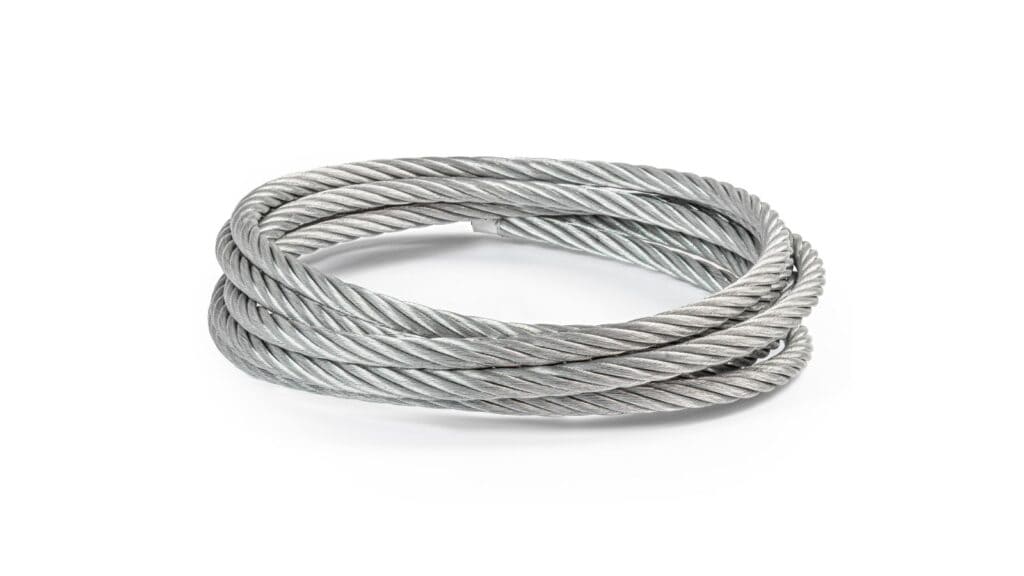
Wire rope is the backbone of many rigging systems. Manufacturers build it from multiple strands of stainless steel wire twisted around a core. This design gives it strength and flexibility.
Turnbuckles and Tensioning Devices
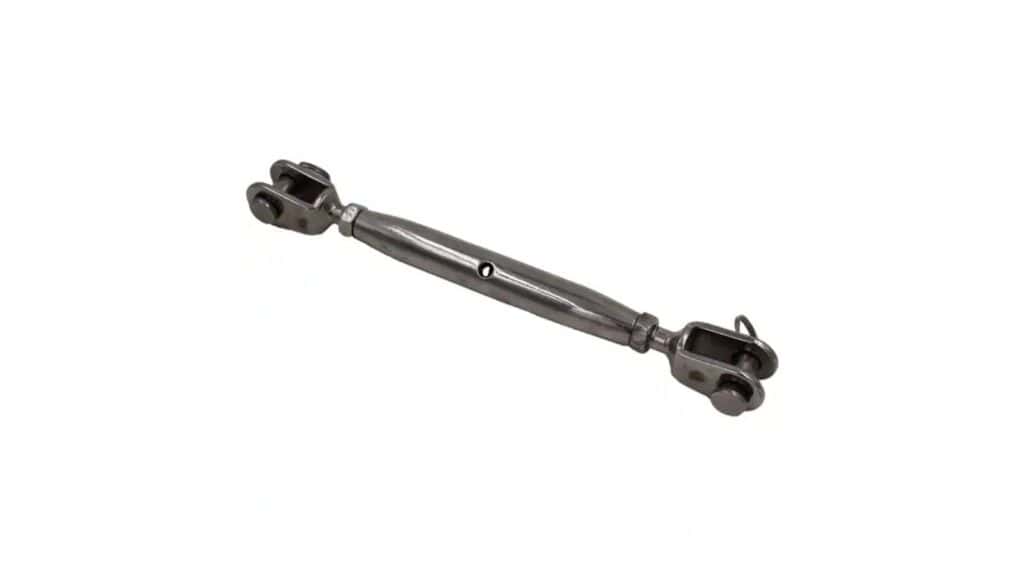
A turnbuckle adjusts tension in wire rope and cable assemblies. It consists of a central body with threaded ends that connect to eye bolts, hooks, or jaw fittings.
By rotating the body, users either tighten or loosen the connected line. This simple action allows precise control over tension. It helps stabilize masts, secure structural bracing, and align loads.
Eye Bolts and Attachment Points
An eye bolt creates a fixed attachment point for lifting or securing loads. It features a threaded shaft and a circular eye designed to hold a shackle, hook, or wire rope fitting.
Eye bolts, turnbuckles, and wire rope must work together as a system. Matching load ratings and material grades helps maintain strength and corrosion resistance across the full assembly.
Common Stainless Steel Rigging Accessories
Stainless steel rigging systems rely on small but critical parts that hold loads, secure lines, and connect components. These accessories must resist corrosion, maintain strength under tension, and match the working load of the full assembly.
Wire Rope Clips and Ferrules
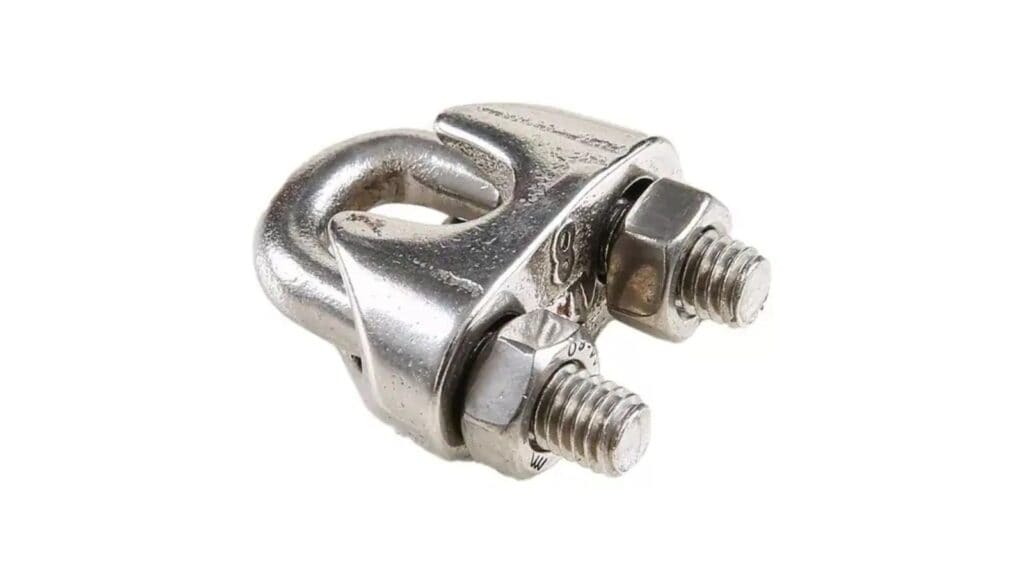
Wire rope clips secure the loose end of a wire rope after it forms an eye. They clamp the live end and the dead end together using a saddle and U-bolt.
Ferrules create a cleaner and more permanent connection. A ferrule slides over the rope and compresses with a swaging tool to form a tight eye around a thimble.
Chains and Chain Fittings
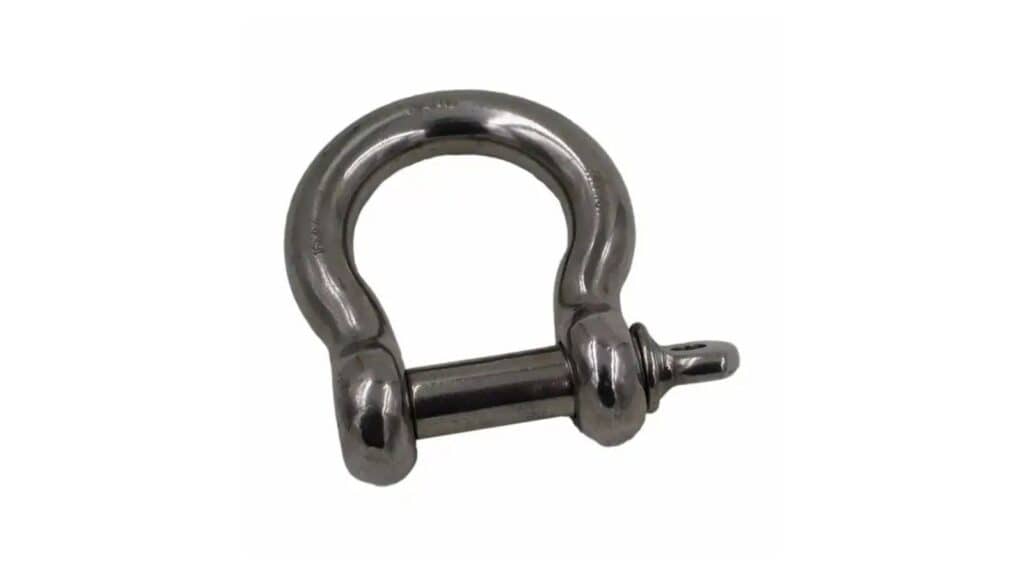
Stainless steel chains handle tension, secure loads, and anchor equipment, often coupled with hoists and cranes
As for the common fittings, they are usually designed to be accessories of wire rope systems, which include:
- Shackles
- Eye bolts
- Turnbuckles
- Connecting links
Each fitting must match the chain’s grade and diameter. A mismatch can reduce the system’s working load limit.
Snap Hooks and Quick Links
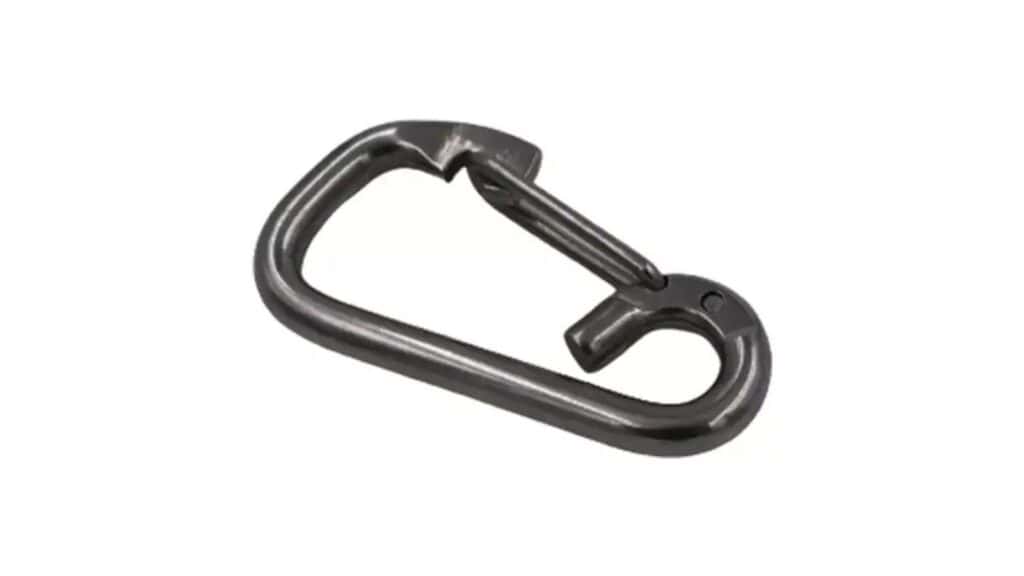
Snap hooks provide fast attachment and release points in rigging systems. A spring-loaded gate closes automatically when it connects to a ring, chain, or eye bolt.
Quick links, also called screw links, use a threaded sleeve to close the opening. They create a more secure connection than a basic snap hook but require manual tightening.
Fields of Applications for Stainless Steel Rigging
Stainless steel rigging supports load control, structural stability, and long-term outdoor use. Industries rely on it where moisture, salt, and heavy loads demand strong and corrosion-resistant hardware.
Marine and Offshore Use
Marine environments expose hardware to saltwater, wind, and constant moisture, which necessitate stainless steel rigging hardware. Unlike zinc coatings that chip and wear away, the chromium in stainless steel actively forms a surface protection layer against rust through oxidation.
Boat builders and dock installers use these pieces of harware to secure masts, tension lifelines, and anchor loads. Offshore platforms also rely on it to handle heavy equipment and structural tie-down points.
These systems must maintain strength under dynamic loads caused by waves and wind. Stainless steel provides consistent performance with low maintenance, which reduces safety hazards and downtime in harsh marine conditions.
Architectural and Cable Railing Systems
Modern buildings use stainless steel rigging in exposed structural and design elements. Cable railing systems are one of the most common examples. They use stainless steel wire rope, tensioners, and end fittings to create slim, secure barriers for balconies, stairs, and walkways.
It also supports shade sails, suspended signage, and lightweight canopy structures. These applications require precise tension control and reliable anchoring. The hardware must meet building codes for load ratings and safety.
Industrial Lifting and Sling Solutions
Industrial sites depend on stainless steel rigging for lifting, pulling, and securing heavy loads. Warehouses, food processing plants, and water treatment facilities often select stainless steel because it handles moisture and chemical exposure.
Slings connect loads to cranes or hoists and must match the correct working load limit. Stainless steel versions suit environments where carbon steel would corrode or contaminate products.
Workers also use stainless steel rigging in clean industries, such as food and beverage production, because it resists rust and supports hygiene standards. In these settings, strength and corrosion resistance remain equally important for safe lifting operations.
Choosing the Right Material Grades: 304 vs 316 Stainless Steel
Material grade directly affects corrosion resistance and price. The two most common options in stainless steel rigging are 304 and 316 stainless steel.
304 stainless steel works well in indoor and light outdoor settings. It resists rust in dry or low‑moisture areas. Contractors often use it for architectural railings, light-duty rigging hardware, and general construction tasks.
316 stainless steel contains molybdenum, which improves resistance to salt and chemicals. It performs better in marine, coastal, and high‑moisture environments. Boat rigging, dock hardware, and chemical plants often require 316.
| Grade | Best For | Limits |
|---|---|---|
| 304 | Indoor, dry outdoor use | Not ideal for saltwater |
| 316 | Marine, chemical, wet areas | Higher cost |
When exposure to salt or chemicals is likely, 316 provides better long-term value.
Best Practices for Installation and Maintenance
Proper inspection, correct installation, and steady upkeep protect stainless steel rigging from early failure. Each step reduces risk, keeps loads stable, and extends the service life of wire rope and rigging hardware.
Inspecting and Testing Rigging Components
Parts should be inspected before installation and at set intervals during service. A trained person should check wire rope, terminals, turnbuckles, shackles, and eye bolts under good lighting.
Look for:
- Broken wires
- Cracks at swage fittings
- Corrosion, pitting, or rust stains
- Bent or deformed hardware
- Loose pins or threads
Test load-bearing systems when required by industry standards such as OSHA. Use documented load limits and never exceed the working load limit (WLL) marked on the hardware. Remove any component that shows damage or deformation, and make sure to not weld or reshape stainless steel rigging hardware in the field.
Proper Installation Techniques
Uncoil wire rope from a reel stand to prevent twists and kinks. Never drag it across concrete or sharp edges. Sharp bends reduce strength and cause early fatigue.
When cutting wire rope, secure both sides of the cut with tape and use proper cable cutters. Install compatible end fittings such as swaged terminals or thimbles and clips.
For wire rope clips:
- Place the saddle on the live end
- Use the correct number of clips
- Space them about six rope diameters apart
- Tighten to the specified torque
Align all rigging hardware with the direction of load. Avoid side loading shackles or turnbuckles. After tensioning, recheck alignment and hardware tightness.
Routine Cleaning and Preventative Care
Stainless steel rigging is indeed strong, but it still needs routine care. Let’s use wire rope maintenance as an example: you should first rinse wire rope and hardware with fresh water, especially after salt exposure. Afterwards, dry the system to limit surface staining. In harsh settings, a light lubricant made for stainless steel wire rope is also preferable.
Schedule maintenance checks based on use. High-load or outdoor systems need more frequent review than indoor architectural cables.
Stainless Steel Rigging for Your Project
Stainless steel rigging is a solid choice for applications demanding a reliable balance of strength, durability, and superior corrosion resistance. Making the right choice is a critical decision that ensures the safety and success of a project.
If you are seeking a one-stop purchase plan for high quality stainless steel rigging hardware, Grandlifting has you covered! Visit our product catalog to learn more.
Frequently Asked Questions (FAQ)
How long does stainless steel rigging typically last?
There is no single lifespan, as it varies greatly based on the environment and maintenance. In a moderate, indoor setting with routine care, it can last for decades. In harsh marine environments, you can expect many years of reliable service, but more frequent inspections are necessary to identify early signs of wear or crevice corrosion before they become safety issues.
Can I use 304 stainless steel for boats for lower costs?
While 304 is a good stainless steel, it is not recommended for most marine applications. The presence of saltwater will eventually cause pitting and corrosion in 304 hardware. Investing in 316 stainless steel is strongly advised for any rigging exposed to salt, coastal air, or chemicals, as its higher corrosion resistance provides better long-term value and safety.
Is it safe to mix stainless steel with galvanized or other metal hardware?
It is generally best to avoid mixing dissimilar metals in a rigging system. When different metals are in contact in the presence of an electrolyte (like saltwater), it can cause galvanic corrosion, which rapidly degrades the less noble metal. If contact is unavoidable, you must use insulators to separate the materials.