
Webbing buckles play a key role in securing and adjusting straps across many products, from backpacks and belts to safety gear and cargo tie-downs. The main types of webbing buckles include but are not limited to, side-release, cam, ladder lock, ratchet, and wire, each serving a specific purpose depending on strength, adjustability, and ease of use.
From everyday accessories to heavy-duty equipment, the right choice can make the difference between reliable performance and constant adjustment. With clear examples and practical details, this article at Grandlifting offers the information needed to choose with confidence from a wide selection of products.
Overview of Webbing Buckle Types
Webbing buckles serve as the fastening and adjustment points for straps used in gear, safety equipment, and everyday products. They vary in design, material, and strength to match specific load requirements and environments.
Definition of Webbing Buckles
A webbing buckle is a device that connects, secures, or adjusts flat woven straps made from synthetic fibers like nylon, polyester, or polypropylene. It functions as both a connector and a tensioning tool.
They come in many forms, and each type has a unique mechanism that determines how it grips or releases the webbing. Their materials also differ. Plastic buckles are lightweight and corrosion-resistant, making them common in cloth containers or pet gear. Metal buckles such as steel or zinc provide higher strength and durability, which suits industrial or heavy-duty use.
Common Applications
Webbing buckles appear in a wide range of products. In outdoor gear, they secure tents and sleeping bags. In safety equipment, they ensure proper fit in harnesses, seat belts, and protective gear.
They are also used in cargo straps, tie-downs, and industrial rigging where load security is essential. Ratchet and cam buckles dominate these areas due to their strength.
Everyday items also rely on them. Pet leashes, sports equipment, and luggage often use plastic side-release buckles for convenience and light weight.
Different industries select buckle types based on strength, adjustability, and resistance to elements like UV rays, moisture, or abrasion. This ensures both safety and long-term reliability.
Types of Webbing Buckles
Plastic webbing buckles are lightweight, affordable, and widely used in straps for bags, outdoor gear, and safety equipment. They provide secure fastening while allowing easy adjustment, making them practical for both everyday and heavy-duty scenarios.
Side Release Buckles
Side release buckles are made of both plastic and metal depending on their functions. They feature two flexible prongs that lock into a socket and release when pressed from the sides. This design allows quick one-handed operation, which makes them popular for belts and pet collars.
They are available in single-adjust or dual-adjust styles. A single-adjust model tightens from one side, while a dual-adjust version allows strap adjustment from both ends. This flexibility is useful in applications like sports gear or lanyards where fit is important.
Cam Buckles
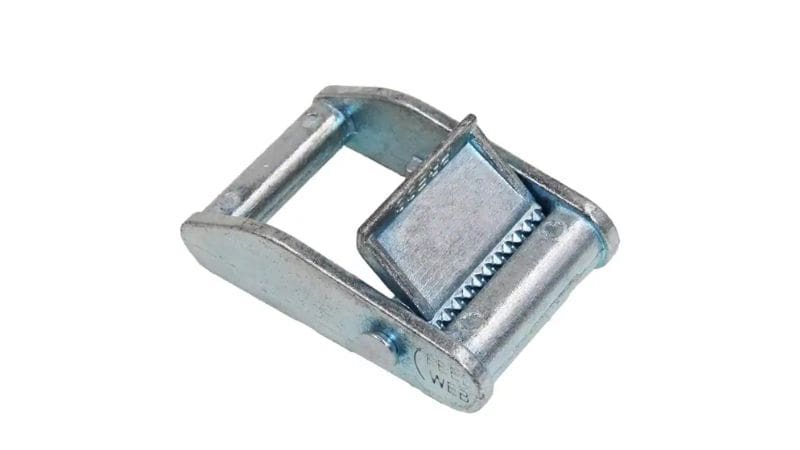
Cam buckles use a spring-loaded lever to grip the webbing. When the lever is pressed down, small teeth clamp onto the strap to hold it in place. Lifting the lever releases the tension and allows the strap to slide freely.
These are well-suited for medium-duty tasks where frequent tightening and loosening are needed. Common uses include securing loads on roof racks, fixing camping gear on the ground, or fastening equipment cases.
Unlike ratchet straps, cam buckles do not provide mechanical advantage, so they are best for lighter loads. However, they are faster to use and less bulky. Their simple design makes them reliable and easy to maintain in outdoor conditions.
Ladder Lock Buckles
Ladder lock buckles are designed for continuous adjustment of strap length. They feature a slot system where the webbing weaves through and locks when tension is applied. This prevents slipping while keeping the strap flat and secure.
They are often used as backpack or shoulderpack straps. Users can quickly tighten or loosen the webbing without detaching the buckle.
Ladder locks are valued for their durability and low profile. They do not have moving parts like prongs or levers, which reduces the risk of breakage. For applications that require frequent adjustment but not quick release, they provide an efficient solution.
Ratchet Buckle
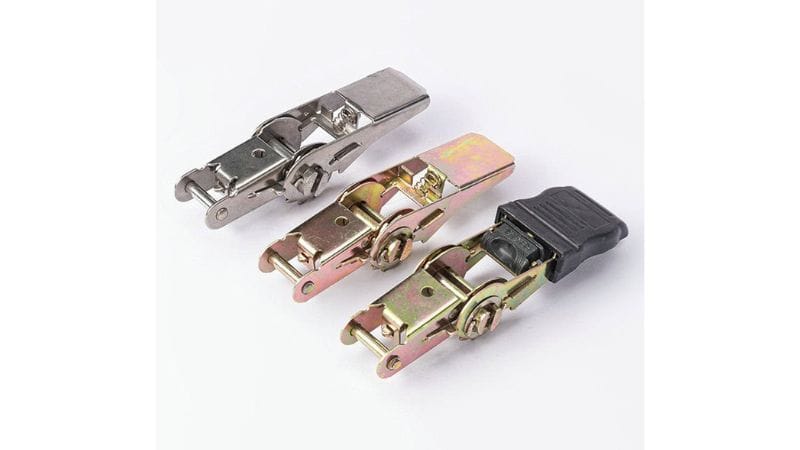
Ratchet buckle uses a geared mechanism to tighten webbing with high tension. The strap feeds through a slotted drum, and the handle is pumped back and forth to pull the webbing tighter. This design allows the user to secure loads far more firmly than with simple cinch or cam buckles.
They are typically made of steel or zinc-coated alloys for corrosion resistance. They are load-rated, often handling weights from a few hundred pounds to several thousand, depending on the model.
Ratchet buckles are common in cargo transport, moving equipment, and construction. They hold items in place during vibration and shifting, which makes them safer for securing vehicles, machinery, or stacked materials.
This type of buckle is best when safety and high load capacity are more important than speed of adjustment.
Wire Buckles
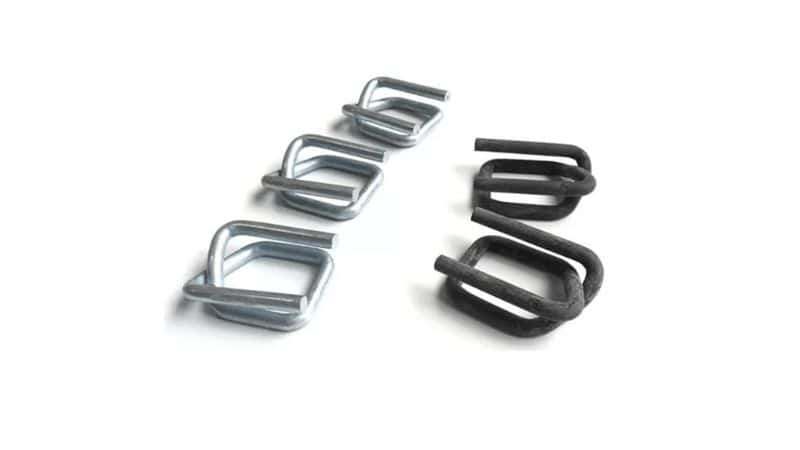
Wire buckles are lightweight connectors made from bent steel wire. They are commonly used with strapping for packaging, bundling, and shipping. Unlike flat ones, their open shape makes them quick to thread and tighten.
Most wire buckles have a self-locking design. When tension is applied, the wire grips the webbing strap and prevents it from slipping. This makes them reliable for securing loads without the need for tools.
They are often zinc-coated to resist rust, which is important in outdoor or humid environments. Wire buckles are not intended for high-strength applications but are cost-effective and practical for one-time or short-term use.
Choosing the Right Buckle for Your Application
A well-informed choice depends on the strap material, the amount of force it will handle, and the conditions it will face. Selecting carefully ensures secure fastening, durability, and ease of use.
Material Considerations
Buckles are commonly made from plastic, steel, aluminum, or zinc alloys. Each has strengths and trade-offs.
- Plastic (acetal, nylon): Lightweight, corrosion-resistant, and cost-effective.
- Steel or aluminum: Stronger and more durable.
- Zinc alloys: Offer a balance of durability and finish.
The webbing material should match the buckle type. For example, nylon webbing pairs well with acetal plastic variants, while polyester or polypropylene straps often fit better with metal ones in outdoor or industrial use.
Finish also matters. A powder-coated steel buckle resists rust, while polished zinc or anodized aluminum provides both strength and appearance. Choosing the right combination avoids premature wear.
Load Capacity
Different buckle types distribute force in different ways. A cam buckle grips with teeth and works well for tie-downs, while a side-release buckle is easier to open but not built for heavy tension.
When selecting, you should scrutinize working load limits (WLL) on the labels and categorize them accordingly:
- Light loads (under 50 lbs)
- Medium loads (50–200 lbs)
- Heavy loads (200+ lbs)
Testing the buckle with the intended strap width is essential. A mismatch can reduce holding strength and cause slipping.
Environmental Factors
Moisture, sunlight, and temperature shifts affect buckle performance. Plastic can weaken under prolonged UV exposure, while metal may corrode without protective coatings.
For outdoor gear, UV-resistant plastics or stainless steel provide longer service life. In marine settings, stainless steel or anodized aluminum resists saltwater damage better than untreated metals.
Extreme cold can make some plastics brittle, while high heat may cause warping. In these cases, metal hardware is more reliable. For fashion or indoor use, appearance may matter more than resistance, making coated zinc or polished aluminum a practical choice.
Maintenance and Safety Tips
Regular care keeps webbing buckles reliable and extends their lifespan. Users should inspect buckles before and after use to catch signs of wear, cracks, or bent parts. Replacing damaged hardware quickly reduces the risk of failure.
Keeping the surface clean improves performance. Dirt, sand, and debris can interfere with moving parts, especially in ratchet buckles. Washing with mild soap and water, then drying completely, helps prevent corrosion and buildup.
A small amount of lubricant on metal mechanisms, such as ratchets, ensures smooth operation. Plastic buckles usually do not need lubrication but should be checked for UV damage if used outdoors.
Load safety depends on proper use. Straps should be tightened enough to secure the load but not overly done, which can weaken both the webbing and the buckle. Even tension across the strap prevents uneven stress on one point.
For quick reference:
| Practice | Purpose | Frequency |
|---|---|---|
| Inspect for damage | Detect cracks, bends, or wear | Before each use |
| Clean with mild soap | Remove dirt and debris | As needed |
| Apply light lubrication | Keep moving parts smooth | Every few months |
| Store in dry conditions | Prevent rust and UV damage | After each use |
Safe storage matters. Buckles should be kept in a dry, cool place away from direct sunlight. Prolonged exposure to moisture or heat can weaken both the buckle and the webbing it supports.
Frequently Asked Questions
How do I choose the appropriate metal buckle for heavy-duty strapping applications?
Metal buckles made from steel or zinc alloys are best for heavy loads because they resist bending and wear. The choice depends on the strap width, load rating, and whether corrosion resistance is needed. For outdoor or marine use, stainless steel is often preferred.
What are the advantages of using plastic buckle clips over metal ones?
Plastic buckles are lightweight, resistant to rust, and less likely to scratch surfaces. They work well for backpacks, belts, and pet gear where extreme strength is not required. They also come in a wide range of shapes and designs for added comfort and flexibility.
Can you explain the various types of buckles available for nylon straps?
Nylon straps can be paired with side release, cam, ladder lock, or ratchet buckles. Side release buckles are common for everyday items like bags. Cam buckles allow quick tightening for light cargo, while ladder locks are valued for their adjustability. Ratchet buckles provide the highest tension for securing loads.
What factors should be considered when selecting a buckle for outdoor gear?
Durability, resistance to moisture, and ease of use in cold or wet conditions are key factors. Weight also matters, as lighter plastic buckles may be preferred for hiking gear, while metal buckles may be chosen for climbing or heavy-duty packs. Visibility features like reflective surfaces can also be useful.
How do the closure mechanisms vary among different buckle styles?
Side release buckles rely on flexible prongs that snap into place. Cam buckles use a spring-loaded lever to grip the strap. Ratchet buckles tighten through a geared handle system, while ladder locks hold tension by threading the strap through angled slots. Each system offers different levels of speed, security, and strength.