
Modern load securing systems are the combination of many intricate parts, no matter how simple or small they appear to be. The D-ring is such a component that might look simple but plays an important role in rigging systems. From industrial rigging and fall protection to luggage, restraints, and marine use, D-rings play a key role wherever controlled movement or secure attachment matters.
Definition and Design of D-Rings
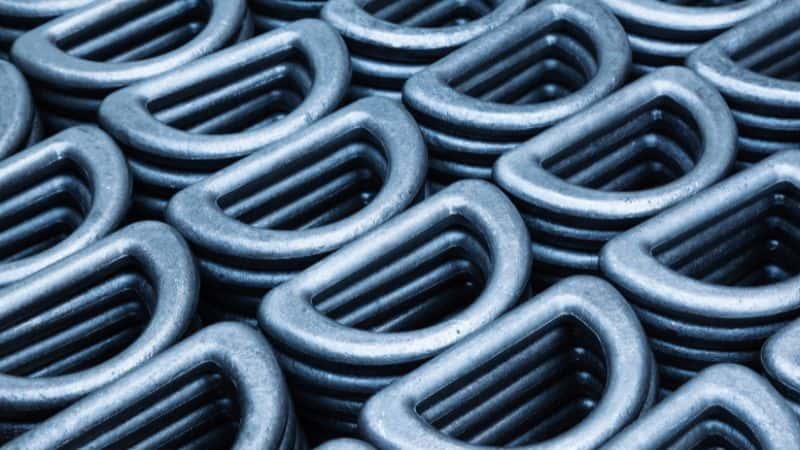
Basic Components: Bow and Shoulder
By definition, a D-ring is a loop-shaped component that takes the shape of the capital letter “D” and is used as a secure connection or attachment point in rigging, tying, or lifting systems. Its design focuses on strength, alignment, and load stability under tension, making it suitable for both static and dynamic applications in lifting, cargo restraint, and fall protection.
A D-ring’s structure centers on two functional parts that determine how it performs under load: the bow and the shoulder.
- The bow forms the curved body of the ring. It is typically forged or welded steel, engineered to bear distributed loads while maintaining rigidity. The curvature ensures enough space for attachments to move freely without causing stress concentrations. Manufacturers often heat-treat or galvanize this section to make the section more durable.
- The shoulder transitions between the flat base and the bow. This area absorbs shear and bending forces, helping stabilize the connection when the D-ring is installed to a surface or welded in place. A properly proportioned shoulder prevents the ring from twisting or spreading under high tension and extends its service life even in demanding conditions.
“D” Shape: Ideal for Load Distribution
The distinctive “D” shape is not just aesthetic. In fact, it directly affects how a D-ring handles force.
The flat side aligns along the anchored surface or mounting bracket, ensuring loads stay centered along the strongest axis. This design keeps rigging components from sliding or rotating unexpectedly, maintaining consistent alignment during lifts or tie-downs.
The curved side allows motion and flexibility for the attached hardware. This geometry evenly distributes tension along the arc while minimizing wear points on slings or straps. Unlike circular rings, D-rings limit movement to one direction, which gives operators better control and reduces side loading risks.
In lifting applications, this geometry supports balanced stress across multiple contact points, improving stability and lowering the chance of hardware failure. When used with rated bolts or weld plates, the D-ring’s flat base and curved top combine strength with predictable performance, which is essential for safe and repeatable rigging operations.
Key Specifications of the D-Ring
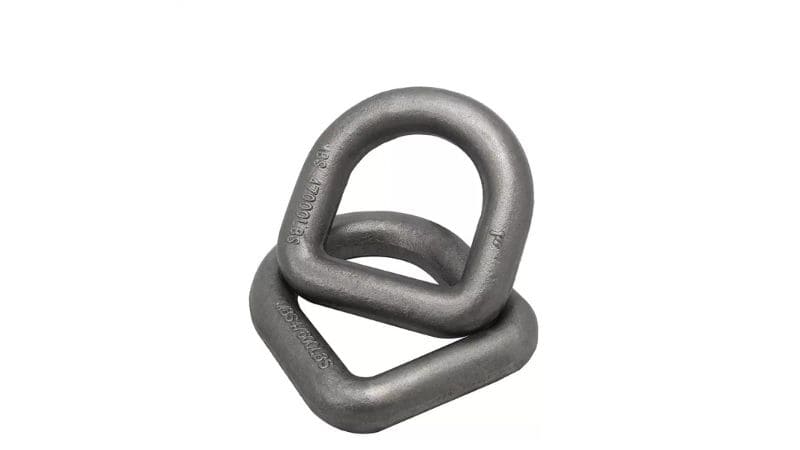
Working Load Limit (WLL) vs. Breaking Strength
The Working Load Limit (WLL) represents the maximum safe load a D-ring can carry during normal use. It is usually calculated as a fraction of the Breaking Strength, often one-third or one-fifth, depending on safety standards. This margin ensures the device remains safe even if the load shifts or vibration occurs.
Breaking Strength, sometimes called ultimate strength, refers to the load at which the D-ring will fail or permanently deform. Testing for this value involves applying tension until the metal fractures or bends beyond usable limits.
Material Grade
Material composition affects performance more than any other factor. Steel D-rings offer strength and are common in industrial or heavy-duty uses. Stainless steel resists corrosion and suits marine or outdoor settings. Alloy steel provides higher tensile strength for lifting or towing.
Surface finish also matters. Hot-dip galvanized or powder-coated finishes add protection from rust. In some cases, zinc plating provides light-duty corrosion resistance at a lower cost.
Grades follow industrial standards such as Grade 30, Grade 43, or Grade 70, which indicate tensile strength levels. Higher grade numbers generally mean stronger materials. Choosing the right material grade depends on load type, environment, and frequency of use.
Sizing: Understanding Bore Diameter and Inside Width
The D-ring’s physical dimensions determine how it fits with straps, bolts, or anchor points. Two key measurements are bore diameter (the internal opening size) and inside width (the space across the flat section).
- Bore diameter controls the size of hardware or strap that passes through the ring.
- Inside width affects how freely the strap can move and how evenly the load is distributed.
For example, a 2-inch inside width D-ring fits a 2-inch webbing strap without bunching or twisting. Larger or smaller mismatches can create uneven stress or reduce strength.
Manufacturers often provide dimension charts listing length, width, and thickness alongside rated capacities. Matching sizing accurately prevents wear and ensures load stability, especially when multiple D-rings share a load path.
D-Ring vs. Shackle: When to Use Which?
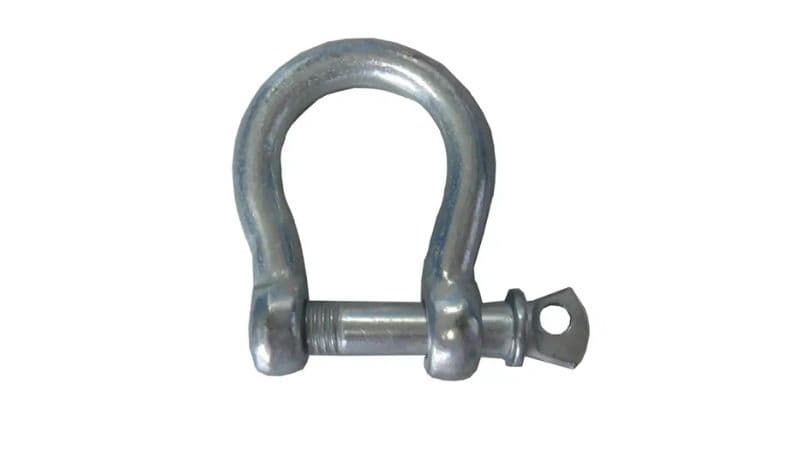
A D-ring and a shackle may look similar at a glance, but they serve different purposes depending on the job. Both connect straps, ropes, or chains to vehicles, anchors, or lifting gear, yet their designs influence how and when each works best.
A D-ring has a simple, rigid steel loop shaped like the letter “D.” It provides a strong connection point on bumpers, trailers, or tie-down systems. These rings stay fixed in place and work well for permanent or repeated connections where movement is limited.
A shackle—whether a D-shape or bow type—includes a removable pin or bolt, which makes it more versatile. Shackles attach or detach quickly from straps or ropes and are often used in lifting, towing, or recovery because they can be removed after each use.
When weight, movement, or flexibility matter, a shackle is often the safer choice. When steady, low-maintenance strength is needed, a D-ring offers a reliable and simple anchor point.
Industries and Typical Applications
Transportation: Securing Cargo on Trucks and Trailers
In transportation, D-rings act as anchoring points that keep freight from shifting during movement. Truckers, haulers, and logistics teams attach straps, chains, or ropes to D-rings welded or bolted onto trailer beds and cargo containers. This setup prevents load movement that could cause uneven weight distribution or accidents on the road.
Different D-ring materials and mounting types—such as weld-on or recessed models—allow flexibility for securing various loads. A small welded steel D-ring might support several thousand pounds of static weight, while larger ring assemblies handle heavier industrial shipments.
Fall Protection System and Safety Lanyard
Safety equipment relies on D-rings to connect lifelines, lanyards, or self-retracting devices that prevent falls from height. They are positioned on the back, chest, or sides of a harness depending on use—such as climbing, positioning, or arresting a fall.
Each D-ring must meet safety standards such as OSHA 1910.140 and ANSI Z359, which require a minimum tensile strength of roughly 5,000 pounds (22.2 kN). This ensures the hardware can withstand both static loads and sudden forces caused by a fall event.
Source the Right D-Rings from Compliant Suppliers
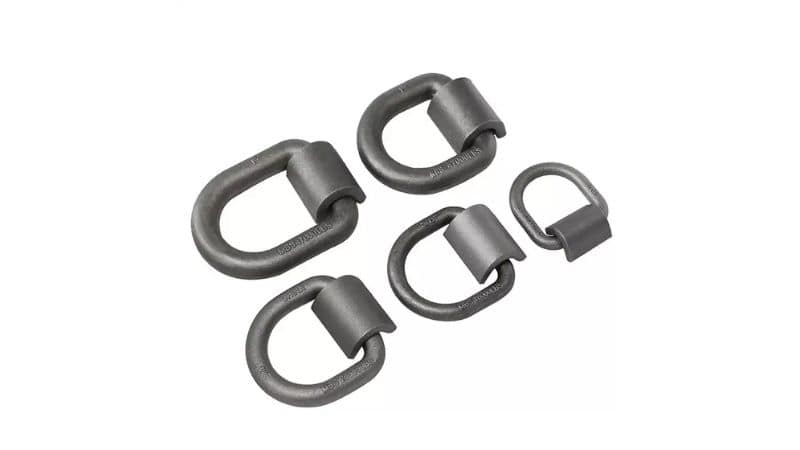
The foundation of safe rigging is using equipment that meets recognized industry standards. D-rings used for lifting, cargo restraint, or fall protection should be compliant with regulations such as OSHA and product standards like ASME B30.26.
Sourcing from a reputable supplier is your primary assurance of this compliance. Established distributors provide crucial guarantees and often hold broader certifications that underpin their reliability:
- Verified Load Ratings: They supply products with clearly listed and accurate Working Load Limits (WLL), backed by test reports.
- Quality and Safety Certifications: Look for suppliers with a ISO 9001 Quality Management System, which ensures consistent manufacturing processes. Some suppliers or their products may also hold CE, GS, or TUV certifications, which are often required for selling equipment in specific markets like Europe and indicate adherence to regional health, safety, and environmental standards.
- Material Integrity: They provide detailed material and finish specifications, ensuring the product is fit for its environment.
Investing in certified products from reputable sources ensures not only the safety of personnel and operations but also protects against liability.
Frequently Asked Questions
Can I use a D-Ring to connect two straps or slings at an angle?
Yes, but with extreme caution. When slings are connected at an angle, the actual load on the D-ring can be significantly higher than the weight being lifted or secured due to increased tension. This is known as the “angle factor.” Always consult load angle charts and ensure the D-ring’s Working Load Limit is not exceeded by the amplified forces. Using a shackle might be a more suitable option for complex multi-directional connections.
What is the difference between a weld-on and a bolt-on D-Ring, and how do I choose?
The choice depends on your equipment and application. Weld-on D-rings provide a permanent, flush-mounted solution, ideal for trailer beds and fixed structures where a low profile is needed. Bolt-on D-rings offer versatility and are easier to install or relocate without specialized welding equipment. The critical factor is ensuring the base plate and fasteners (for bolt-on) are of a strength rating equal to or greater than the D-ring itself.
My D-Ring is made of stainless steel, but it’s showing signs of rust. Why?
Stainless steel is highly corrosion-resistant, but it is not stain-proof. Surface rust can occur due to a condition called “free iron contamination,” where tiny particles of ordinary carbon steel (from tools, wire brushes, or environmental dust) embed on the surface and rust. This is often superficial. More serious corrosion can occur in environments with high chlorides (like saltwater) or when the protective chromium oxide layer is damaged. Regular cleaning is recommended to maintain its integrity.