
Moving heavy loads demands entire sets of gears for lifting and rigging. Being a part of the sets, endless slings (or endless round slings) play a quiet but critical role in many projects from factories to warehouses.
In this blog, we will introduce what you need to know when procuring these slings: How they are built, what materials shape their strength, and which types fit specific tasks.
Endless Sling Basics: Design and Features
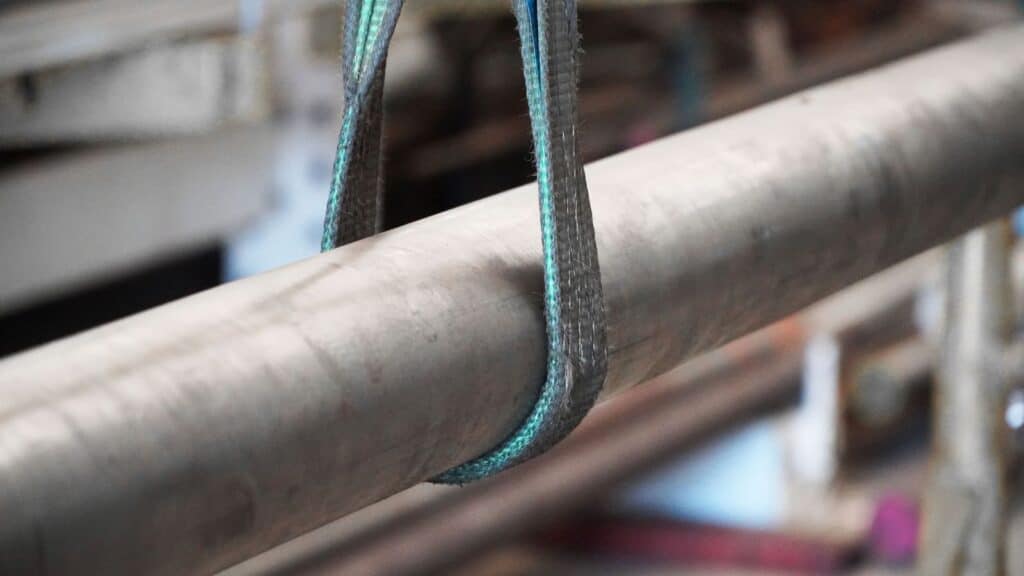
An endless sling uses a continuous loop with no eyes, hooks, or stitched ends. Manufacturers form it from webbing, rope, or yarn laid into a circle and covered or bound for strength. Because the loop has no start or stop point, tension spreads around the entire sling during a lift.
Key Features and Benefits
Endless slings offer several practical benefits in lifting work. The most important features focus on strength, flexibility, and load protection.
Key benefits include:
- Even load distribution across the full length of the sling
- No fixed ends, which reduces weak points
- Multiple hitch options without changing hardware
- Flexible positioning around irregular loads
Common Terminology
The lifting industry uses several terms for endless slings. These names often describe form, material, or standards rather than function.
| Term | Meaning |
|---|---|
| Endless sling | General term for a closed-loop lifting sling |
| Endless round sling | Referring to the specific shape of the endless sling |
| Continuous loop sling | Highlights the unbroken loop design |
| Grommet sling | Common term in rigging and heavy lifts |
Suppliers may also label them as endless webbing slings or endless rope slings. Despite different names, they all describe a sling with no ends and a continuous load path.
Construction and Materials of Endless Slings
Endless slings use synthetic fibers formed into a continuous loop with no hardware or end fittings. The choice of fiber affects strength, stretch, weight, and resistance to heat, moisture, and chemicals.
Synthetic Webbing and Fibers
These slings are primarily constructed from high-strength synthetic fibers, woven into forms that bend easily and distribute weight over a wide surface area. These fibers form web slings or round slings that bend easily and spread weight across a wide surface.
The endless design removes stitched eyes and metal parts, which reduces stress points and helps protect the load surface.
Common construction features include:
- Continuous loop with no joints or hooks
- Flat or round profile for even load contact
- Protective sleeves to limit abrasion
Synthetic webbing works well for lifting finished parts, coated steel, and fragile equipment. It also reduces damage compared to wire rope slings.
Nylon and Polyester Slings
Nylon slings and polyester webbing dominate general lifting work. Each material behaves differently under load, which affects how it performs on the job.
Nylon stretches more under tension. This stretch helps absorb shock during sudden movement. It suits lifting tasks where the load may shift, but it offers less control for precise placement.
An endless polyester round sling stretches less and holds its shape better. A polyester roundsling or flat sling keeps the load steady during lifts. Polyester also resists moisture and sunlight better than nylon.
High-Performance Sling Materials
For demanding applications, endless slings are made from advanced fibers that offer superior strength-to-weight ratios and specialized properties.
- HMPE (High Modulus Polyethylene): These fibers offer exceptional strength with minimal weight and stretch. They are highly resistant to moisture and chemicals, making them ideal for marine, offshore, and precision lifting applications. A key limitation is the low melting point, requiring protection from heat and friction.
- Aramid Fibers: Known for their excellent heat resistance and high strength with very low stretch, aramid slings are suitable for work near furnaces, welding, or in high-temperature environments. They are susceptible to UV degradation and require protective covers for extended outdoor use.
- Polypropylene: An economical and highly chemical-resistant option, polypropylene is lightweight and floats. It is best for light- to medium-duty lifts involving corrosive chemicals or marine environments, though it has lower strength and heat tolerance than polyester or nylon.
These high-performance materials command a premium price and are selected for specific job conditions where standard slings are inadequate.
Types of Endless Slings
Endless slings come in several common forms, each designed for specific load types and work conditions. Material, shape, and construction affect strength, flexibility, and wear resistance.
Round Sling
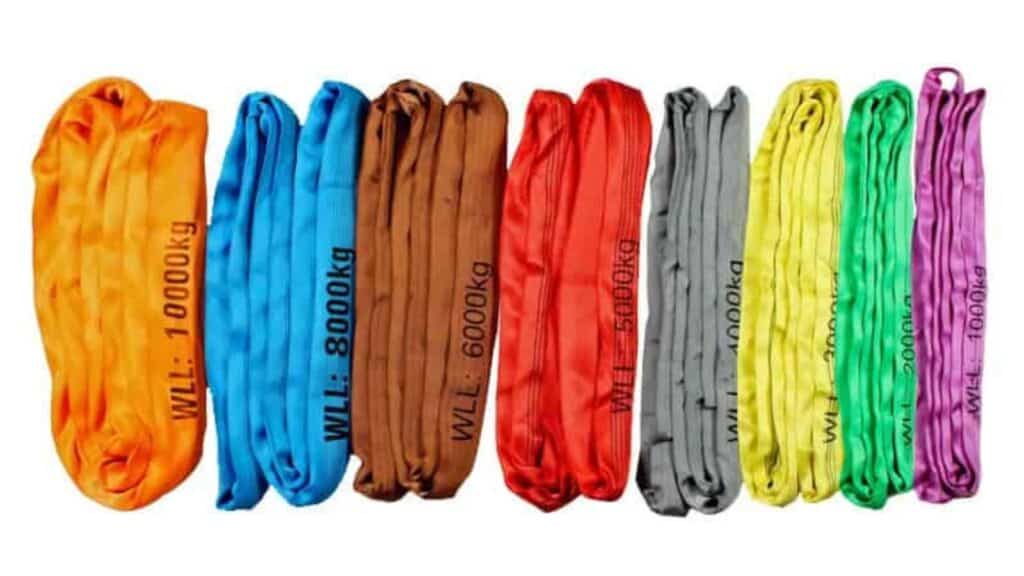
A round sling, often called a roundsling, uses load-bearing yarns inside a woven outer cover. The cover protects the core from cuts, dirt, and abrasion. This design allows the sling to bend easily around the load.
Round slings work well for lifting finished parts, pipes, and painted or polished surfaces. They spread pressure evenly and reduce surface damage.
Key features include:
- High strength-to-weight ratio
- Color-coded ratings for quick load checks
- Good flexibility for irregular shapes
They do not tolerate sharp edges without protection, so edge guards remain important.
Endless Web Sling
An endless web sling forms a continuous loop from flat woven webbing, usually polyester or nylon. Polyester versions resist stretching, while nylon handles shock loads better.
Common advantages include:
- Simple inspection for cuts and wear
- Good load control on flat or wide items
- Lower cost than some specialty slings
These slings remain popular in construction, warehousing, and general rigging.
Grommet and Rope Sling Variants
Grommet slings use wire rope or high-strength fiber formed into a continuous loop sling. Wire rope grommets are often used bare, but for applications requiring load protection or additional abrasion resistance, they can be fitted with a protective nylon or polyurethane coating. It’s crucial to distinguish these from fully synthetic-jacketed wire rope slings, which are a different product category with a permanent, sewn cover.
Rope-based endless slings handle very heavy loads and harsh conditions. They resist heat, crushing, and abrasion better than many synthetic options. This makes them common in steel mills, shipyards, and heavy fabrication.
Typical characteristics include:
- High load capacity
- Long service life in rough environments
- Less flexibility than soft slings
These variants suit jobs where strength matters more than surface protection.
Safety, Capacity, and Compliance of Endless Slings
Safe use of an endless sling depends on clear load limits, correct hardware selection, and regular care. These factors reduce risk during lifting and help the sling meet recognized safety standards in daily work.
Working Load Limit and Rated Capacity
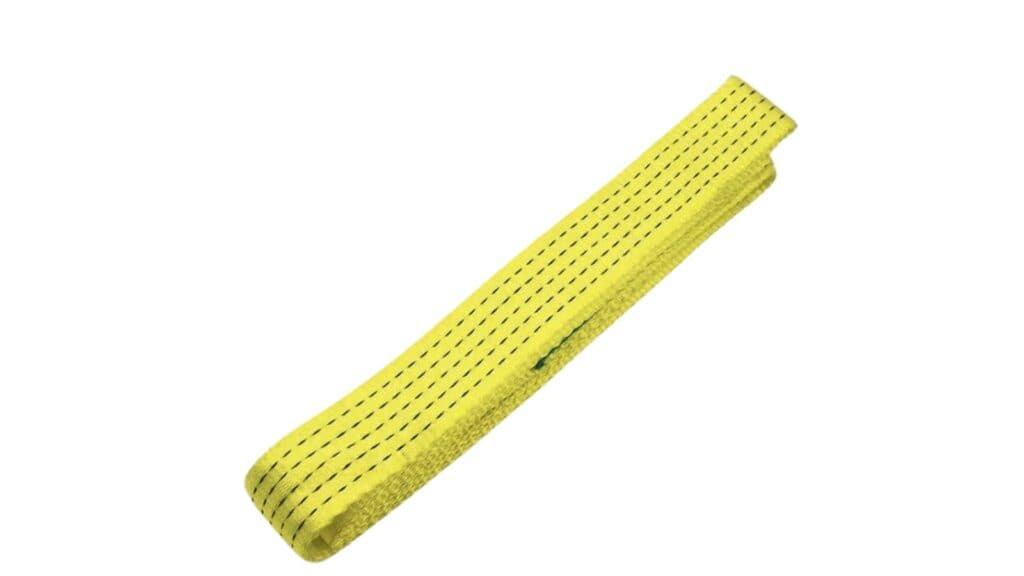
Every endless sling has a working load limit (WLL). The WLL shows the maximum weight the sling can lift under normal conditions. The rated capacity comes from lab testing and includes a safety factor, often 6:1 or higher.
Key points to verify before lifting:
- Sling material and size
- Lift method and angle
- Weight of the load
Using a sling above its WLL increases failure risk and breaks compliance with safety rules.
The Critical Role of Sling Angle
The angle at which an endless sling is used is the single most important factor in determining the actual force on the sling. As the angle from horizontal decreases (i.e., the sling legs become more horizontal), the tension on each leg increases dramatically.
- Vertical Lift (90° to horizontal): Each leg carries 50% of the load weight.
- 60° Angle: Tension per leg increases to approximately 58% of the load weight.
- 45° Angle: Tension per leg increases to about 71% of the load weight.
- 30° Angle (DANGER ZONE): Tension per leg nearly doubles to about 100% of the total load weight. A two-leg sling at a 30° angle is effectively at its full WLL with the load weight.
Always use the widest possible angle (closer to vertical) to minimize stress on the slings and hardware. The Working Load Limit (WLL) marked on the sling tag is only valid for a vertical hitch or for specific angles as rated by the manufacturer.
Proper Use with Hardware
Endless slings work with many types of lifting equipment, but hardware choice matters. Common hardware includes shackles, hooks, and lifting rings. Each piece must match or exceed the sling’s rated capacity.
Hardware must have smooth, rounded surfaces. Sharp edges can cut sling fibers under load. Shackles should sit straight and allow the sling to move freely during the lift.
Best practices for hardware use:
- Match hardware WLL to the sling WLL
- Avoid side loading on shackles
- Never knot or twist the sling
Workers can rotate the sling to change contact points. This helps reduce wear in one spot and can extend service life.
Care, Maintenance, and Durability
Regular inspection supports safe and long-term sling use. Workers should look for cuts, melted fibers, broken stitching, and chemical damage before each lift. Any sling with visible damage should be removed from service.
Environmental exposure also affects durability. Long-term sunlight causes ultraviolet degradation, which weakens synthetic fibers. Heat, moisture, and chemicals can reduce strength over time.
Care guidelines include:
- Store slings away from direct sunlight
- Keep slings clean and dry
- Follow manufacturer inspection rules
Proper care helps the sling keep its rated capacity and stay compliant with safety standards.
Conclusion
Endless round slings offer seamless, even tension distribution, protecting loads and slings, and your choice of types, materials, and applications can greatly affect performance. Therefore, you should always select the right sling that matchs your lift’s demands and source quality endless slings from reputable suppliers with credible production certifications and experience.
Frequently Asked Questions (FAQ)
Are endless slings suitable for lifting loads with sharp edges?
While their flexibility allows them to conform to shapes, endless slings (especially synthetic web and round slings) are vulnerable to cutting. They should only be used on sharp edges with proper edge protection, such as padded corner guards or wear sleeves, to prevent fiber damage.
What industries most commonly use endless round slings?
Their gentle touch and versatility make them ubiquitous across many sectors. Common applications include manufacturing (for finished goods/machinery), warehousing and logistics, construction for prefabricated elements, aerospace and automotive assembly, and any industry handling coated, polished, or delicate surfaces.
Is color-coding standard across all endless sling manufacturers?
While many manufacturers use color-coding (e.g., purple for polyester, green for nylon) to indicate material and sometimes capacity, the system is not universally standardized. You must always verify the Working Load Limit (WLL) by reading the sling’s permanent, stitched-in identification tag, not by color alone.