
Selecting the right lifting equipment for a construction project is about more than matching weight capacities — it is an operational decision that directly affects site productivity, crew safety, and project timelines. The wrong machine creates bottlenecks; the right one keeps materials moving and workers at height without interruption.
This guide focuses on the core categories of construction lifting equipment you’ll see on most jobsites: aerial work platforms for temporary access, telehandlers for material placement, and, most importantly, cranes and hoists — including electric hoists, manual hoists, and beam-mounted units — for heavy or high-rise operations.
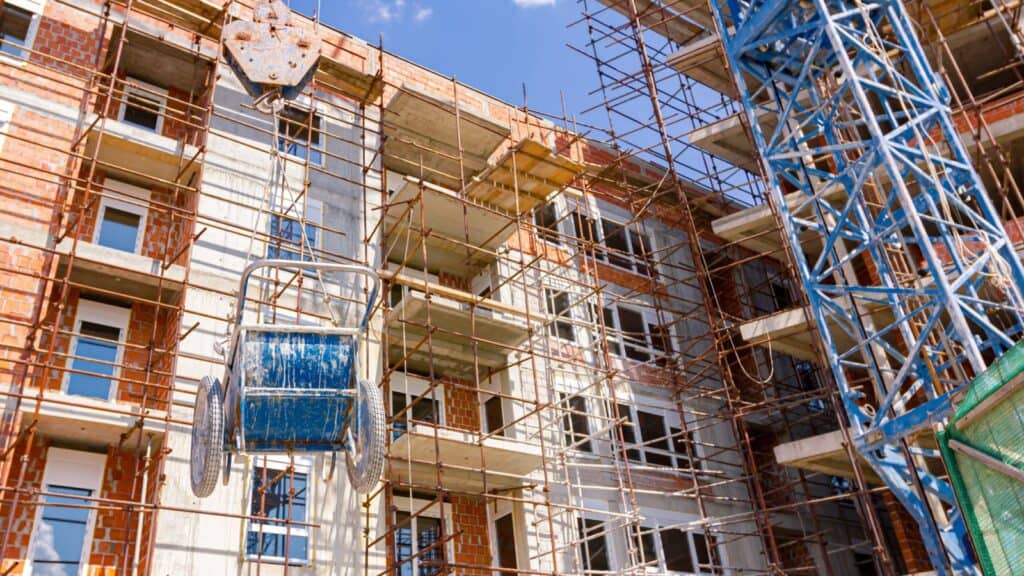
Boom Lifts and Other Elevated Lifting Equipment
Boom lifts are mobile elevating work platforms that raise workers and tools on a small platform at the end of a hydraulic arm. They provide both vertical and horizontal reach, making them useful when the work area is blocked by structures or when the machine must park away from the façade.
For tight or finished interiors where floor space and weight are constrained, compact vertical mast lifts often replace larger boom lifts and ladders.
Telehandlers and Forklifts for Material Movement
A telehandler is the most versatile material-handling machine on a construction site. Its telescopic arm extends forward and upward on a rough terrain chassis, and support great attachment flexibility at the end of its mechnical arm.
Meanwhile, standard forklifts handle the same ground-level moves faster and at lower cost, but their vertical lift tops out under 20 feet on most models, and they offer minimal forward reach. For projects where materials need to be placed at varied heights and distances across an uneven site, a telehandler is the stronger choice.
Scissor Lifts for Vertical Access
Scissor lifts raise a wide work platform straight up and down on a crisscross steel frame, providing stable vertical access for crews working on ceilings, façades, and interior finishes. They are common on construction sites, but unlike cranes and hoists, they are designed for temporary work positioning rather than heavy material lifting over long heights.
Electric scissor lifts are typically used indoors on finished floors, where low noise and zero emissions matter. Rough‑terrain scissor lifts carry larger loads on outdoor sites, but they still move only vertically and operate within relatively limited height ranges.
When Cranes and Hoists Are the Better Fit
Boom lifts, scissor lifts, and telehandlers cover a wide range of construction tasks, but some projects demand lifting capacities, heights, or sustained vertical transport that only cranes and hoists can provide. These machines are essential for high-rise construction, heavy steel erection, and large-scale concrete operations.
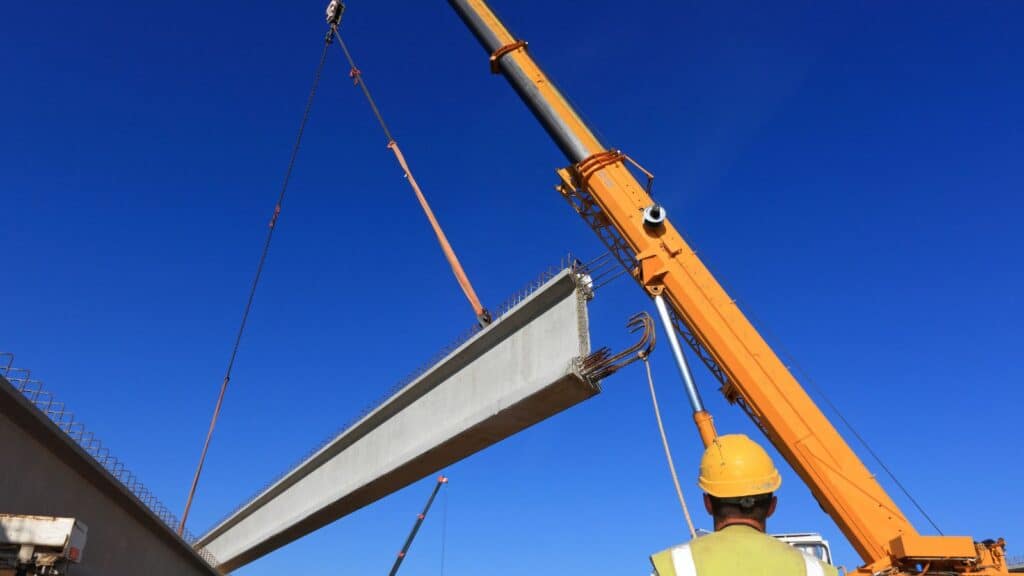
Cranes for Heavy Lifts and High-rise Projects
Cranes take over when loads are too heavy or too far out for mobile platforms and telehandlers. On high‑rise and industrial projects, they handle steel columns, precast panels, formwork, and large mechanical equipment that must be placed with precision.
Tower cranes are fixed installations that climb with the building, providing continuous lifting coverage over most of the footprint. Their long jibs and high hook heights make them the standard choice on projects that run for many months and require repetitive heavy picks at elevation.
Where flexibility is more important than permanence, mobile and crawler cranes fill the gap. Truck‑mounted mobile cranes travel on rubber tires between pick locations and even between jobsites, setting up quickly with outriggers. Crawler cranes move on tracks and can travel slowly under load on softer ground, which suits tilt‑up construction, bridge work, and plant shutdowns. Both types are typically brought in for short‑duration heavy lifts, equipment setting, or precast erection, rather than day‑to‑day material handling.
Chain Hoists and Trolleys for Localized Lifting
On many projects, a full crane is not necessary for every lift. Electric and manual hoists mounted to runway beams or monorails, using chain or wire‑rope lifting media, handle repetitive lifting in fixed bays — for example, positioning steel components, formwork, or prefabricated assemblies within a workshop or on a specific floor.
Electric chain hoists and wire rope hoists provide faster lifting speeds and higher capacities for production environments, while manual hoists are often chosen for occasional picks, tight spaces, or areas without reliable power. Beam-mounted hoists can be combined with push or motorized trolleys to move loads horizontally along an I‑beam, creating a simple, low‑maintenance alternative to a full overhead crane.
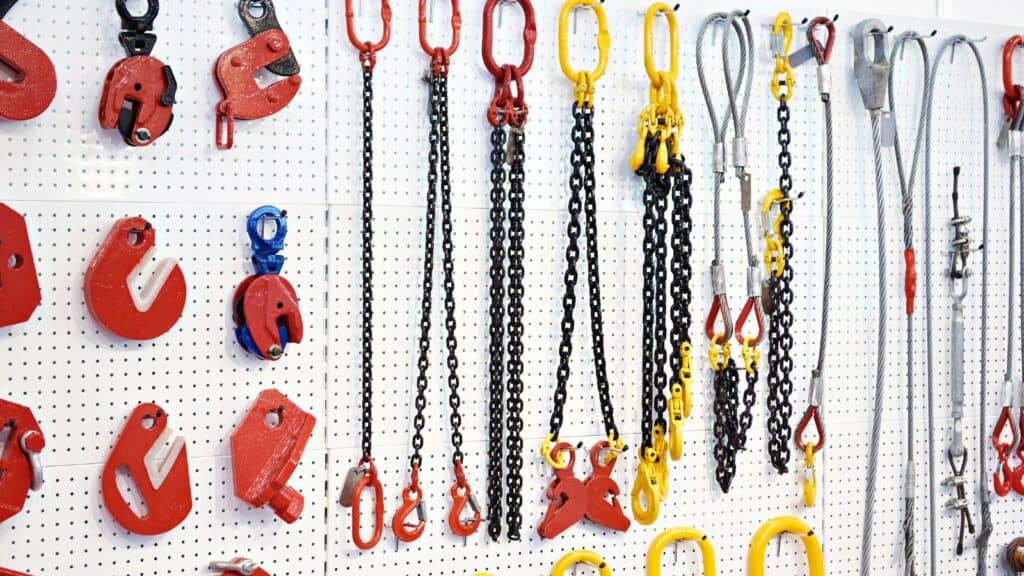
In all cases, the hoist must be matched with properly rated wire rope or lifting sling— including the correct diameter, construction, and safety factor — and inspected regularly for wear, broken wires, and corrosion.
Construction Hoists for Vertical Transport
A construction hoist is a temporary elevator installed on the outside of a building under construction. It carries workers, tools, and materials vertically between floors, reducing reliance on stairways, ladders, and crane time.
Hoists are rated by load capacity, speed, and the number of cars (single or dual). On large high-rise projects, multiple hoists may run simultaneously to keep pace with the schedule.
Unlike compact electric or manual hoists used on beams inside workshops or plant rooms, construction hoists are engineered as large, guided cars that move people and materials over the full height of a building. They do not swing or traverse, but for routine vertical deliveries they are far more efficient than tying up a tower crane.
How to Choose the Right Machine for the Job
Selecting lifting equipment starts with the work itself and narrows through a series of practical checks. The goal is to match machine capabilities to the project’s specific demands for height, capacity, terrain, and logistics.
Match the Equipment to the Task
The first question is whether the job involves lifting people, moving materials, or both.
- Personnel access (working at heights): boom lifts, scissor lifts, vertical mast lifts, or spider lifts.
- Material placement and local lifting: telehandlers, cranes, or electric/manual hoists with trolleys.
- Sustained vertical transport between floors: construction hoists or temporary elevators, which move people and materials over the full height of the structure.
Defining the task type immediately eliminates large portions of the equipment catalog and focuses the search.
Check Height, Reach, and Capacity Limits
Every piece of lifting machinery has rated limits for lift height, horizontal reach (if applicable), and platform or load capacity. Exceeding any of these limits is both unsafe and illegal under OSHA regulations.
Key numbers to confirm before selecting a machine:
- Maximum platform or hook height needed
- Horizontal outreach required to clear obstacles or span gaps
- Total weight on the platform or at the hook, including workers, tools, and materials
- Number of personnel who will be on the platform at once
Evaluate Terrain, Surface, and Site Constraints
Site conditions shape which machines will actually work once they arrive.
- Indoor projects on flat concrete suit electric scissor lifts and vertical mast lifts, while localized lifting in plant rooms or workshops is often handled by beam‑mounted electric or manual hoists running on runway beams.
- Unpaved outdoor sites with grades call for rough‑terrain models with pneumatic tires, and exposed steelwork may require hoists and trolleys that are protected against dust, moisture, or corrosion.
Space matters too as they directly restrict the size of the equipment.
- Narrow doorways, low overhead clearance, and tight aisles limit machine width and transport height, and they also affect how far a hoist trolley can travel along a beam before reaching an end stop.
- Bridges, ramps, and parking structures impose weight limits that must include the lifting equipment, supporting steel, and any loaded wire‑rope or lifting cable systems.
Consider Power Source and Transport
Electric machines work best indoors or in emission‑sensitive areas, and the same applies to electric chain hoists and wire‑rope hoists mounted on beams or monorails.
Diesel and dual‑fuel units provide the power needed for rough terrain and heavy mobile loads, while manual hoists remain useful where no reliable power supply is available or where only occasional lifts are required.
Transport logistics also affect the decision. Larger boom lifts and cranes require flatbed trailers and wide‑load permits, whereas compact hoists, trolleys, and wire‑rope assemblies can usually be shipped as palletized components and assembled on site. Planning how equipment will be delivered, installed on the supporting structure, and later removed is as important as choosing the lifting capacities themselves.
Talk to Grandlifting About Your Next Project
Choosing the right lifting concept on paper is only the first step. Grandlifting designs and supplies electric hoists, manual hoists, beam‑mounted trolleys, and matching wire‑rope solutions for real jobsites, helping contractors turn lifting plans into safe, reliable hardware.
If you are planning a new construction project or upgrading an existing facility, our engineers can review your drawings and recommend a complete hoist and lifting cable package that fits your loads, structures, and standards.
Frequently Asked Questions
What are common signs that a wire rope or lifting cable needs to be replaced?
Typical indicators include broken wires, visible corrosion, kinks or crushed sections, flattened strands, and diameter reduction compared to the original specification.
Can the same hoist be used for both personnel and material lifting?
In most cases, no. Hoists and platforms intended for personnel lifting must be specifically designed, rated, and certified for that purpose, with additional safety devices.
What factors influence the duty rating of an electric hoist?
Key factors include average load as a percentage of rated capacity, number of starts per hour, total operating hours per shift, and ambient temperature.
Can Grandlifting support compliance with local lifting standards?
Grandlifting designs and selects equipment in line with relevant national and international lifting standards, and can provide documentation to support site safety and compliance reviews.