
A lifting chain is a critical tool for safely moving, holding, or performing heavy-duty tasks. Its strength and control are vital in construction, manufacturing, and various industrial settings.
This article explains how lifting chains work, detailing their main types, grades, and configurations with chain slings and attachments. It also covers essential guidelines for safe selection and inspection to ensure ongoing reliability on the job.
Definition and Core Components
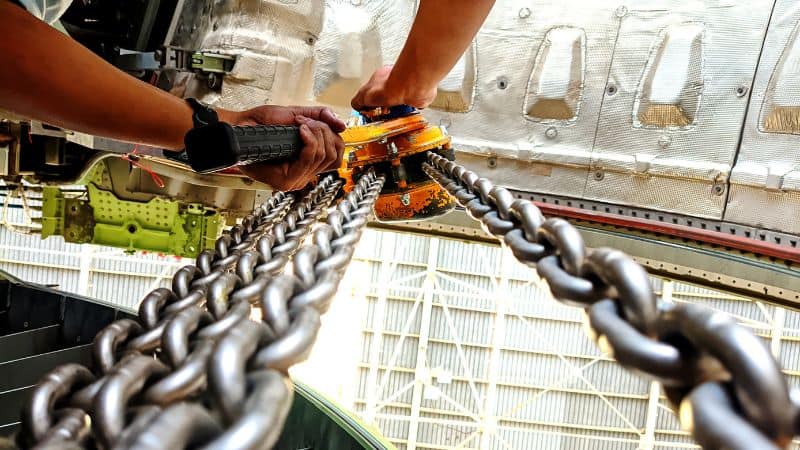
What Makes a Lifting Chain Unique
A lifting chain uses steel links made for overhead lifting operations. Only specific grades meet this role, most often Grade 80, Grade 100, or Grade 120. These grades offer known strength levels and tested working load limits.
Unlike tie-down or transport chains, a lifting chain must handle shock loads, vertical force, and repeated use. Each link provides flexibility while keeping strength across the full length. The chain also allows short adjustments without cutting or splicing.
Primary Components of a Chain Sling System
A lifting chain system includes more than the chain itself. Each part affects safety and performance during industrial lifting.
Core components include:
- Alloy steel chain links with a rated working load limit
- Master links that connect the chain to a hook or hoist
- End fittings such as grab hooks, sling hooks, or foundry hooks
- Shortening devices that adjust chain length without knots
Typical Industrial Applications
Companies use lifting chains in many industrial settings where weight, heat, or rough use limits other options. The chain works well with cranes, hoists, jib arms, and other material handling equipment.
Common uses include:
- Overhead lifting of machines, parts, and various cargoes
- Material handling in plants, yards, and warehouses
- Rigging for construction, energy, and utility work
- Foundry and high-heat lifts where synthetic slings fail
Chain slings also support single-leg, two-leg, and multi-leg lifts. This setup improves load balance and control. Workers often choose chain when sharp edges, abrasion, or hot surfaces could damage other lifting tools.
Types of Lifting Chains
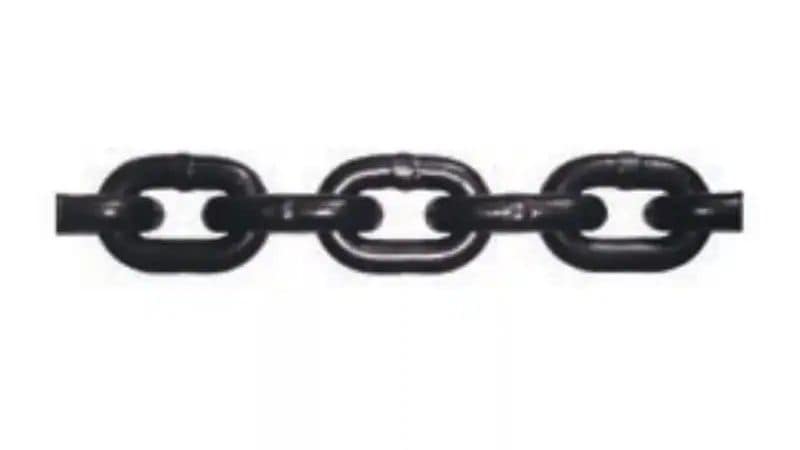
Alloy Steel Chain Grade and Its Advantages
Alloy steel chains handle most overhead lifting tasks. Manufacturers heat-treat this steel to deliver high strength and resistance to wear. Only specific grades qualify for overhead lifting under common safety standards.
Approved alloy grades include Grade 80, Grade 100, and Grade 120. Each step up in grade increases capacity without increasing chain size.
A grade 100 chain often replaces larger lower-grade steel chains. It lifts more weight while reducing sling size. Compared to synthetic slings, alloy steel chains handle heat, sharp edges, and rough use better.
Stainless Steel Lifting Chains
Stainless steel lifting chains serve specialized environments. They resist corrosion in wet, chemical, or marine settings where rust causes fast failure.
These chains use grades like 50 or 60/63 stainless steel. They lift less weight than alloy steel chains of the same size. Operators choose them for exposure, not strength.
Stainless steel chains work well in food plants, coastal facilities, and wash-down areas. They clean easily and maintain surface integrity. For heavy overhead lifting, alloy steel chain remains the stronger option.
Users must confirm load ratings and markings. Not all stainless steel chains qualify for overhead lifting.
Welded vs. Non-Welded Chains
Most lifting chains use welded links. Welding closes each link and allows the chain to carry rated loads safely. Welded steel chains meet lifting standards and allow full strength across the link.
Non-welded chains lack a closed link. They appear in light-duty or decorative uses, not lifting. These chains fail under shock or dynamic loads.
For overhead lifting, welded construction is mandatory. This applies to alloy steel chain and approved stainless options. Non-welded chains should never replace lifting-grade equipment.
Chain Sling Configurations
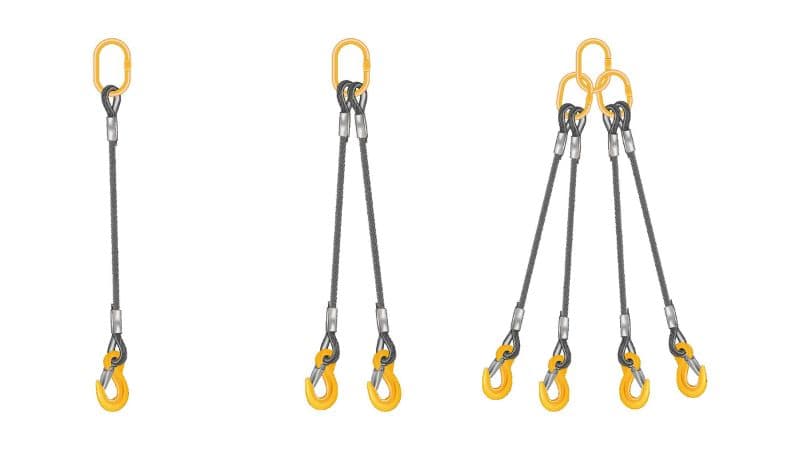
Single Leg Chain Sling
A single leg chain sling uses one chain connected to a master link at the top and a hook at the bottom. It works best for straight, vertical lifts where the load has one strong lifting point.
This type offers simple rigging and clear load control. It places all force on one chain, so the working load limit stays lower than multi-leg options.
Operators often use single leg chain slings for machinery, steel parts, and compact loads. Some chain sling assemblies allow the hook to connect back to the chain, forming an endless chain, but this does not increase rated capacity.
Double Leg Chain Sling
A double leg chain sling has two chains attached to one master link. Each leg connects to a separate lifting point on the load.
This setup improves balance and reduces load swing. It also spreads force across two legs, which increases capacity when the leg angles stay within rated limits.
Double leg chain slings suit loads with two pick points, such as beams or frames. Leg angle matters. As the angle widens, stress rises, and the working load limit drops.
Triple Leg Chain Sling
A triple leg chain sling uses three chains connected to a single master link. It works well for loads with three lifting points or uneven weight.
Two legs usually carry most of the load, while the third helps stabilize the lift. This setup improves control during hoisting and placement.
Rigging requires careful adjustment to keep all legs engaged. If one leg goes slack, the load shifts to the other two. Triple leg chain slings often support large fabrications and irregular shapes.
Four-Leg Slings
Four-leg slings use four chains connected to one master link. They support heavy loads with four lifting points and improve overall stability.
In most lifts, only two or three legs carry the full load at once. The extra leg helps level and steady the load rather than increase capacity.
Four-leg slings appear often in heavy construction and plant work. They handle large chain sling assemblies where control matters more than speed. Proper inspection and equal leg length remain critical.
Common Attachments and Rigging Hardware
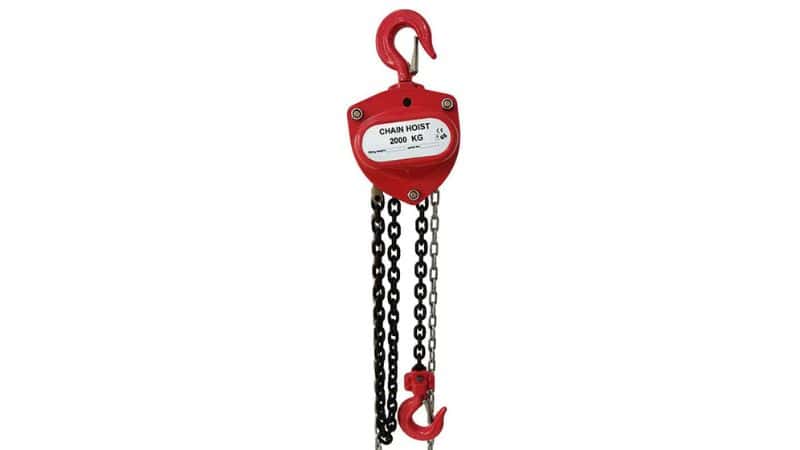
Master Links and Oblong Master Links
Master links connect the lifting chain to a crane hook or hoist. They sit at the top of the sling and carry the full load. Manufacturers size them to match specific chain grades and diameters.
Oblong master links allow multiple chain legs to connect to one point. Their longer shape helps spread the legs and reduce side loading. This design improves balance on multi-leg slings and reduces wear at the connection.
Key points to check:
- Match the master link grade to the chain grade.
- Confirm the working load limit (WLL) for single or multi-leg use.
- Inspect for wear, stretch, or cracks before each lift.
Foundry Hooks and Hook Types
Foundry hooks handle heavy loads with large lifting points, such as castings or bars. Their wide throat makes it easier to seat thick material without forcing the hook.
Several hook types serve different needs. Self-locking hooks close under load and reduce the risk of the chain slipping free. Clevis sling hooks attach directly to the chain and allow easy replacement without special tools.
Common hook options include:
- Foundry hooks for wide or hot loads
- Self-locking hooks for added load security
- Clevis sling hooks for direct chain connection
Each hook must match the chain size and grade.
Shackles and Shortening Hooks
Shackles connect lifting chains to loads, lugs, or other rigging gear. Bow shackles allow more movement, while anchor shackles work well for straight-line pulls. Pin type and body size affect how the load transfers through the shackle.
Shortening hooks adjust chain length without cutting or re-rigging. They help level uneven loads and fine-tune lift height. These hooks must seat the chain correctly to maintain the rated capacity.
Best practices include:
- Never side-load a shackle unless rated for it.
- Use shortening hooks designed for the specific chain grade.
- Avoid knots, twists, or makeshift adjustments in the chain.
Choosing and Using Lifting Chains Safely
Working Load Limit and WLL
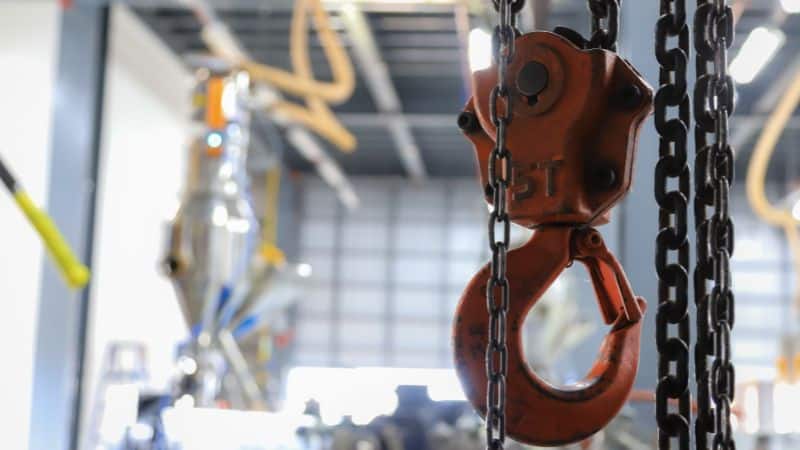
The working load limit (WLL) states the maximum weight a lifting chain can handle during normal use. The tag on the chain lists the WLL, grade, and maker. Operators must never exceed this value.
ASME B30.9 requires that all lifting chains used overhead meet approved grades and show clear identification. Using an unmarked chain breaks this rule and raises risk.
WLL changes with how the rigging chain is used. Single-leg lifts allow the full rated WLL. Multi-leg lifts reduce capacity because each leg carries part of the load at an angle.
Common factors that reduce WLL include:
- Sling angles below 60 degrees
- Shock loading from sudden crane movement
- Worn links or damaged rigging hardware
Load Distribution Best Practices
Good load distribution keeps the load stable and protects the chain and hardware. Operators should place the load’s center of gravity directly under the crane hook.
Even leg length matters. Uneven legs cause one chain to carry more weight, which can exceed its WLL. Adjust links or use shortening hooks to balance the load.
Key load securing steps include:
- Use matched chain grades and fittings
- Keep sling angles as steep as possible
- Protect chains from sharp edges
Balanced loads lift smoothly, reduce swing, and limit stress on rigging hardware during operation.
Inspection Criteria
The durability and reliability of your lifting slings are not guaranteed by initial quality alone. To maintain both safety and efficiency across all your lifting needs from a factory floor to a construction truck, a strict protocol of regular inspections is necessary. Choosing the right chain is the first step, but proper care determines its long-term load-bearing performance.
A thorough inspection must occur before each use (visual) and at least annually by a competent person (detailed). Document all findings.
What to Look For:
- Wear & Stretch: Measure chain links periodically. For lifting slings, any link elongation of 5% or more from its original length indicates material fatigue and requires immediate removal.
- Surface Damage: Look for nicks, gouges, and cracks. Pay special attention to bearing points and contact areas. Surface cracks are a critical defect.
- Link Deformation: Any bent, twisted, or otherwise deformed links must be removed. This is a sign of demanding lifting or overload.
- Corrosion & Pitting: Heavy rust or deep pitting reduces the metal’s cross-section and strength. While surface rust may be cleaned, extensive pitting compromises integrity.
- Heat Damage: Blue or black oxide scaling, or a “tempered” appearance, indicates exposure to excessive heat. This changes the steel’s properties and reduces the working load limit.
- Component Integrity: Check master links, hooks, and shackles for wear at contact points, throat opening, and latch function.
Regulatory Considerations: ASTM, DIN, and ASME
Industry standards define how a lifting chain must perform and how users must manage it. ASTM standards set material and test rules for alloy steel chains used in lifting. DIN standards cover design, dimensions, and load ratings used across many global markets.
In the United States, ASME B30.9 guides the use and inspection of slings, including chain slings. It sets rules for inspection types, removal criteria, and record keeping.
Users must match the chain grade, size, and standard to the lift. Mixing non‑matching parts can void certification and increase risk.
A Rigging Manufacturer for Your Lifting Equipment Needs
In summary, a lifting chain is a fundamental, robust solution for the most demanding material handling challenges. Its safe and effective performance depends on informed selection, proper use, and sourcing from a reliable supplier.
Ready to ensure your next lift is secure? Explore Grandlifting’s extensive catalog of certified lifting chains, slings, and rigging hardware. Our experts can help you select the right grade and configuration for your specific application.
Browse our lifting chain collection now and equip your team with reliability and safety.
Frequently Asked Questions
Can we mix lifting components from different manufacturers?
It is strongly discouraged and often violates standards. An assembly is only rated as a complete, tested unit. Mixing untested components voids manufacturer certifications and introduces unknown risks. Always use matched assemblies or have new configurations engineered and certified by a qualified supplier.
What is the cost difference between a cheaper, non-specification chain and a rated lifting chain?
The initial purchase price of a normal utility chain is generally lower, but this is a false economy for lifting applications. Rated lifting chains (Grade 80/100/120) are engineered, heat-treated, and proof-tested to a verifiable standard, with a known Working Load Limit. Using a non-specification chain for overhead lifting introduces extreme liability, risks catastrophic failure, and violates OSHA and ASME regulations. The true cost includes potential fines, insurance implications, equipment damage, and severe safety hazards. The investment in a certified lifting chain is fundamentally a purchase of risk mitigation and operational reliability.