
Moving heavy loads in a tight space poses many challenges to management and operation, and many factories and warehouses rely on one tool to lift and guide materials along a fixed path without extra handling: the trolley hoist.
A trolley hoist is a lifting device that raises a load and moves it along a beam using a rolling trolley. Understanding how this system works helps teams choose the right type, use it in the right setting, and keep it running safely. The sections ahead break down how trolley hoists differ, where they fit best, and what matters most during setup and care.
Trolley Hoist – An Overhead Lifting Solution
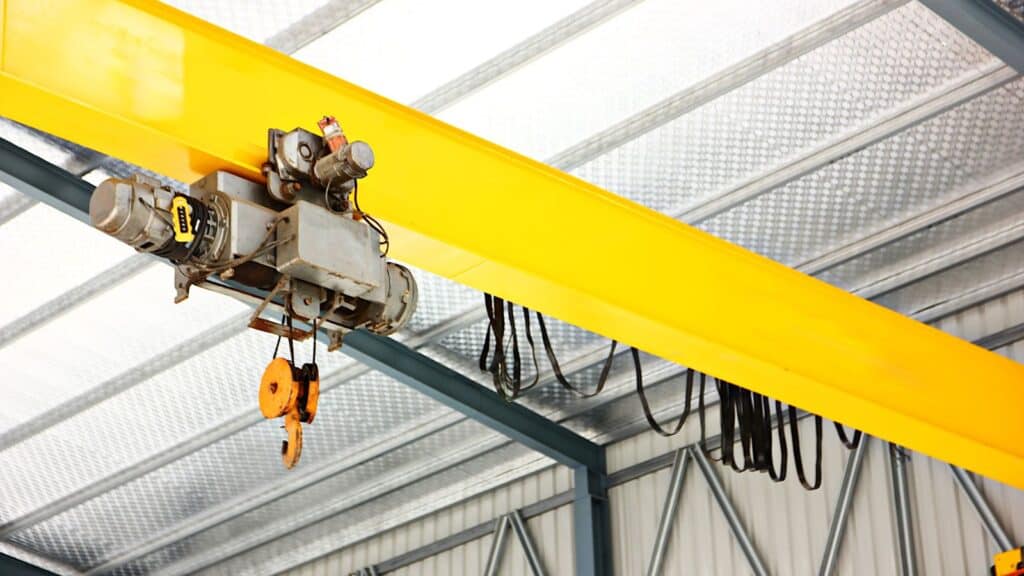
As the name implies, a trolley hoist is actually a combination of two main components: a trolley and a hoist. It combines vertical lifting with controlled horizontal movement on a fixed beam, which supports safer overhead handling of loads by reducing manual repositioning and keeping movement predictable.
What Is a Hoist?
A hoist is a type of lifting equipment that lifts and lowers a load in a vertical direction. It uses a motor or manual force to move a chain or wire rope. The hoist carries the full weight of the load during lifting.
Hoists include key parts such as a lifting motor, a load chain or wire rope, a brake, and a hook. These parts work together to lift, hold, and lower materials in a controlled way.
Combined Functionality: Hoist and Trolley
On their own, hoists only lift straight up and down and do not move loads sideways. A trolley hoist, however, links a hoist to a trolley that travels along a horizontal beam. This pairing allows one system to lift and position materials along a fixed path.
The trolley rolls on wheels fitted to an I-beam or H-beam. It can move by hand, by chain, or by an electric drive. Operators can lift a load, move it across the beam, and set it down without changing lifting points.
This combined motion improves control and reduces manual handling. It also helps place loads with better accuracy, which is important in repetitive tasks of overhead crane systems.
Key Components of a Trolley Hoist
A trolley hoist consists of several core parts that work as one system. Each part supports safe and smooth operation. These components allow hoists and trolleys to function together as a single lifting solution. The design keeps movement stable and limits load swing during travel.
Main components include:
| Component | Purpose |
|---|---|
| Hoist motor or hand chain | Provides lifting force |
| Load chain or wire rope | Supports the load |
| Hook and latch | Connects to the load |
| Trolley frame | Holds the hoist on the beam |
| Trolley wheels | Enable horizontal travel |
| Braking system | Holds the load in place |
Types of Trolley Hoists
Trolley hoists differ by how they move, how they lift, and how often they operate. The power source and lifting medium play the biggest role in capacity, control, and daily use.
Electric Trolley Hoist
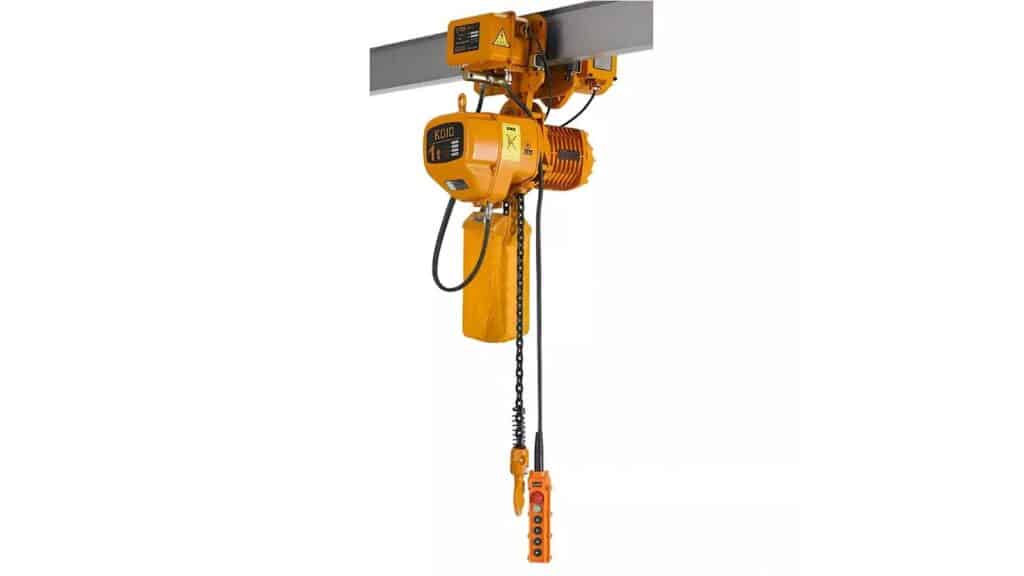
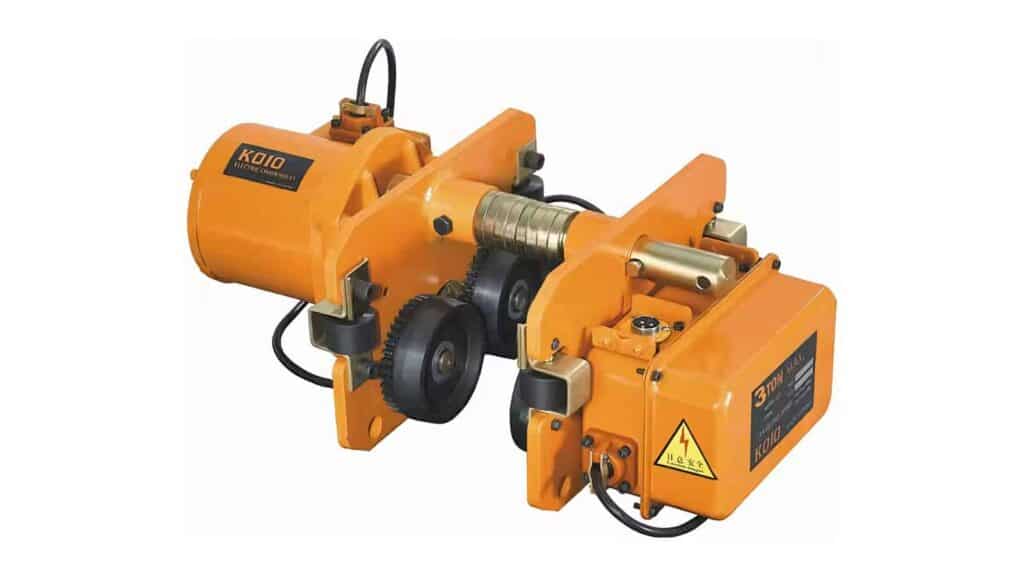
An electric trolley (or motorized trolley) hoist uses motors to lift and move loads along a beam. One motor powers the electric hoist, while another drives the trolley wheels.
Electric hoists suit frequent lifting and heavier loads. Workers can control speed and direction with a pendant or remote, which improves accuracy and reduces strain. Many models include limit switches and braking systems for safer operation.
Electric chain hoists and wire hoists work well in warehouses, production lines, and maintenance areas. They handle repeat tasks where consistent speed and precise placement matter more than portability.
Manual Trolley Hoist
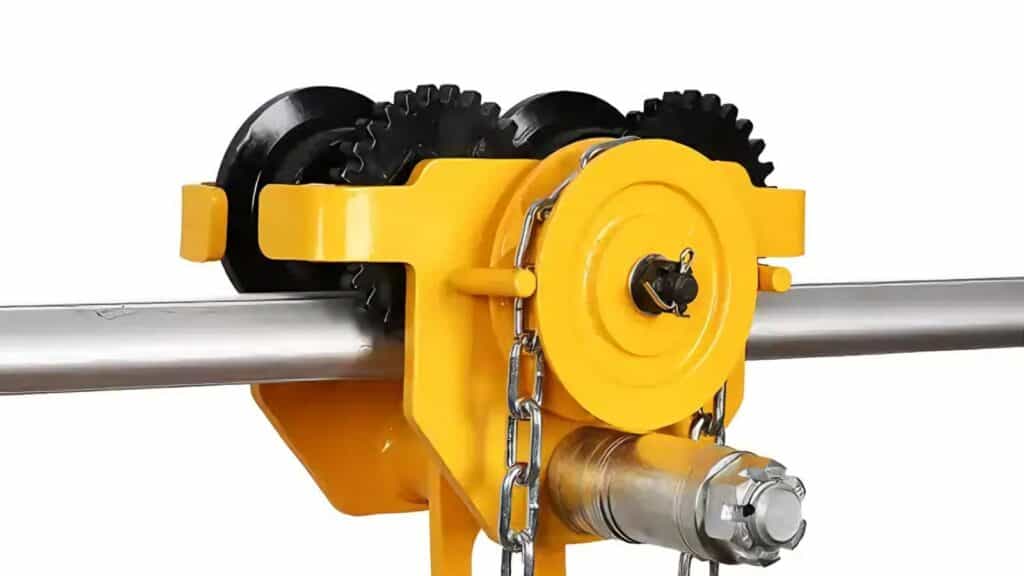
A manual trolley hoist relies on hand power instead of electricity. The manual hoist lifts the load using a hand chain, while the manual trolley moves the hoist along the beam by pushing or pulling.
Although manual systems demand more physical effort and move slower than electric hoists, they fit maintenance work, small workshops, backup lifting, or remote or temporary locations where electricity is not available.
Chain Hoist and Wire Rope Hoist Options
Trolley hoists also differ by lifting medium: load chain or wire rope. Each option affects durability, lifting height, and maintenance needs.
| Feature | Chain Hoist | Wire Rope Hoist |
|---|---|---|
| Lifting medium | Load chain | Wire rope |
| Best for | Short lifts, compact space | Long lifts, higher capacity |
| Maintenance | Simple inspection | More complex |
| Common use | Chain hoists in workshops | Heavy industrial lifting |
Chain hoists handle moderate loads with a compact design. Wire rope systems support higher capacities and longer travel but require more space and care.
Applications and Use Cases
A trolley hoist supports vertical lifting and horizontal movement along a beam or track. It suits tasks that require controlled lifting, steady travel, and accurate load placement across short or long distances.
Heavy-Duty Lifting Scenarios
Trolley hoists handle heavy-duty lifting where loads weigh several tons and need precise control. Steel plants use them to lift beams, coils, and plates from one station to another. Construction sites rely on them to raise concrete forms, generators, and structural parts.
Electric trolley hoists work best in these settings because the loads are almost consistently heavy. Therefore, reducing manual effort and improving control take priority.
Common heavy-duty uses include:
- Moving steel and metal components
- Lifting large machinery during installation
- Handling concrete and prefabricated parts
Wire rope hoists often support higher capacities than chain hoists, assuming operators follow rated load limits and use proper controls.
Industrial and Commercial Environments
Factories use trolley hoists to move parts between workstations on overhead beams. Automotive plants lift engines and frames during assembly. Warehouses use them to position pallets or heavy crates without floor traffic.
Commercial spaces also use trolley hoists. Theaters lift lighting rigs and stage equipment. Maintenance teams use them in power plants and water facilities to service pumps and motors.
In these environments, electric trolleys improve speed and consistency. Manual trolleys are also viable for lighter loads or areas with limited power.
Typical environments include:
- Manufacturing plants
- Warehouses and distribution centers
- Maintenance bays and service areas
Combining Lifting and Transporting
Trolley hoists support lifting and transporting materials in one continuous process. This setup reduces the need for forklifts or extra handling. Such convenient features make it a perfect option for moving raw materials, finished goods, and tools.
Materials often handled include:
- Pallets and containers
- Machine parts and tools
- Construction and maintenance supplies
This system improves workflow by keeping loads suspended and guided during transport.
Selection Considerations
Selecting a trolley hoist can be complicated. This section will comb through all the essential factors including lifting demands, movement needs, and working conditions, etc.
Evaluating Load Capacity
Load capacity ranks as the most critical factor. The hoist and trolley must support the maximum weight of the load plus rigging, not just the average lift.
Operators should select a rated capacity that exceeds the heaviest expected load. Many facilities add a safety margin of 10–20% to reduce strain and wear.
Key points to verify:
- Rated load of the hoist and trolley match.
- Beam and supporting structure handle the same or higher load.
- The load stays centered to avoid uneven stress on the trolley wheels.
Choosing Between Electric and Manual Options
Electric and manual hoists serve different needs. The choice depends on load weight, travel distance, and frequency of use.
Manual hoists rely on hand force to lift or move loads. They work best for lighter loads, short distances, and low-use tasks. They cost less and require minimal power infrastructure.
Electric hoists use motors for lifting, travel, or both. They suit heavier loads and repeated cycles. They reduce worker effort and improve control.
Understanding Duty Cycle and Environmental Needs
Duty cycle describes how often and how long a hoist operates. A hoist used all day needs a higher duty rating than one used a few times per shift.
Light-duty hoists fit maintenance or occasional lifting. Heavy-duty models support production lines or continuous handling.
Environmental conditions also matter. Dust, moisture, heat, or outdoor use require added protection.
Consider these conditions:
- Indoor vs. outdoor use
- Exposure to water, chemicals, or debris
- Temperature range and ventilation
For the specific features and designs, it is recommended to consult the lifting equipment manufacturer before purchase.
Installation, Maintenance, and Safety
Proper setup, regular care, and clear safety rules keep a trolley hoist working as designed. Each area affects load control, equipment life, and operator safety in daily use.
Installation Best Practices
For safety and performance, always have your trolley hoist installed by qualified professionals. Here’s what a proper installation should include:
- Beam Compatibility: Verified that the support beam is the correct type and can handle the hoist’s maximum capacity.
- Secure Mounting: Ensured the trolley wheels align perfectly with the beam for smooth rolling without binding.
- Pre-Use Testing: Included a no-load test to check all movements, brakes, and safety limits before putting the hoist to work.
Routine Maintenance Procedures
Regular care prevents breakdowns and ensures safety. Think of maintenance in two ways:
1. Quick Daily Checks (Operator Tasks):
- Visually inspect the chain/rope and hook for any damage.
- Test the brake by lifting a light load a few inches.
- Listen for unusual noises during operation.
2. Scheduled Professional Service:
- Follow the manufacturer’s schedule for in-depth inspection and lubrication of wheels, bearings, and gears.
- Keep a simple log of any issues and service dates. This helps track wear and is often required for compliance.
Important Safety Standards
Operators must follow recognized standards such as OSHA rules and ASME B30 requirements for overhead hoists. These standards define inspection intervals, load limits, and operating practices.
Never exceed the rated capacity shown on the hoist nameplate. Overloading damages the braking system and can cause sudden failure.
Train operators to avoid side pulling and sudden starts or stops. Controlled movement reduces load swing and protects trolley wheels and beams.
Use lockout procedures during maintenance. Disconnect power before working on electrical parts, brakes, or lifting components to prevent accidental operation.
Enhance Your Operations with Quality Trolley Hoists
Understanding the components, types, and applications of trolley hoists is the first step toward transforming your workflow—improving efficiency, safety, and control in your facility.
Why navigate this choice alone?At GrandLifting, our experts are here to help you select the perfect trolley hoist system matched to your project needs. Contact us today!
Frequently Asked Questions
Can a trolley hoist be used on any type of beam?
No. Trolley hoists are designed for specific beam types and flange widths, typically I-beams or H-beams. It is critical to ensure the trolley wheel spacing matches the beam flange and that the beam’s rated capacity exceeds the total weight of the hoist and load. Always consult the manufacturer’s specifications.
Can I convert a stationary hoist into a trolley hoist?
Often, yes. Many hoists are designed to be mounted onto a separate trolley kit. It is essential to use a compatible trolley from the same manufacturer or one certified for use with your specific hoist model, ensuring all components are rated for the intended load capacity.
What does ‘duty cycle’ mean when selecting an electric trolley hoist?
Duty cycle refers to the operating time relative to rest time within a given period (e.g., 10 minutes). It classifies how intensively the hoist can be used (e.g., light, medium, heavy, or continuous duty). Choosing a hoist with a duty cycle matching your operational frequency prevents overheating and premature wear.