
Manual material handling tasks place daily strain on workers across many industries. Heavy loads, tight spaces, and repeated motion increase the risk of injury and slow down work. Therefore, manual material handling equipment is introduced to help workers lift, carry, push, pull, or move materials with less physical effort and lower injury risk.
This topic matters because good handling is beneficial to both the productivity of the job and the safety of the workers. The sections ahead explain how these different types of material handling equipment work, the main types in use today, and best practices for their use.
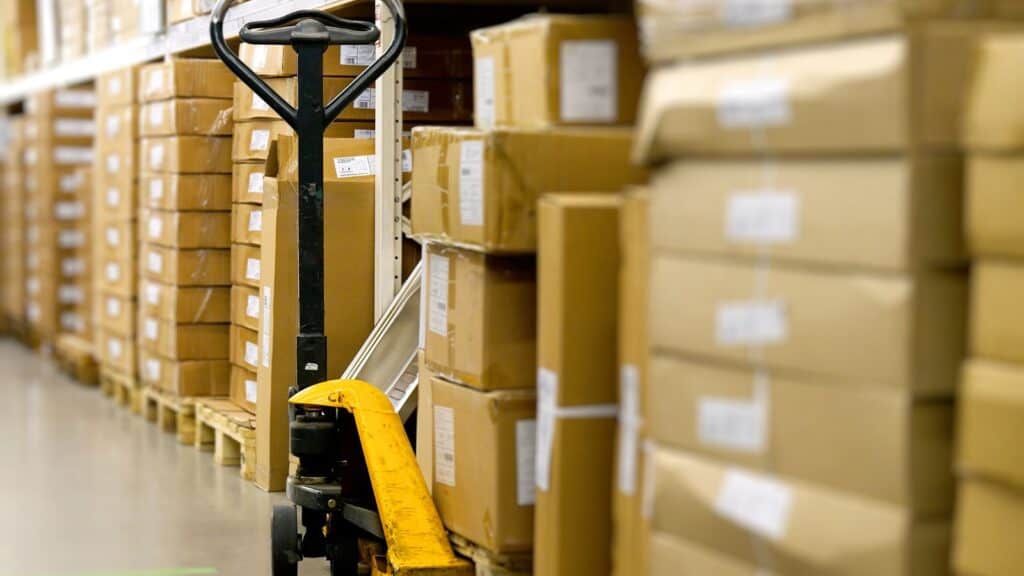
Understanding Manual Material Handling Equipment
Manual material handling equipment refers to primarily human-powered tools used to transport, lift, carry, push, pull, or position materials. Although they can sometimes be semi-electric, the major functions of these tools still depend on the worker’s physical input and basic mechanical design.
Manual material handling focuses on light to medium loads and short travel distances, but when used on a larger scale, they could also be adapted as bulk material handling equipment. Employers must match the task to the worker’s ability and choose the right equipment. Poor design or misuse can raise the risk of muscle and joint injuries, so proper selection is a key part of material handling solutions.
Key Applications in Various Industries
Manual handling equipment appears across many industries.
- Warehouses and distribution centers use pallet jacks, hand trucks, carts, and bin-handling equipment for short moves and order picking. Storage and handling equipment like rack and shelf systems organize these move materials processes.
- Manufacturing plants and the factory floor rely on carts, gravity conveyor systems, and jacks near machines. Lifting equipment like lift tables helps position heavy loads.
- Retail and grocery stores depend on stock carts and rolling ladders.
- Construction and maintenance teams use wheelbarrows and machinery skates to move heavy items in small areas.
These tools support tasks where there is a balance between speed, control, and access and load size or bulk material volumes. Manual material handling remains common because it adapts quickly to changing work needs.
Major Types of Manual Material Handling Equipment
Manual material handling equipment helps workers move loads with less strain and better control. Each type suits a specific load size, weight, and travel distance, which makes correct selection important for safety and efficiency.
Carts and Dollies
Carts and dollies move loads across flat surfaces with minimal effort. They rely on wheels to reduce friction and limit lifting. A dolly often has a small platform and four wheels, which suits boxes, bins, and small machines.
Carts usually include a frame or sides that help contain items during travel. Many designs support frequent short moves in warehouses, offices, and retail spaces. Workers push rather than pull to maintain control and reduce shoulder strain.
Key uses include:
- Moving stacked boxes or totes
- Handling light to medium loads
- Reducing carry distance and fatigue
Hand Trucks
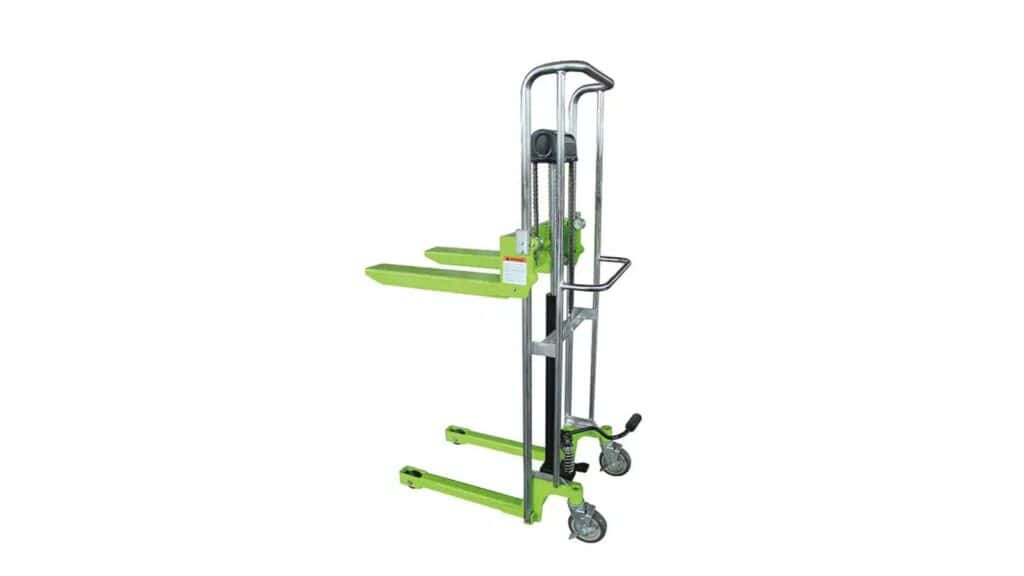
A hand truck is a two-wheeled tool designed to move tall or heavy items. Workers tilt the load back onto the wheels, which shifts weight away from the arms and back. Hand trucks work well for appliances, cylinders, and stacked cartons.
Different designs fit different tasks. Some hand trucks include stair climbers, while others fold for storage. Toe plates must support the load size, and wheel material should match the floor surface.
Important features to check:
- Load rating and balance point
- Wheel size and tread type
- Handle height and grip style
Pallet Jacks and Pallet Trucks
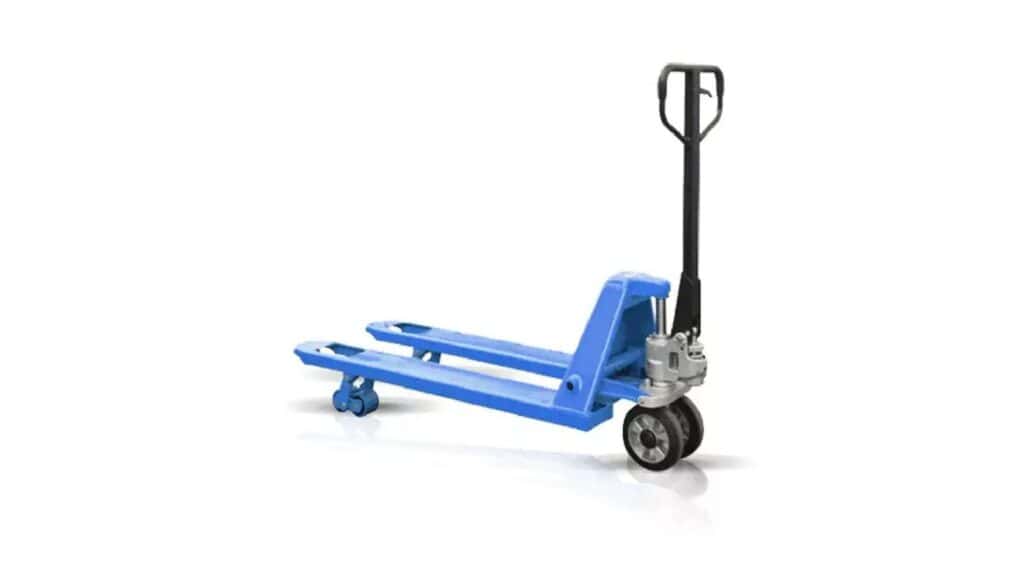
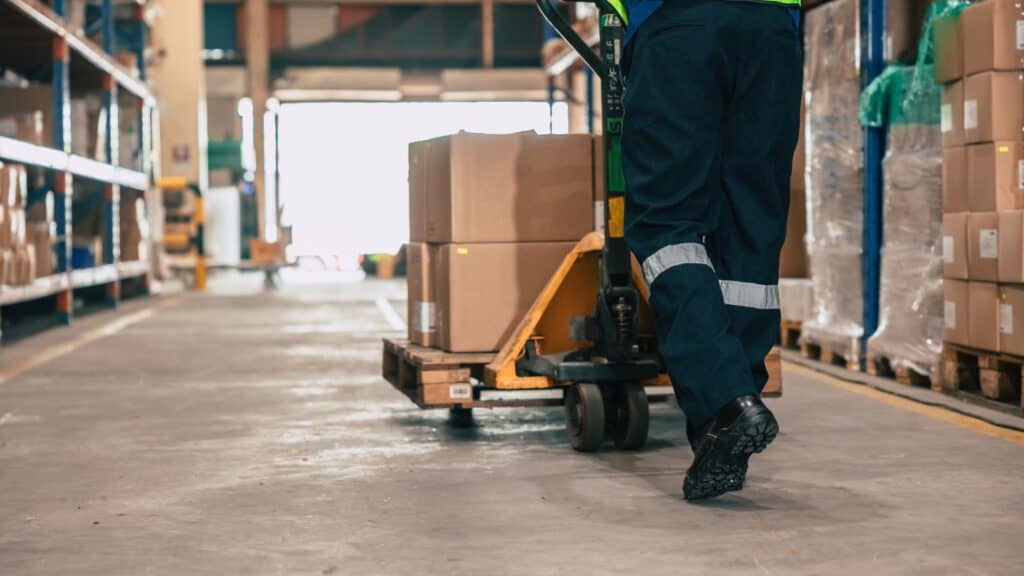
A pallet jack, also called a pallet truck, lifts and moves palletized loads. It uses hydraulic jacks to raise pallets just enough to roll. This design supports heavy loads without powered equipment.
Pallet jacks work best on smooth floors with enough turning space. Manual models suit short distances, while longer forks fit wider pallets. Operators should check fork length, weight capacity, and steering response.
Common benefits include:
- Safe movement of heavy pallets
- Simple controls and low maintenance
- Tight maneuvering in storage areas
Trolleys and Platform Trucks
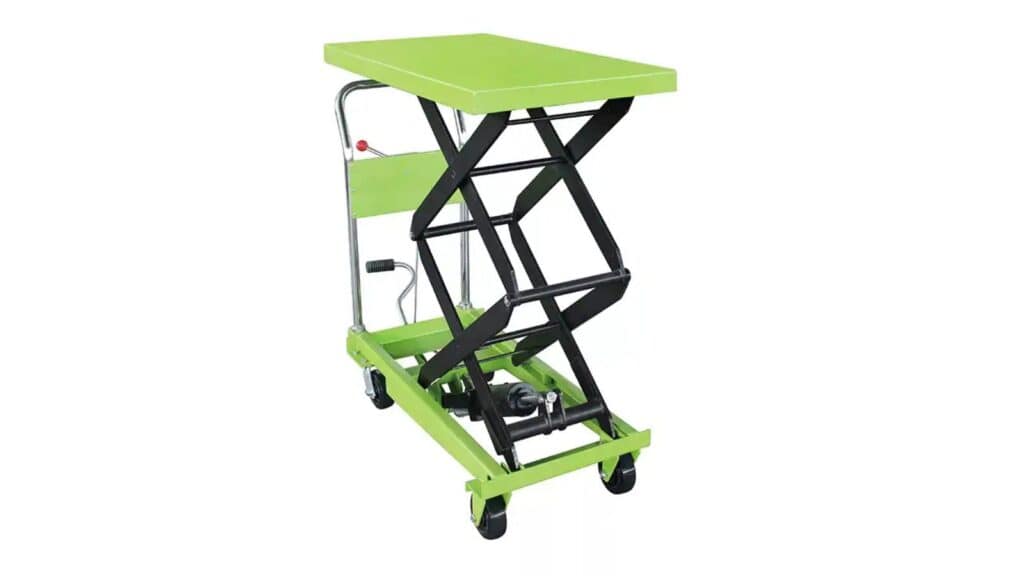
Trolleys and platform trucks provide a flat surface for moving varied loads. They often include four wheels and one or two handles for steering. These tools support bulky or mixed items that do not stack well. There is also a variation of platform trucks that have additional hydraulic systems and can be used for both transporting and lifting pallets or goods, which are often referred to as lifting tables.
Platform trucks handle heavier loads than basic carts. Some models include brakes or removable sides for added control. Workers use them in manufacturing, shipping, and maintenance areas.
Selection tips:
- Match platform size to load shape
- Choose wheels for floor conditions
- Ensure handles allow clear visibility
These tools improve stability during transport and reduce repeated lifting.
Proper Use and Best Practices
Safe manual material handling depends on using the right equipment and following clear safety rules. Good habits reduce strain, limit injuries, and improve efficiency.
Proper Equipment Use
Workers must use manual material handling equipment only for its intended purpose. They should check carts, dollies, pallet jacks, and straps before each use. Look for damaged wheels, loose handles, or worn parts.
Equipment must match the load size, weight, and shape. A small cart should not carry heavy or unstable items. Workers should keep loads close to the body and secure them to prevent shifting.
Proper technique matters even with equipment. Operators should push instead of pull when possible. They should move at a steady pace and avoid sudden turns. Mechanical aids should reduce effort, not increase risk.
Operator and Task Assessment
Each task should fit the individual performing it. Supervisors should consider strength, reach, and experience before assigning work. Operator training must cover both equipment use and safe body movement.
Workers should assess the task before starting. They should check the travel path, floor condition, and final placement area. Obstacles, slopes, and tight spaces increase risk.
Team lifting or added equipment may be needed for awkward loads. Workers should stop if a task feels unsafe. Reporting concerns early helps prevent injury.
Regulatory Guidelines
Manual material handling operations must follow workplace safety regulations. In the United States, OSHA requires employers to reduce hazards that can cause muscle and joint injuries. While no single weight limit applies, risk must stay as low as possible.
Guidelines stress training, task design, and proper equipment. Employers should provide written procedures and regular refreshers. Records of training and incidents support compliance.
Regulations also expect employers to improve conditions when risks appear. This may include new equipment, layout changes, or adjusted work practices. Following these rules protects both workers and organizations.
The Role of Ergonomics in Equipment Selection
Beyond simply moving a load from point A to point B, effective manual material handling is deeply rooted in ergonomics—the science of designing tasks and tools to fit the worker. Selecting the right equipment is fundamentally an ergonomic decision aimed at minimizing biomechanical stress on the body.
Reducing Injury Risk Through Design
Ergonomic manual handling equipment is engineered to counteract common injury vectors.
For instance, lift tables and tilt tables bring loads to a comfortable “power zone” (between mid-thigh and mid-chest), eliminating dangerous bending or overhead reaching.
Pallet jacks with low-effort hydraulic pumps and easy-grip handles reduce the force required to lift heavy pallets, protecting the lower back and shoulders. When equipment performs the strenuous part of the work, it directly lowers the risk of strains, sprains, and chronic back pain.
Key Ergonomic Features to Look For
When evaluating equipment, prioritize features that promote neutral postures and reduce exertion:
- Adjustable Handles: On carts and hand trucks, handles should allow the operator to stand upright with arms slightly bent, not forced to stoop or over-reach.
- Easy-Access Controls: Levers and pumps should be within easy reach and require minimal force to operate.
- Stable Wheel Bases: Equipment with a wide, stable base prevents tipping, reducing sudden, corrective movements that can cause injury.
- Non-Slip Surfaces: Platforms and toe plates should provide secure footing for loads.
The Alternatives of Engineered & Automated Systems
In spite of all the advantages, there is still a limit to the effectiveness and capacity of manual equipment. Upgrading to engineered systems or automation can be the next step. This includes equipment like:
- Forklift trucks (powered forklifts): For lifting, transporting, and stacking palletized loads with high power and efficiency over longer distances.
- Overhead cranes and hoists: To provide precise, vertical lifting and movement of extremely heavy or bulky items within a fixed area.
- Conveyor systems: To create a continuous, automated flow of materials between fixed points, eliminating manual carrying.
- Automated Guided Vehicles (AGVs): Motorized driverless vehicles that follow predetermined paths to transport loads, connecting processes without manual intervention.
- Automated Storage and Retrieval Systems (AS/RS): High-density robotic systems that automatically store and retrieve items from inventory, maximizing space and accuracy.
- Robotic delivery systems: Versatile robotic arms or mobile units that automate complex tasks like picking, packing, or precise placement.
Integrating such systems, sometimes within a mezzanine structure, represents an advanced tier of material handling solutions.
Conclusion
Manual material handling equipment may be regarded as no more than simple tools, but in fact, they are invaluable for preserving human well-being and operational efficiency in the workplace.
By building a proper material handling system, businesses transform physically demanding tasks into manageable processes. Ultimately, the conscious selection and correct use of this equipment is an investment in both people and productivity.
Ready to build a safer, more efficient workflow? Begin with a partnership with Grandlifting today.
Frequently Asked Questions (FAQ)
How often should manual material handling equipment be inspected?
A formal pre-use check for visible damage or malfunction is recommended daily. Additionally, a more thorough inspection by a competent person should be scheduled quarterly or semi-annually, depending on usage frequency, with detailed records kept as part of a preventative maintenance program.
When should I consider upgrading from manual to powered equipment?
If load weights or travel distances consistently push human limits, or when throughput demands create repetitive strain, you should considering upgrade to powered equipment. However, do note that powered solutions can have a higher initial investment.
What is the most important thing I should consider when choosing the equipment?
The nature of the load itself is paramount. Its weight, dimensions, stability, and contents determine the capacity and type of equipment needed. Selecting tools based first on load compatibility ensures safety and effectiveness more than any other factor.