
Shackle, in the lifting and rigging industry, refers to a component that is primarily used for connecting and fixturing different lifting equipment like hooks, straps, wire ropes, and more. There are many different types of shackles, and two of them stand out the most due to their prevalence: bow shackles and D shackles.
This comparison guide aims to break down the key distinctions between bow and D-shackles, as well as how to choose the right variant and material based on their distinct features and facilitate safe practices in real-world operations.
Core Design and Functional Differences
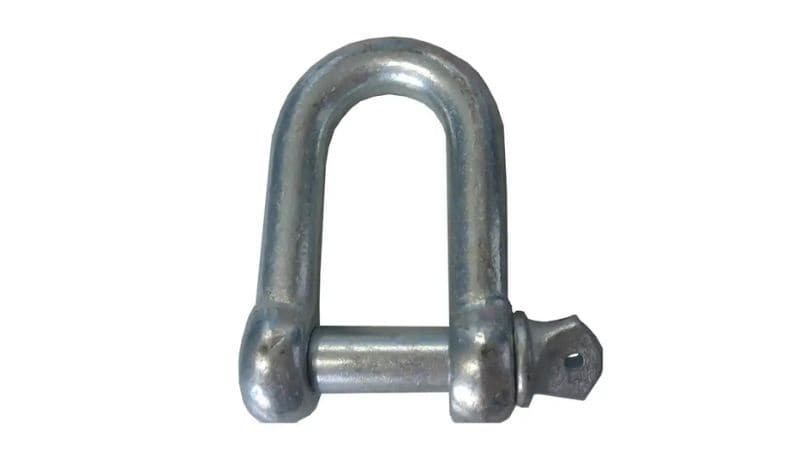
Fundamental Shapes and Alternative Names
A D shackle, also known as a Dee shackle or chain shackle, has a narrow, D-shaped body with a straight pin at the opening.
A bow shackle, often called an anchor shackle, features a wider, rounded body that forms a loop or “bow.”
This fundamental difference in geometry—the bow shackle’s rounded form versus the D shackle’s narrow “D” shape—directly dictates their functional strengths.
Load Direction and Force Distribution
The bow shackle‘s wide, rounded body is designed to spread load forces more evenly across its curve, making it inherently suited for multi-directional loads. It balances tension from different angles, reducing stress on any single point.
In contrast, the D shackle‘s narrow construction is engineered for straight-line loads with higher stress concentration. It keeps the shackle aligned with the pull direction, minimizing unwanted rotation and preventing side loading, which can weaken a shackle or bend its pin.
Connection Flexibility and Spatial Needs
The rounded body of a bow shackle provides extra space, allowing operators to attach several slings, ropes, or chains to one shackle without crowding.
Meanwhile, a D-shackle offers less interior clearance but provides a compact and secure fit for single connections, which is important for maintaining direct tension and stability, especially in confined spaces.
Shackle Pin Types and Their Importance
While the shape of the shackle body determines its load-handling capabilities, the pin is the critical component that ensures the connection remains secure. Choosing the correct pin type is just as important as selecting the right shackle shape, as it directly impacts safety, reliability, and suitability for the application. The primary pin types are Screw Pin, Bolt Type, and Safety Pin shackles.
Screw Pin Shackles
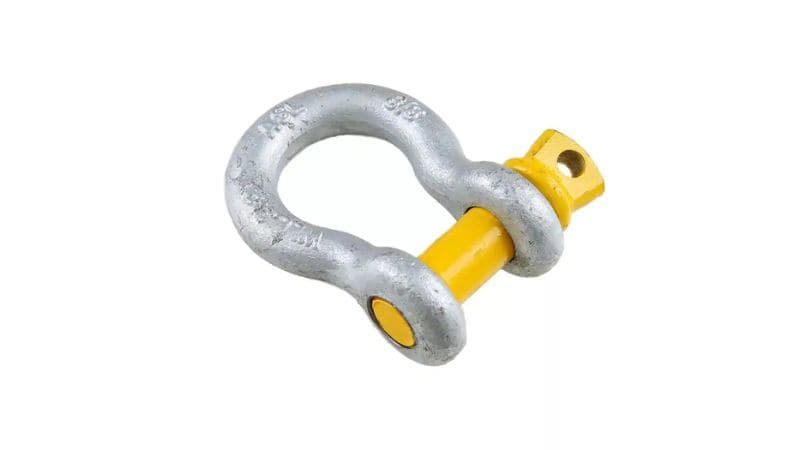
This is the most common and versatile type of pin. It features a pin with threads that screw directly into the shackle body’s bore, and it is typically tightened and loosened with a spanner.
- Best For: General purpose, non-permanent applications where connections will be frequently made and broken. Their simplicity makes them quick and easy to use.
- Screw pins can be susceptible to loosening under rotation or constant vibration. They should be inspected regularly during use to ensure they remain fully tightened. They are not recommended for applications where the shackle may spin or where a loose pin could lead to a catastrophic failure.
Bolt Type Shackles (Clevis Pin with Cotter Pin)
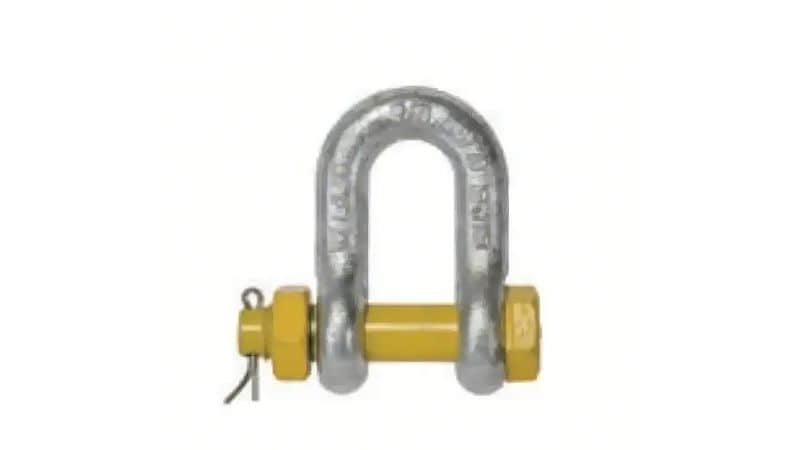
Bolt type design uses smooth clevis pins or bolts that pass through the shackle body. The pin is then secured mechanically with a cotter pin (split pin) or a locking ring, which physically prevents the pin from falling out, even if it becomes loose.
- Best For: Permanent or semi-permanent installations, high-vibration environments (such as on vehicles or machinery), and applications where the load may cause rotation. The mechanical lock provides a much higher level of security against accidental disassembly.
- Installation and removal are slightly more involved, as they require inserting and securing the cotter pin. The cotter pin itself must also be inspected for wear or damage.
Safety Pin Shackles
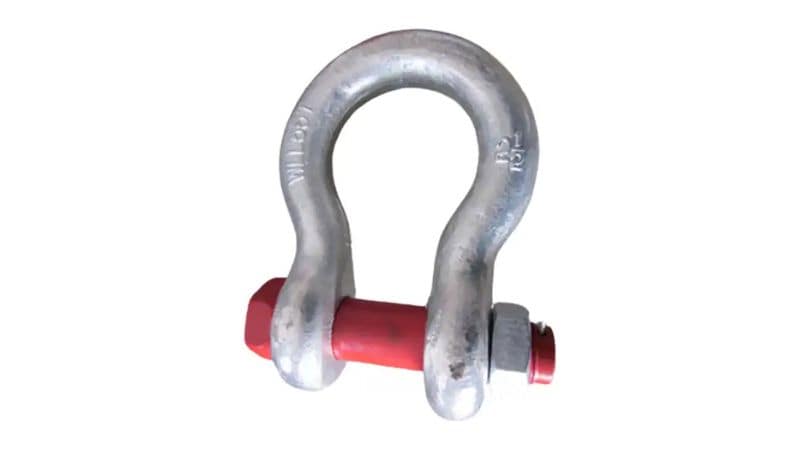
Often considered the most secure option, safety pin shackles feature a threaded pin like a screw pin but have a drilled hole through their head. Once the pin is fully tightened, a cotter pin is inserted through this hole to lock it in place.
- Best For: Critical lifts, overhead lifting, and any high-risk application where absolute security is paramount. This design combines the easy threading of a screw pin with the positive mechanical lock of a bolt-type shackle.
- While offering the highest level of security, they share the same installation complexity as bolt-type shackles, requiring the additional step of inserting and bending the cotter pin.
Load Capacity and Safety Considerations
Understanding Working Load Limit (WLL)
The Working Load Limit (WLL) defines the maximum load a shackle can safely handle during normal use. It is calculated as a fraction of the shackle’s tested breaking strength, offering a built-in margin of safety. WLL values are often stamped on the body or pin for quick identification.
A D shackle typically has a higher WLL for straight-line pulls because its force aligns perfectly with the pin and body. A bow shackle may show a lower WLL in similar sizes because its curved shape distributes force across multiple angles.
The Role of Safety Factor and Rated Capacity
This WLL is part of the shackle’s broader rated load capacity. Manufacturers determine this capacity through testing and apply a safety factor (commonly 4:1 to 6:1) to account for real-world variations. This means the shackle’s ultimate strength is four to six times higher than its rated load.
For instance, a 2-ton WLL shackle may have a breaking strength between 8 and 12 tons.
Maximum Breaking Load and Risk Assessment
The point of ultimate failure is known as the Maximum Breaking Load (MBL). It represents the total structural limit, not an operating value.
D shackles often achieve high breaking loads in direct tension, while bow shackles rely on their round design to tolerate more complex stresses.
Accurate understanding of the WLL, safety factor, and MBL is crucial for risk assessment to prevent overloading, which can lead to deformation or catastrophic failure.
Industrial Applications of Both Types of Shackles
Lifting and Hoisting Scenarios
In lifting operations, D shackles are the preferred choice for straight, vertical pulls where the load aligns directly with the pin. This makes them suitable for cranes, hoists, and chain or wire-rope connections, especially with single-leg slings. Their compact form is also advantageous for limited-space lifting gear.
Conversely, bow shackles work best in multi-leg lifting or angled load situations. Their wide, rounded shape allows several slings or attachments to connect at once, making them common in spreader beam setups and load distribution points where lift angles shift during movement.
Towing and Rigging Uses
In towing and rigging, D shackles excel in fixed or direct line pulls, such as vehicle recovery or connecting tow straps, providing a rigid, high-strength link.
Bow shackles perform better in rigging systems that require flexibility or movement, such as marine towing and heavy equipment rigging. Their large curvature accommodates multiple chains, ropes, or hooks, preventing pinching and allowing rotation under tension, which helps manage side pulls and reduces wear.
Material Selection and Environmental Factors
Corrosion Resistance for Different Environments
Shackle performance and longevity depend heavily on material selection for the operating environment. Corrosion resistance is paramount. Shackles used in marine, offshore, or humid settings face saltwater and moisture, which quickly corrode unprotected steel.
Stainless steel provides the best resistance to rust and pitting, making it ideal for marine, coastal, and high-humidity applications.
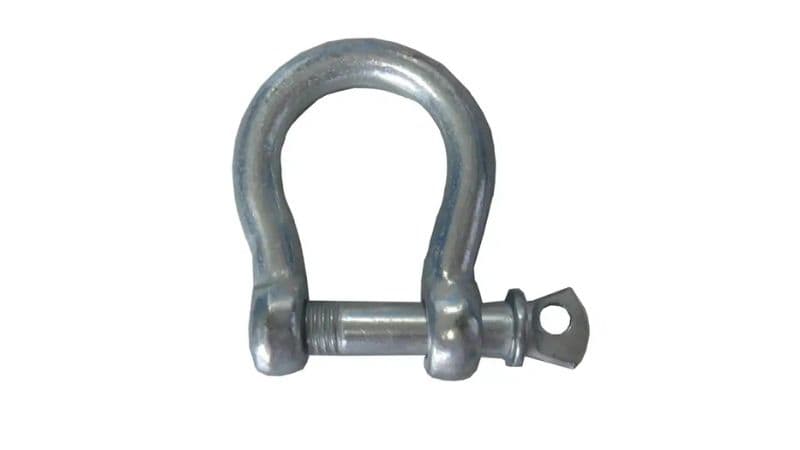
Galvanized steel offers good protection for general outdoor use, but corrosion may accelerate if the coating is damaged.
Alloy steel provides high strength but only fair corrosion resistance, making it better for controlled indoor or dry conditions.
Additionally, manufacturers would apply surface treatments for better resilience against natural elements. For example, byapplying a coating of metallic zinc, the shackle surface could naturally form a layer of zinc oxide, which then reacts with moisture and carbon dioxide to create a stable, protective layer of zinc carbonate. This layer is what ultimately provides the barrier against further corrosion from rust and erosion.
Choosing the Right Material for the Job
Selecting the right material depends on the work environment, load type, and maintenance expectations. In extreme environments, coatings like powder coating or hot-dip galvanizing can extend service life.
Users should also consider temperature limits, as high heat can alter metal strength and cold weather can induce brittleness.
Best Practices for Safe Use
Inspection and Maintenance Tips
Proper care of your shackles is not just about preserving equipment—it’s a critical safety practice. Regular inspection and simple maintenance can prevent accidents, extend service life, and ensure reliable performance. Follow these essential tips to keep your shackles in top condition.
- Check shackles before and after each use. Look for bends, cracks, rust, or worn-down threads.
- Clean off dirt and salt with fresh water, especially after outdoor use. Dry them thoroughly.
- Lubricate the screw threads to keep them from getting stuck.
- Mark any damaged shackle and take it out of service. Don’t use it.
- Replace a shackle if it looks worn or has deep scratches.
- Store shackles in a dry place. Don’t stack heavy things on top of them.
Proper Handling and Installation
Misuse often causes more damage than natural wear. The most common mistakes include side loading, overloading, and mixing incompatible parts.
D shackles handle straight-line pulls best, while bow shackles allow for multiple or angled connections. Using each type incorrectly increases stress on the pin and frame.
Keep the working load limit (WLL) visible and never exceed it, even briefly. When connecting slings or chains, ensure the load sits properly in the shackle’s bow or body and does not press against the pin threads.
Never use makeshift spacers or oversized bolts in place of proper pins. Only use manufacturer-rated pins to maintain design strength.
Conclusion
Through the analysis above, we can arrive at the conclusion that there is no universal “best” shackle—only the right shackle for the specific application. The choice ultimately hinges on the nature of the load: a D shackle is the superior choice for secure, in-line tension, while a bow shackle offers the necessary flexibility for multi-directional or complex rigging. By understanding the distinct roles of each shackle and adhering to best practices, you can significantly mitigate risk and ensure efficient and safe securement.
Frequently Asked Questions
Can I use a bow shackle and a D shackle of the similar size for the same task?
No, they are not interchangeable. While they may be similar in physical size, their design and rated capacity are optimized for different types of loads. Using a bow shackle for a straight-line pull for which a D shackle is designed, or vice versa, can lead to improper loading, reduced safety margins, and potential equipment failure.
How often should I inspect my shackles?
Shackles must be inspected visually before every single use. Additionally, a more formal, documented inspection should be conducted periodically by a competent person, with the frequency determined by the severity of service, but typically at least annually. Any shackle that shows signs of wear, deformation, or corrosion should be taken out of service immediately.
Is a galvanized or stainless steel shackle stronger than a standard alloy steel one?
Not necessarily. The material primarily affects corrosion resistance, not the fundamental strength rating. A high-quality alloy steel shackle and a galvanized shackle of the same size and grade will have the same WLL. The choice between them is based on the working environment—stainless for superior corrosion resistance and alloy steel (often galvanized) for high strength in less corrosive environments.