
A pallet truck, as a mobile handling tool for pallets and stacks, plays a quiet but vital role in places where heavy lifting equipment doesn’t fit. There are many versions and designs for pallet trucks, from basic manual models to electric and ride-on options. Each type fits a different task, surface, and workload. The sections ahead will explain what a pallet truck is, and its the common applications. Read on and find out more!
Pallet Trucks: What Are They Exactly?
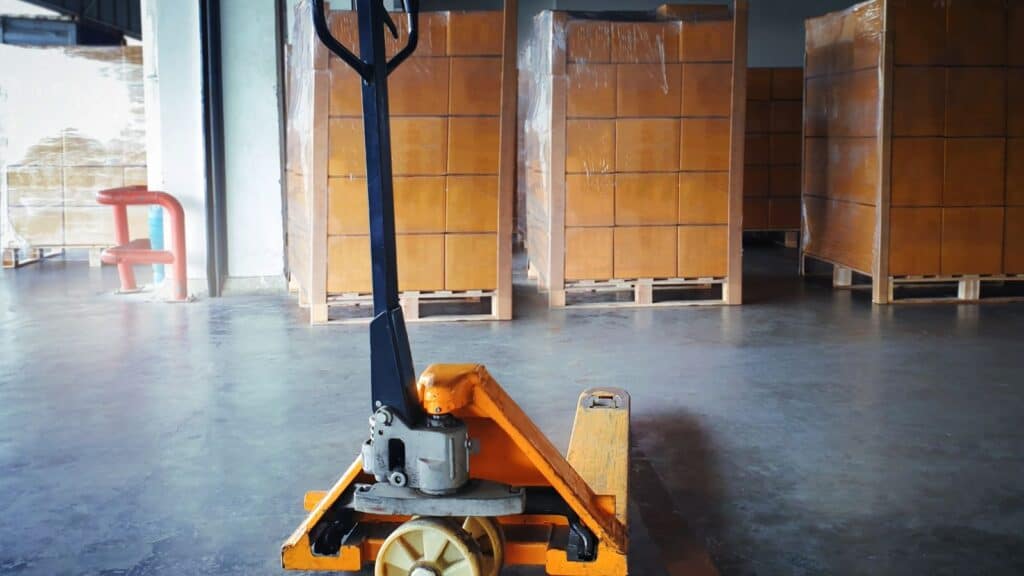
A pallet truck is a piece of material handling equipment designed to lift and move pallets. It uses two forks that slide under a pallet and a handle that controls steering and lifting.
Most pallet trucks use a hydraulic pump to raise the load a few inches off the floor. This small lift allows smooth movement without fully lifting the pallet. Some models work by hand, while others use electric power.
Purpose and Fundamental Functions
Pallet trucks exist to move heavy loads safely with less effort. They reduce strain on workers and lower the risk of damage to goods.
The core functions can be concluded as:
- Lifting a pallet slightly off the ground for placement
- Transporting loads across short distances (preferably on flat ground)
- Positioning pallets for storage, staging, or loading
Operators control the lift with a handle pump or electric buttons. Steering stays simple, which helps in tight aisles.
Pallet Trucks vs. Pallet Jacks vs. Forklifts
People often use “pallet truck” and “pallet jack” to address the same thing. Both refer to equipment that lifts pallets just enough to move them across the floor. The term “pallet truck” appears more often in industrial settings.
A forklift truck serves a different role. It lifts pallets high and stacks them on racks.
| Equipment | Lift Height | Power | Primary Function | Typical Use |
|---|---|---|---|---|
| Pallet Truck / Pallet Jack | Low (few inches) | Manual or Electric | Horizontal transport | Moving pallets on flat floors, loading trucks |
| Pallet Stacker | Medium (up to 8–10 ft) | Manual, Electric, or Semi-Electric | Light stacking & transport | Stacking pallets in tight spaces, second-tier storage |
| Forklift | High (10–30+ ft) | Engine or Electric | Heavy lifting & high stacking | Loading trailers, high-bay racking, heavy construction |
Major Types of Pallet Trucks
Different pallet trucks serve different work needs, floor conditions, and load weights. Each type balances cost, effort, speed, and space in a specific way.
Manual Pallet Trucks
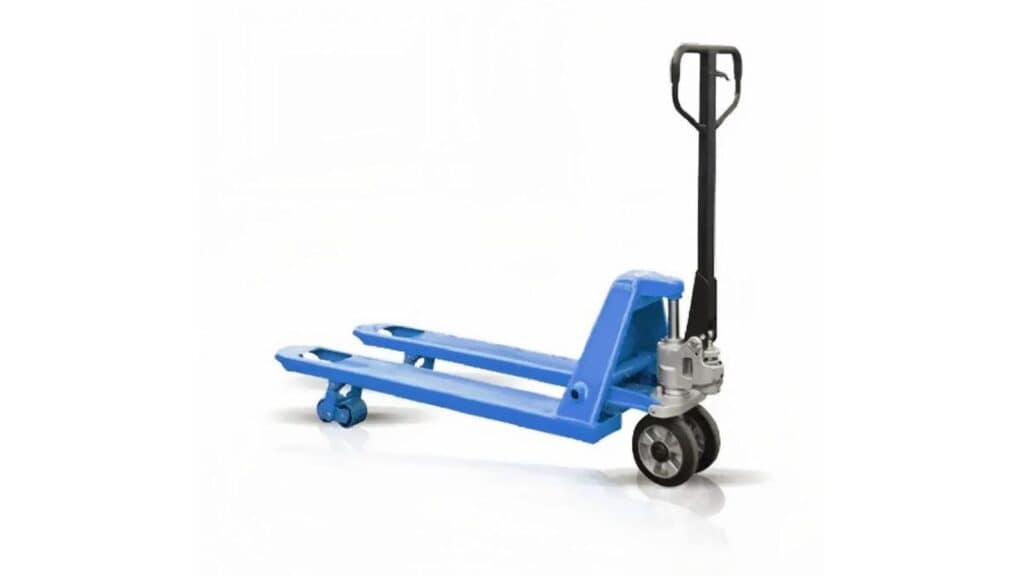
Manual pallet trucks, also called hand pallet trucks, use human force to lift and move loads. The operator pumps the handle to raise the forks and pushes or pulls the truck to move it. These models suit short trips and lighter daily use.
They cost less than powered options and need little upkeep. Most handle loads between 5,000 and 6,000 pounds, which fits standard pallets. Their simple design reduces downtime and repair needs.
Manual pallet trucks work best in tight aisles and small spaces. They perform well on smooth floors and flat surfaces. Warehouses and retail backrooms often rely on them for quick, basic moves.
Key traits:
- No motor or battery
- Low purchase and service cost
- Best for short distances
Electric Pallet Trucks
Electric pallet or powered pallet trucks use motors to lift and drive loads. Many models run on rechargeable batteries, which are controlled with buttons or levers.
Some electric pallet trucks require walking behind the unit. Others include a rider pallet truck or ride-on pallet truck with a standing platform. These trucks move heavier loads faster than manual models. They fit large warehouses and busy loading docks.
Rough Terrain Pallet Trucks
A rough terrain pallet truck handles uneven ground, gravel, and outdoor surfaces. It uses large pneumatic tires and a strong frame to stay stable under load. These trucks differ from standard pallet trucks built for smooth floors. They serve job sites, lumber yards, and outdoor storage areas.
Low-Profile Pallet Trucks
A low-profile pallet truck lifts pallets with very low clearance. The forks sit closer to the floor than standard models. This design fits custom pallets, skids, and flat crates.
Operators use these trucks in printing shops and specialty plants. Many loads lack the height needed for a standard pallet jack. The low fork height solves that problem without added equipment.
Low-profile pallet trucks usually carry less weight than standard units. They also need smoother floors to avoid scraping.
Specialized Pallet Truck Variations
Some pallet trucks handle tasks beyond basic transport. These models add features like built-in scales, higher lift ranges, and stacking ability to support specific warehouse and production needs.
Weighing Pallet Trucks
Weighing pallet trucks combine lifting and weighing in one unit. They include a digital or analog scale built into the forks. An operator can lift palletized loads and see the weight at the same time.
These trucks help reduce extra steps in shipping and receiving. Staff do not need to move pallets to a separate floor scale, saving time and reducing handling.
High-Lift and Scissor Lift Pallet Trucks
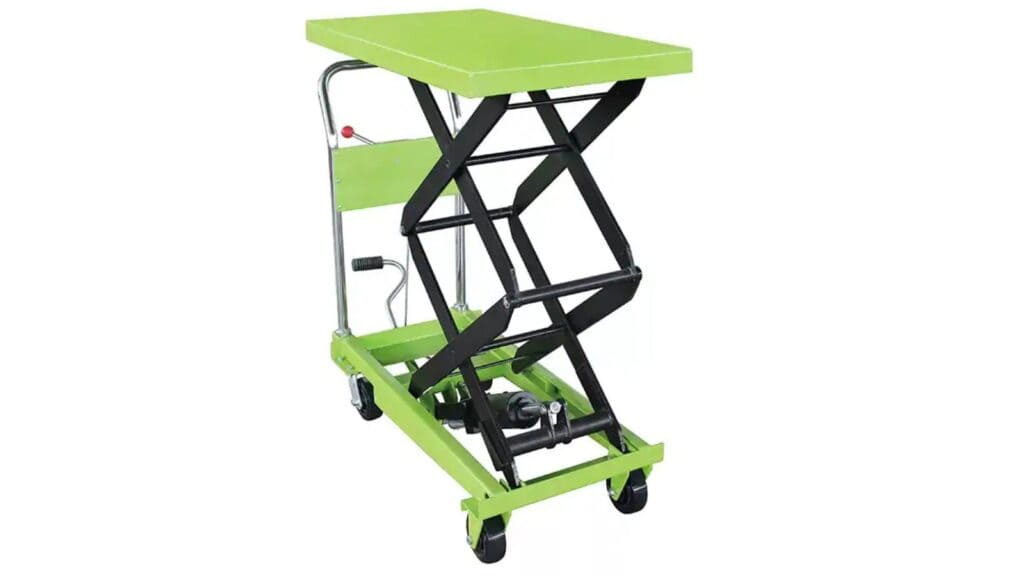
High-lift and scissor lift pallet trucks raise loads higher than standard models. They use a scissor mechanism to raise and lower pallets to waist or chest height.
These trucks reduce bending and lifting by hand. They help protect workers during packing, sorting, and light assembly tasks. Many models can also act as a temporary work table.
Common uses include:
- Order picking
- Line feeding in production
- Loading items onto benches
They move palletized loads over short distances and do not replace forklifts for high stacking.
Pallet Stacker Trucks
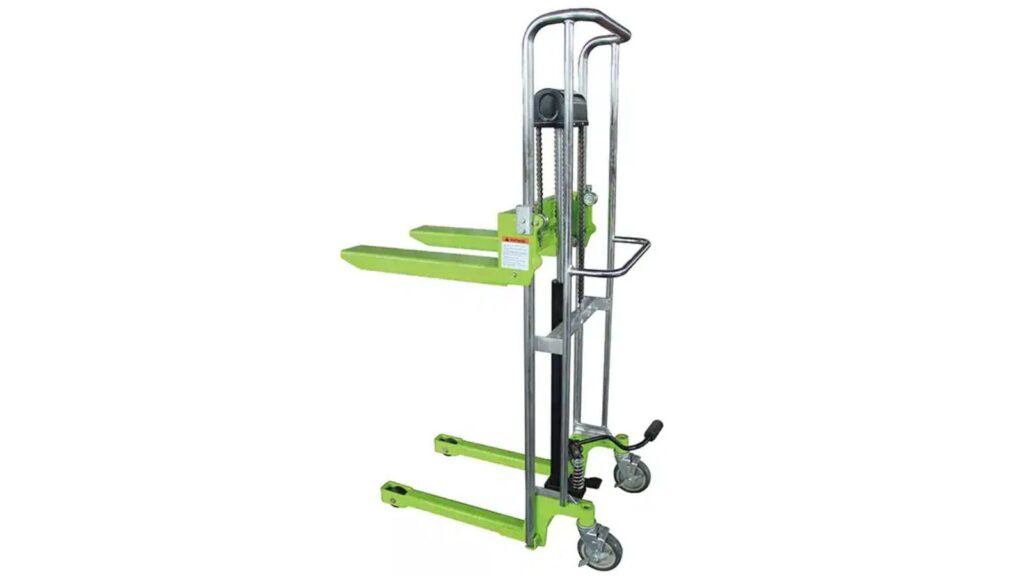
Pallet stacker trucks lift and place loads onto racks or stack pallets vertically. A pallet stacker, sometimes called a stacking truck or stacker, fills the gap between pallet trucks and forklifts.
Stackers can be manual, semi-electric, or fully electric. They handle palletized loads in narrow aisles and tight spaces with three typical advantages:
- Higher lift than pallet trucks
- Smaller size than forklifts
- Better control when stacking pallets
A Key Distinction: Most pallet stackers use outriggers—two legs that extend in front of the unit and straddle the bottom pallet for stability during lifting. This design requires that the rack system allows for the legs to slide underneath. For this reason, stackers are ideal for ground-level entry racks but cannot place a pallet directly onto the floor from a height the way a forklift can.
These trucks suit small warehouses, back rooms, and areas with limited overhead space where a full-sized forklift is impractical.
Common Uses and Applications
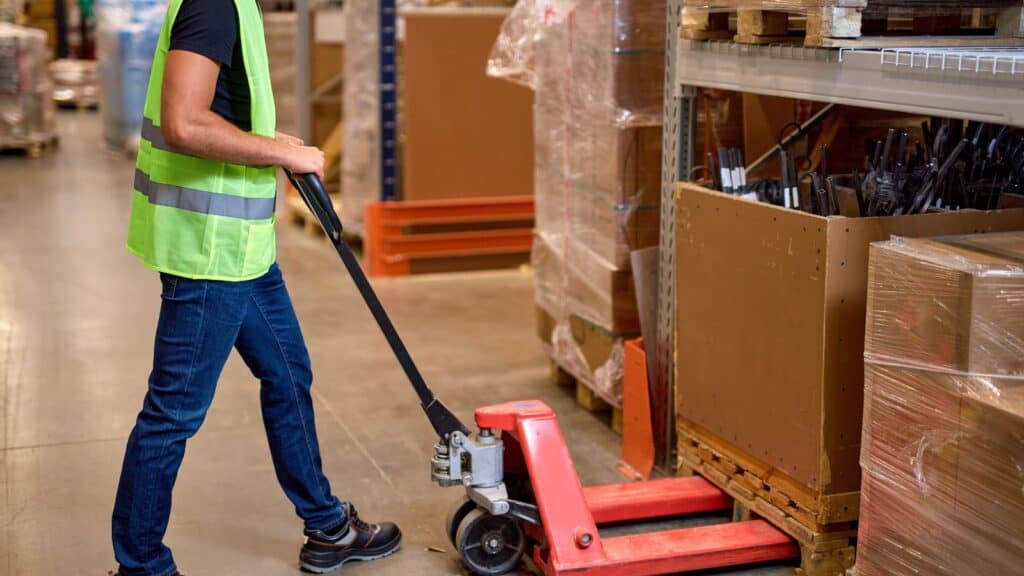
Warehousing and Distribution Centers
Warehouses rely on pallet trucks to move goods between storage areas, docks, and staging zones. The compact design helps them maneuver in narrow aisles where forklifts may not fit.
Pallet trucks often handle ground-level transport. They load and unload trailers, shift pallets between racks, and stage orders for outbound logistics.
Retail and Supermarkets
Retail stores use pallet trucks to restock shelves and manage backroom inventory. Employees move pallets from delivery trucks to storage areas, then reposition them near sales floors.
Supermarkets often use pallet trucks during off-hours to reduce customer disruption. Workers transport heavy loads like bottled drinks, bulk food, and paper goods. Manual pallet trucks fit well in customer-facing environments.
Manufacturing and Logistics
Manufacturing sites use pallet trucks to move raw materials and finished products. They shift pallets between workstations, assembly lines, and storage zones, keeping production flowing without delays.
In logistics operations, pallet trucks support cross-docking and short transfers. Workers use them where forklifts would slow traffic or add risk.
By enabling the fast repositioning of raw materials and finished goods, these units ensure that production lines maintain a continuous flow. They drastically reduce manual lifting, mitigating the risk of workplace injuries and allowing staff to focus on value-added tasks.
Consequently, pallet trucks are a vital component of lean workflows, supporting just-in-time inventory practices.
Construction Sites and Outdoor Environments
Common outdoor applications:
- Material movement on flat outdoor surfaces
- Transport between staging areas
- Support for site logistics tasks
Construction sites use pallet trucks to move palletized materials like tiles, cement, and tools. This is where the specialized all-terrain pallet trucks are used, as their reinforced frames and pneumatic wheels handle uneven ground better than standard models.
Outdoor pallet trucks support temporary storage yards and site logistics. Workers transport heavy loads across short paths where powered vehicles may not reach.
Safety, Benefits, and Key Considerations
Safe use, clear limits, and regular care shape how well a pallet truck performs in daily material handling. Good practices reduce injury risk, protect goods, and extend the life of the truck during frequent pallet movement.
Operator Training and Safety Features
Operators need basic training before using a pallet truck. Training should cover steering, braking, and correct fork placement under pallets. It should also stress safe walking speed and clear sight lines.
Most pallet trucks include built-in safety features. These often include handle-mounted brakes, neutral positions to lock forks, and smooth-lowering controls. Electric models may add speed limits and emergency stop buttons.
These steps reduce tip-overs, foot injuries, and damage during pallet movement.
Load Capacity and Weight Limits
Every pallet truck has a rated load capacity. This number shows the maximum weight it can lift safely. Exceeding it strains the hydraulic system and increases the risk of failure.
Most manual pump trucks handle 2,000–2,500 kg, while heavy-duty models allow more. Electric pallet trucks often support higher and more frequent loads.
Maintenance and Best Practices
Routine maintenance keeps a pallet truck reliable. Operators should check wheels, forks, and the hydraulic pump before use. Leaks, flat spots, or loose parts signal a need for repair.
Best practices focus on consistent care:
- Lubricate moving parts on schedule
- Replace worn wheels early
- Store trucks in dry, level areas
Electric models need extra attention. Batteries require regular charging and inspection. Clean terminals prevent power loss.
Conclusion
The pallet truck is an indispensable asset in filling the gap of transportation of goods when heavy machinery isn’t needed or available. Learn how to choose the right types, and your businesses can significantly optimize their workflows and improve productivity.
Frequently Asked Questions
What are the different types of pallet trucks?
Manufacturers produce manual, electric, high-lift, weighing, and long-reach pallet trucks. Each type serves a specific task and work setting.
Manual pallet trucks suit daily warehouse use. Electric models handle frequent moves or heavier loads with less effort from the operator.
What are the common uses for a pallet truck in warehouses?
Workers use pallet trucks to move goods between storage, loading bays, and work areas. They support short-distance transport on flat floors.
Warehouses also use them for order picking and stock movement. Weighing pallet trucks add load checks during handling.
What safety considerations should be considered when using a pallet truck?
Operators should check wheels, forks, and controls before use. They must keep loads within the rated capacity.
Training reduces the risk of injury and damage. Regular servicing and required inspections help keep the equipment safe.