
Relocating a heavy commercial or industrial generator is a serious material handling operation. Contrary to the smaller portable units, they can weigh anywhere from a few hundred pounds to well over 100,000 pounds with complex internal structure. In this instance, rated rigging equipment is critical for moving a heavy generator correctly.
Drawing directly from our experience in heavy machinery relocation projects, we’ve compiled this rigging guide that covers the full process from choosing the correct webbing slings to securing a multi-ton load for highway transit.
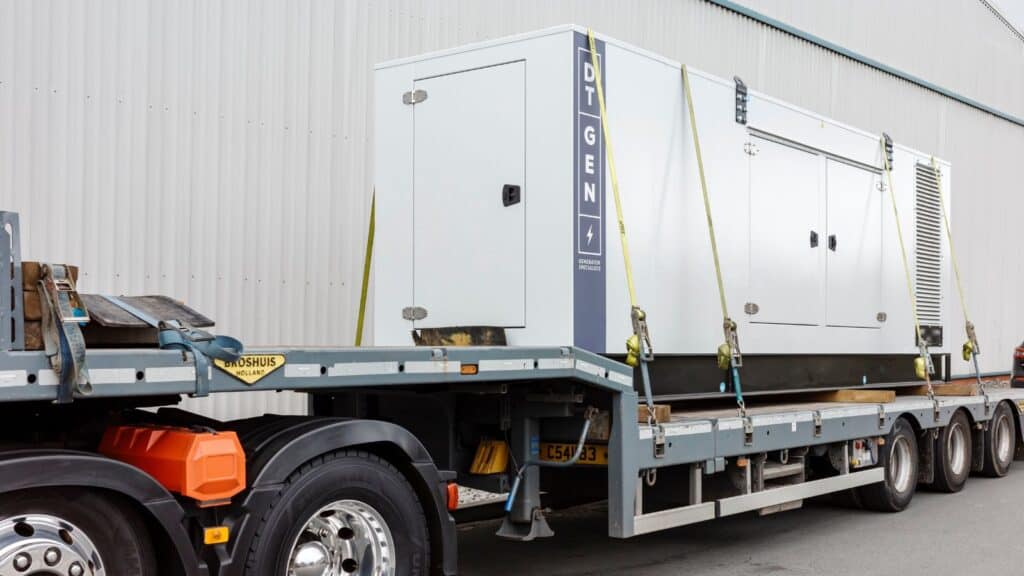
Groundwork Before Moving a Heavy Generator
A safe lift begins long before the crane arrives. Mastering the pre-lift phase ensures you select the right gear and prevent costly damage.
Pre-Lift Assessment: Know Your Load
Before the operation, you must have an accurate picture of the generator’s physical demands, namely in three aspects:
- Calculate True Weight & Center of Gravity: Don’t solely rely on the “dry weight” from the spec sheet; fuel and coolant can add hundreds of pounds. There will also be an offset for the center of gravity because the generator is not a solid block with the same density in every part.
- Identify Designated Lifting Points: Never assume the steel frame can accept a sling simply because it looks heavy. Always use engineered lifting lugs or pad eyes confirmed by the manual, and check if a spreader bar is strictly required.
- Verify the Route: Briefly walk the travel path to ensure doorway clearances and floor load ratings are adequate before movement begins.
Pre-Lift Preparation: Secure and Protect
Proper preparation eliminates hazards and protects both the generator’s sensitive components and your rigging equipment:
- Isolate Power & Cool Down: Lock out all power sources and allow exhaust systems to cool fully to protect the rigging crew from heat hazards.
- Drain Fluids to Reduce Weight: Draining the fuel tank drops the unit’s weight, which directly reduces the Working Load Limit (WLL) demanded from your slings and shackles.
- Apply Edge Protection: Remove loose hardware and pad sensitive control panels. Always use load-rated corner pads or edge protection sleeves to prevent webbing damage under tension.
- Verify the Rigging Setup: Cross-check the manufacturer’s manual for maximum allowable sling angles and confirm if a spreader bar is strictly required for a multi-point pick.
Choose Rated Lifting and Rigging Gear
The equipment selected for a generator lift must match the load’s weight, geometry, and attachment configuration. Underrated or mismatched gear is one of the leading causes of rigging failure on industrial equipment moves.
Selecting Webbing Slings for Controlled Lifts
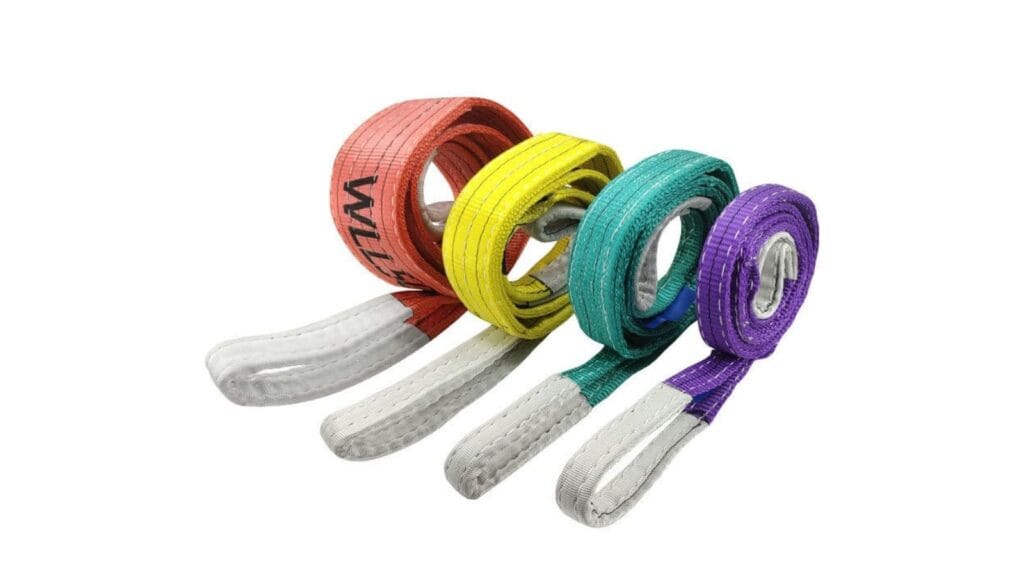
Polyester webbing slings are the standard choice for lifting industrial generators when protection of the unit finish and controlled load distribution are priorities. Synthetic slings conform to the lifting surface without concentrating stress at narrow contact points, which matters when rigging around base frame rails or structural members.
Select slings rated to the working load limit required by the generator’s weight and the planned sling angle. Steeper sling angles increase tension in each leg; a 30-degree sling angle can more than double the load on each leg compared to a vertical lift. Manufacturers like Grandlifting produce polyester lifting slings in a range of widths and capacities designed for exactly these industrial applications.
When To Use A Spreader Bar For Load Stability
A spreader bar is the correct tool when vertical sling legs are needed to avoid inward compression on the generator’s casing or when the lift geometry requires a controlled, level pick across a wide load. Without a spreader bar, slings angle inward under load, applying horizontal force to the attachment points and potentially crushing or bending non-structural panels.
For wide industrial generator sets, a spreader bar keeps the sling legs parallel, distributes the load evenly across multiple attachment points, and gives the rigging crew better control during placement. The bar’s rated capacity must match or exceed the total lift weight.
Hardware, Shackles, and Connection Compatibility
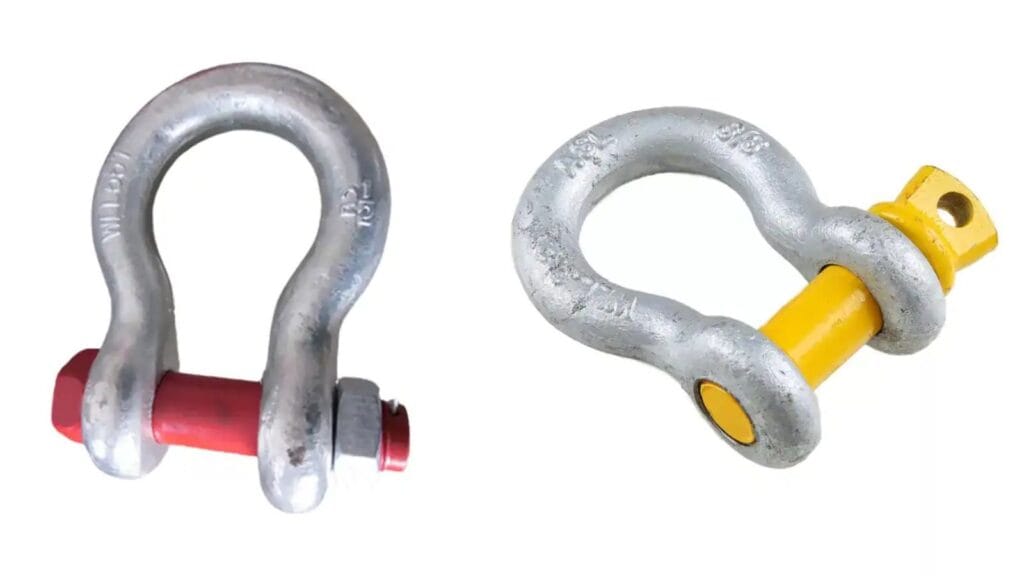
Every shackle, hook, and connecting hardware in the lift assembly must be rated for the full working load. Bow shackles are commonly used at sling-to-lug connections because they allow the pin to seat squarely under load. Screw-pin shackles should have the pin moused or secured to prevent backing out during movement.
Inspect all hardware before use. Bent pins, worn load-bearing surfaces, and corroded bodies are all disqualifying conditions. The rated capacity marked on the hardware is valid only when the component is in serviceable condition.
Lift, Roll, Or Hoist the Generator Safely
Execution is where planning either holds or fails. Every action during the lift or roll phase needs deliberate coordination, with the supervisor calling movements and all personnel maintaining their assigned positions throughout the operation.

The Trial Lift (Managing the Heavy End)
The initial pick is the most dangerous moment. Because the generator’s alternator end is heavier, it will naturally try to tilt. Bring all webbing slings to a snug tension, then lift the unit just one or two inches off the ground. If the generator tilts, lower it immediately and adjust the sling lengths. Never attempt to balance a tilted generator while it is suspended high in the air.
Preventing Sling & Frame Damage
Ensure all polyester slings are lying flat against their attachment points. Twisted slings drastically reduce their Working Load Limit (WLL). Double-check that all edge protection is securely placed where the slings cross the generator’s base frame or canopy to prevent catastrophic webbing failure.
Control the Swing with Tag Lines
Generators act like massive pendulums if left uncontrolled. Attach tag lines to the base frame before the lift begins. This allows your ground crew to guide the bulky unit onto the transport trailer smoothly, without ever placing their hands near a suspended multi-ton load.
Secure The Generator For Truck Or Trailer Transport
Once the unit is loaded, the tie-down configuration must hold it through acceleration, braking, cornering, and road vibration for the entire journey. A generator that shifts on a trailer can damage itself, destabilize the vehicle, and create a serious road hazard.
Positioning The Unit On The Vehicle Bed Or Deck
The generator should sit as close to the centerline of the trailer or truck bed as practical, with weight distributed evenly across the axles. Position the heaviest end, typically the alternator side, toward the front of the vehicle to improve towing stability.
Confirm that the deck surface and mounting rails can handle the concentrated load. For very heavy units, spreader timbers or steel dunnage may be needed to distribute pressure across a wider deck area.
Using Right Equipment: Ratchet Straps and Anchor Points
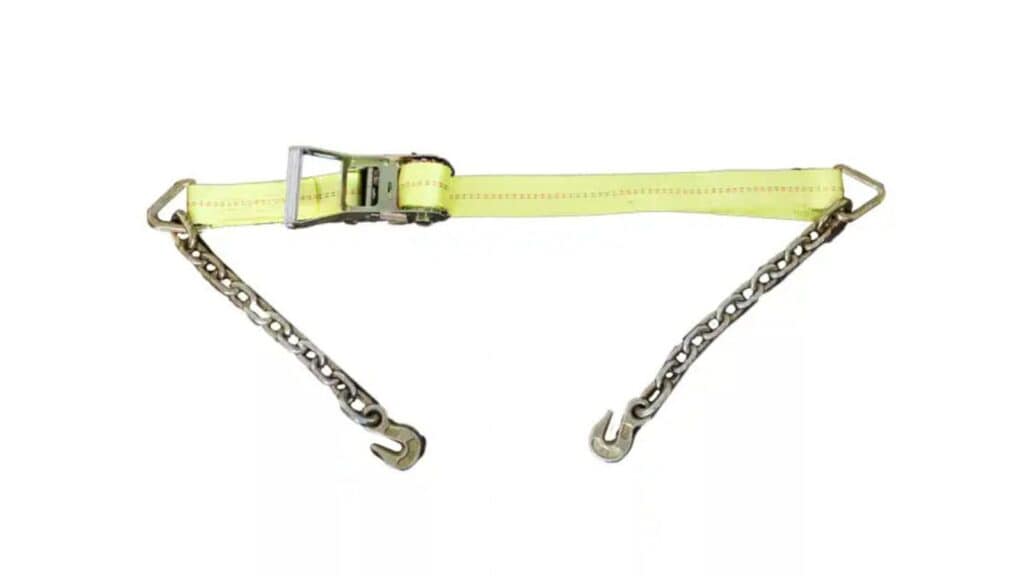
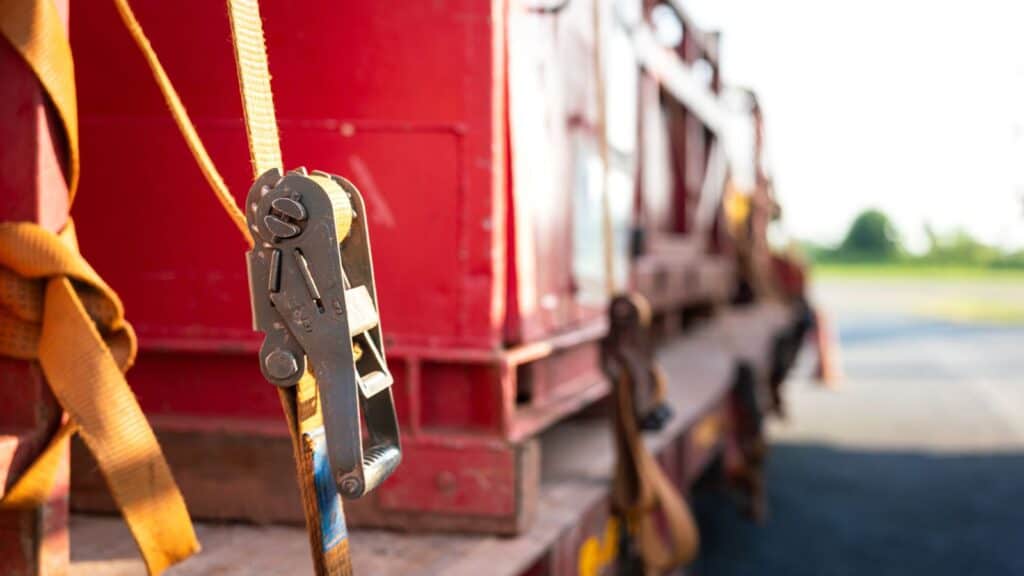
Ratchet straps are the standard tie-down method for generator transport. Use straps rated to the working load limit appropriate for the generator’s weight, anchored to designated tie-down rings on the trailer deck. Ratchet straps with chain ends and direct chain extension options that are well suited for securing heavy industrial equipment to flatbed trailers with structural anchor points.
The number of straps required is determined by the unit’s weight and the applicable cargo securement standard. Position straps in both forward and rearward directions to resist load shift in all axes. Angle the straps to pull the load down and inward, not just laterally.
Protecting Webbing From Edges, Abrasion, And Weather
Webbing straps routed across the generator’s frame edges, skid corners, or any protruding hardware must be protected with edge guards, sleeves, or protective pads. A sharp 90-degree edge under full strap tension can cut through polyester webbing far below its rated capacity.
For extended transport or exposure to rain, inspect strap condition after loading and use covers or sleeves where weather exposure is a concern. Wet webbing maintains its rated strength but should be inspected and dried before storage.
Rechecking Tension After Loading And During Transit
Strap tension should be checked immediately after loading the vehicle and rechecked at the first stop after departure, typically within the first 25 to 50 miles. Vibration and initial load settling frequently loosen tie-downs that were properly tensioned at the yard.
For long-distance hauls, establish a recheck interval appropriate to the route conditions. Keep a ratchet tool and spare straps accessible during transit so tension can be restored without unloading equipment from the cab. Document each inspection check as a standard part of the transport record.
Equip Your Next Generator Lift with Grandlifting
Moving a heavy industrial generator leaves no room for error. A successful relocation depends entirely on strict planning and high-quality, load-rated rigging hardware.
Whether you need heavy-duty polyester webbing slings to protect sensitive canopies, or high-capacity ratchet straps with chain ends for secure flatbed transport, Grandlifting manufactures the reliable gear your crew needs to get the job done safely.
Contact us today or browse our catalog to find the right rigging solutions for your next heavy transport operation.
Frequently Asked Questions
Should I use chain slings or synthetic slings for lifting an industrial generator?
Synthetic webbing slings are the industry standard for lifting generators. Unlike chain slings, which concentrate extreme pressure at narrow contact points and can easily crush thin metal canopies or scratch finished surfaces, polyester webbing distributes the load evenly.
While chains are more durable in abrasive environments, synthetic slings offer the necessary protection and controlled handling required for sensitive power equipment.
How should a generator be secured on a flatbed trailer to prevent shifting?
Heavy generators should be secured using high-capacity ratchet straps anchored to rated tie-down rings on the trailer deck. Arranging the straps to pull down and inward resists forward, backward, and lateral movement.
For heavy-duty flatbeds, ratchet straps with chain ends provide a secure connection to structural anchor points. Always recheck strap tension after the first 25 to 50 miles, as road vibration causes the load to settle.
Why is a spreader bar necessary when hoisting wide generator sets?
A spreader bar (or spreader beam) keeps the lifting slings perfectly vertical. Without it, the slings angle inward under tension, applying massive horizontal compression (crushing force) against the sides of the generator enclosure.
By using a spreader bar matched to the unit’s designated lifting lugs, the crew ensures a level pick without damaging non-structural panels.