
In the lifting and rigging industry, the offshore environment is exceptionally challenging for how severely it punishes ordinary gear. This calls for special gears that handle harsh operating environments.
In this blog, we at Grandlifting have compiled a comprehensive list of different offshore lifting equipment and a detail guide on inspection, monitoring, and certification.
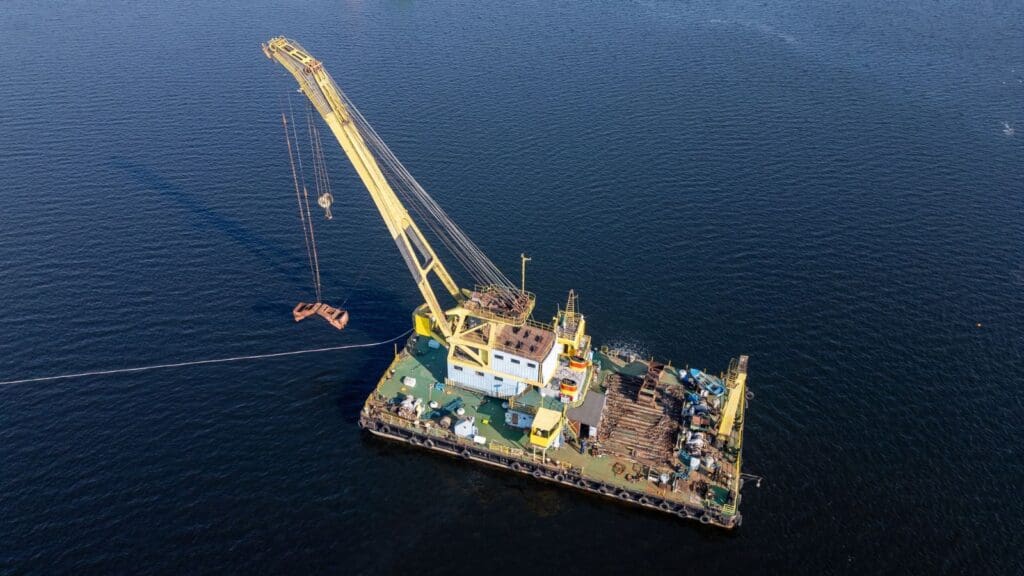
Choosing Equipment For The Lift Task
The proper selection of offshore lifting equipment should be based on factors such as installation conditions, lift geometry, deck constraints, connection points, and dynamic loading from vessel movement.
Matching Gear to Marine Installation Conditions
Marine jobs rarely offer stable, dry, workshop-like conditions. Equipment may face continuous salt exposure, impact from cargo handling, and load swing caused by vessel heave, roll, and pitch.
That is why experienced teams look at protection against corrosion, temperature range, and whether the gear fits the job’s specified operating limits.
- For deck work, gear often needs compact dimensions and secure stowage points.
- For splash-zone work, sealing, finish quality, and material choice are more critical.
Selecting by Load Path, Reach, and Motion
The load path drives the equipment decision. A vertical lift from quayside to deck needs a different setup than a transfer between vessels, and a hoisting package that looks adequate on paper can become marginal once motion and side loading are added.
Therefore, these points should be reviewed first:
- Lift weight, center of gravity, and pickup points
- Dynamic amplification from sea state and vessel/crane motion
- Working radius and deck obstructions that affect the hook path
- Need for rotation control, tag lines, or guided handling
- Clearance through structures and restricted openings
Core Equipment Categories and Their Uses
Marine operations use a broad mix of lifting systems. In most cases, the goal is to select reliable, well-marked gear that suits the duty cycle and can be inspected, traced, and maintained over time.
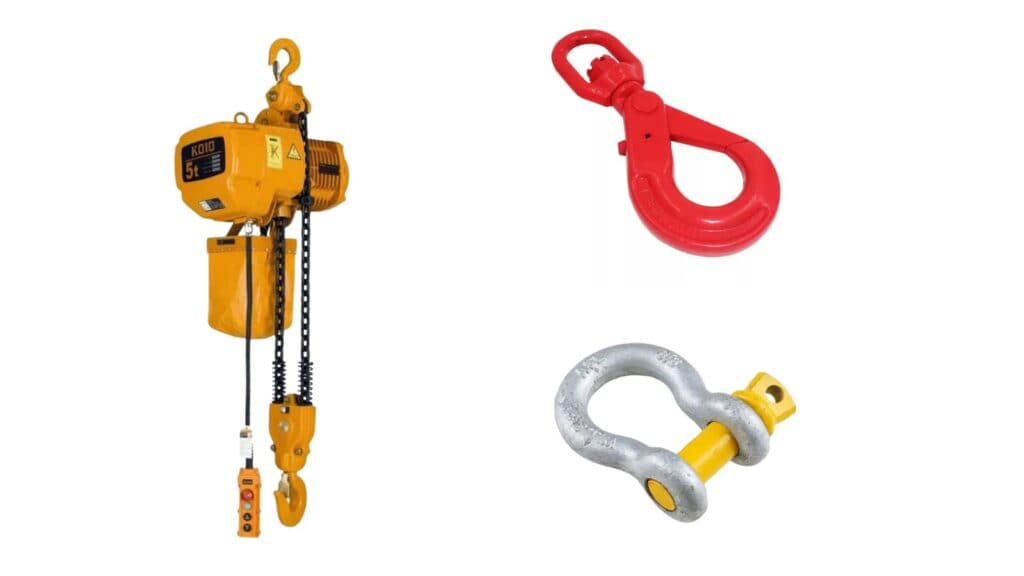
Hoists, Pulling Tools, and Below-the-Hook Accessories
Many marine sites already have lifting appliances such as vessel cranes or shore cranes. What often varies from job to job is the hoisting and rigging package used beneath the hook: hoists for localized lifting, pulling tools for alignment, and accessories that improve control in tight spaces.
Depending on the task, teams may use chain hoists for short lifts and maintenance work, and wire-rope pulling tools for controlled positioning where fine line control matters. For example, a wire rope pulling hoist can help with controlled pull/positioning tasks when the geometry is not ideal for a direct vertical lift.
Chain Hoists and Wire Rope Hoists
Chain hoists suit shorter lifts, maintenance work, and localized handling where headroom is limited. They are common for workshops, machinery spaces, and temporary rigging tasks.
Wire rope hoists fit applications needing greater lift height, smoother reeving, or higher duty cycles. Regardless of type, correct selection depends on rated capacity, duty rating, hook compatibility, and how the hoist will be protected from corrosion and impact in service.
Rigging Hardware: Hooks, Shackles, Links, and Connection Points
Rigging hardware at connection points can drastically ensure balanced load distribution, prevent dangerous side loading, or maintain a usable safe working load.
Load hooks require special attention in dynamic lifts to reduce accidental disengagement during vessel roll and tagline correction. They are especially prominent when waves cause loads to momentarily slacken and re-tension.
To withstand these sudden shock loads and the corrosive marine environment, rigging assemblies must utilize high-strength alloy materials, specifically Grade 80 (G80) or the more advanced Grade 100 (G100) chains and hooks.
Shackles and other connection points must be selected based on pin size, bow clearance, and the actual line of pull, because these shackles should be suitable for heavy gloves on workers’ hands, sea spray, and restricted access.
Furthermore, special attention must be paid to small parts; pins, springs, latches, and bearing surfaces can degrade from saltwater long before the main heavy body shows any obvious damage.
Load Monitoring and Control
Load monitoring gives the lifting team real-time data. For this reason, it is often used as an added control measure during critical lifts, transfers in restricted deck areas, and operations where the actual suspended load needs to be verified throughout the job.
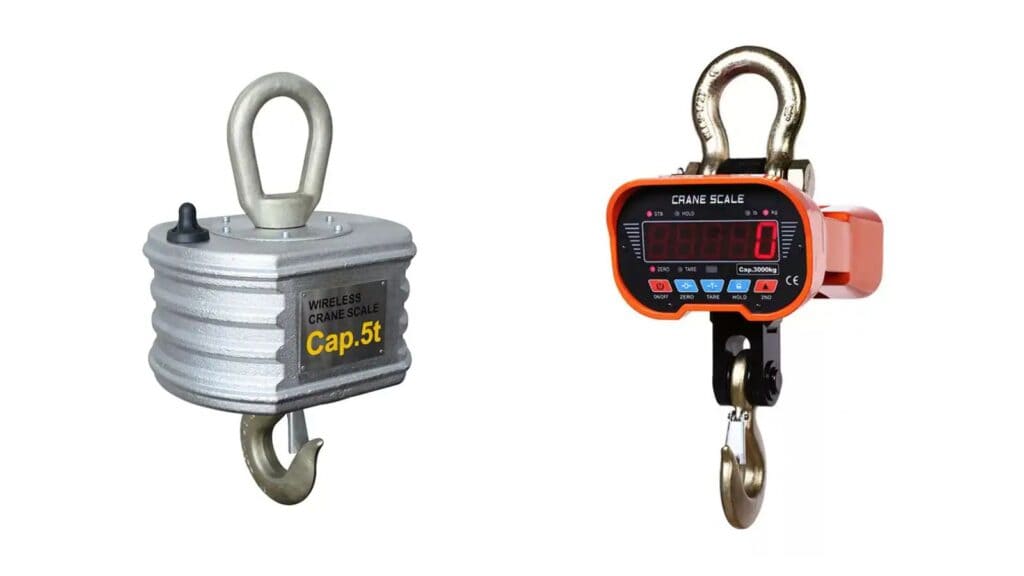
Using Monitoring Tools During Critical Lifts
On critical lifts, teams may use monitoring tools to confirm actual load and detect unexpected increases early:
- Wireless digital crane scales
- Crane load indicators
- Inline load measurement devices
These tools can be especially useful where pickup weight is uncertain, sling angles may change during the lift, or the load path passes close to structures and equipment.
Where monitoring is used, it works best when it is built into the lift plan from the start. The display should be clearly visible to the relevant personnel, action limits should be agreed on in advance, and the team should define a clear stop point before overload develops. Real-time readings are most useful when they support active lift control rather than serving as passive reference only.
Preventing Overload In Changing Sea States
Sea state can change faster than the assumptions used in the lift plan. Even a moderate increase can push lifting gear closer to or beyond its safe working load. This is why weather limits, operating limits, and supervision to pause the job should be clearly defined before the lift begins.
Good practice includes reassessing the operation when conditions worsen, maintaining clear communication between the lifting supervisor and crane operator, and prioritizing stability over speed when the lift window narrows.
Certification and Inspection for Offshore Rigging Equipment
For marine lifting, buyers and operators need equipment that can be shown to meet the required standard, with inspection records and load testing where required by the project, client, or audit review.

Foundational Standards And Quality Assurance
While specific offshore operating frameworks vary by region, flag, and vessel type, the foundation of safe marine lifting always starts with globally recognized manufacturing standards. Equipment used in these harsh environments must be rigorously tested for its baseline structural integrity and reliability.
When selecting gear, buyers should prioritize equipment backed by strict quality and safety credentials. Essential benchmarks to look for include ISO 9001 (ensuring consistent manufacturing and quality management), CE certification (verifying conformity with rigorous European health and safety standards), and GS certification (a highly respected mark for tested safety).
Comprehensive Testing and Inspection Protocols
Offshore lifting safety is a continuous process that begins at the factory. Reliable suppliers enforce a strict Total Quality Control (TQC) system, conducting rigorous quality tests before shipment to guarantee baseline integrity.
Once on site or after major repairs, formal load testing is often required to verify safe operation under controlled conditions. Equipment should only be cleared for use if its physical identification marks perfectly match its test certificates.
During active service, safety depends on routine inspections, including daily pre-use checks and formal examinations by a competent person. Crews handling the gear are the first line of defense. They must constantly monitor for early warning signs like pinhole wear, latch issues, distorted fittings, chain stretch, or hidden corrosion to pull compromised gear from service immediately.
Procurement, Maintenance, and Lifecycle Planning
Marine lifting solutions need to perform beyond first delivery. Procurement decisions should account for inspection intervals, spare parts, repair routes, and the long-term condition of lifting and rigging gear in harsh service.
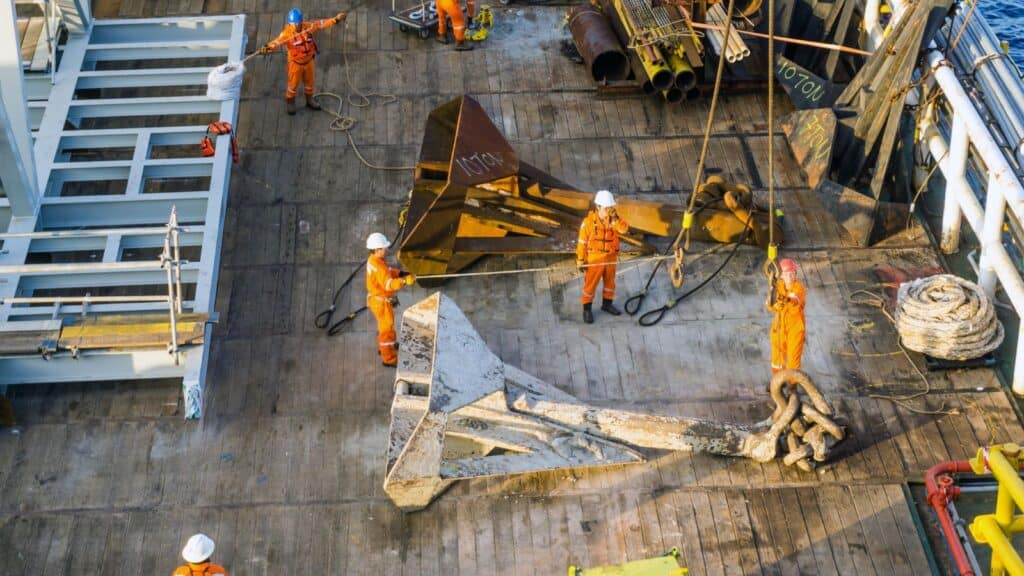
Standard Equipment Versus OEM/ODM Custom Solutions
Purchasing standard, off-the-shelf lifting gear makes sense for routine operations where crews need consistent familiarity and readily available spare parts.
However, offshore operations frequently involve unusual situations that standard gear cannot handle. In these cases, leveraging OEM (Original Equipment Manufacturer) and ODM (Original Design Manufacturer) services is the most effective approach. Partnering directly with a capable manufacturer allows teams to develop project-specific solutions, such as custom spreader beams or specialized lifting frames engineered and certified to their exact acceptance criteria.
An experienced OEM/ODM partner provides faster certification lead times, direct technical support, and reliable mobilization that far outweigh the differences in initial costs.
Service Support for Harsh Marine Environments
Marine gear needs a service plan that reflects salt spray, impact damage, and storage realities. Freshwater washdown, controlled lubrication, coating repair, and protected stowage extend usable life more than many buyers expect.
It also helps to confirm how repairs will be handled and how quickly replacement parts can be supplied. Reliable support often matters more than minor differences in list price.
Documentation, Traceability, And Spare Parts
Each item should be traceable by serial number or unique ID to its certificate, inspection status, and maintenance history. Missing records create delays during vessel audits and client verification.
Spare parts planning should cover wear items, latches, pins, chain, wire-rope terminations, and approved replacement hardware. If a critical part cannot be sourced quickly, the equipment may become a single-point failure in the project schedule.
Frequently Asked Questions
What types of lifting devices are commonly used in offshore environments?
Common marine lifting setups combine a lifting appliance (often already installed on the vessel or at the port) with below-the-hook gear such as slings, hooks, master links, shackles, and hoists for localized lifting and maintenance. Selection depends on the load type, deck constraints, and the need to control motion and side loading.
How to determine a safe working load in marine environments?
The safe working load is set by design and the relevant manufacturing standard, then verified through inspection, marking, and certificates. In marine environments, teams also account for dynamic effects from vessel motion and ensure the rigging arrangement avoids side loading and shock loading.
What should I consider when purchasing used marine lifting machinery?
Used equipment should be checked for structural condition, corrosion, repair history, remaining certification validity, load test records, spare parts support, and clear traceability. Buyers should also confirm the gear can still meet the project’s inspection and documentation expectations.