
In construction and industrial settings, workers frequently encounter the challenges of stopping heavy loads from moving around during operations. That’s where beam clamps come into play. These hardware devices are crucial for attaching equipment rigging or safety systems to beams without drilling or welding.
This article will explore the basic design, typical use cases and key benefits of these versatile tools in various industries.
What Is a Beam Clamp?
A beam clamp, as its name implies, is a clamp designed to be fixed onto a beam, but its definition and usages can be expanded in detail. In the majority of the cases, the term solely refers to a specific kind of industrial equipment.
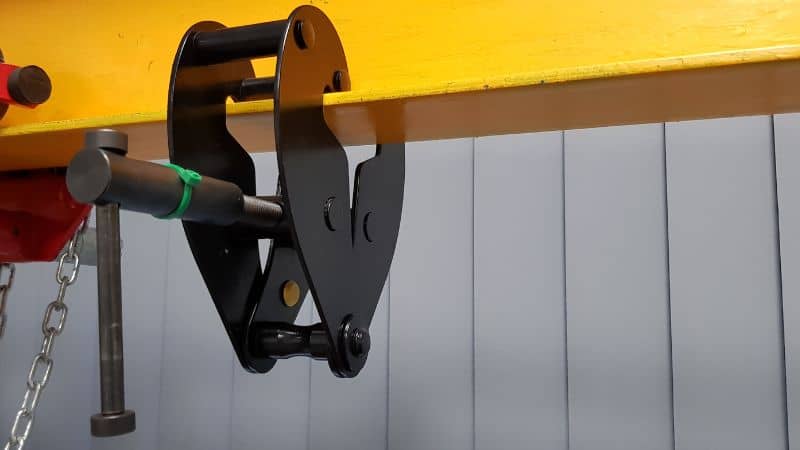
Definition and Basic Function
A beam clamp is a mechanical fastener that grips the flange of an I-beam or H-beam. It supports suspended loads by using a threaded bolt or a lever mechanism to apply force.
This device offers a non-permanent and reusable solution for load attachment in construction and industrial production, and eliminates the need for drilling or welding into the beam. It functions as an anchor point for rigging, lifting, or fall protection systems. Common applications include attaching hoists, conduit, piping, or safety cables.
Common Materials and Construction
Beam clamps are typically constructed from high-strength materials to ensure safety and durability. Common materials include:
- Forged steel for heavy load
- Malleable iron for general-purpose use
- Stainless steel for corrosive environments
- Aluminum for lightweight requirements
The construction involves several key components:
- A main body that hooks over the beam flange
- A threaded screw or toggle mechanism for tightening
- A load-rated eye, hook, or pad for attachment
Manufacturers often apply protective coatings like galvanization or powder coating to resist rust and wear. Each piece of equipment carries a working load limit (WLL) based on its material and design specifications.
Types of Beam Clamps
Beam clamps are categorized based on their design and application, offering solutions for various flange shapes and load requirements. Each type provides a secure, non-invasive attachment to beams.
Standard Beam Clamps
Standard beam clamps attach securely to steel beams for standard flange shapes and sizes. They can be divided into two categories.
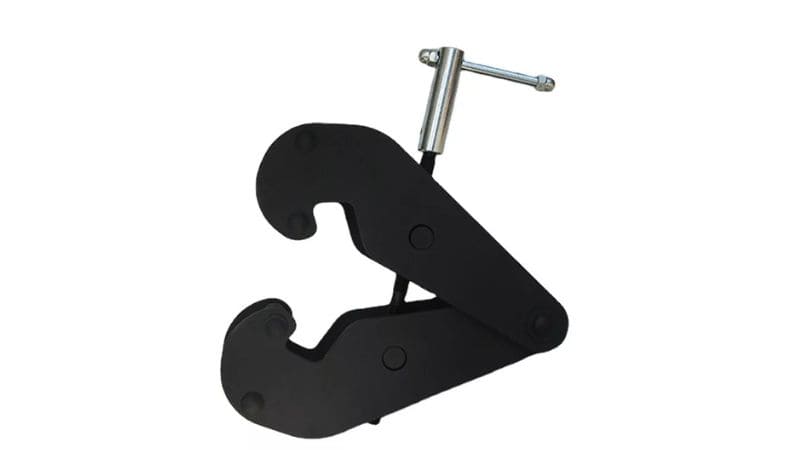
| Feature | Flat Flange Clamps (BA/BB Types) | Sloped Flange Clamps (BT/BW Types) |
|---|---|---|
| Flange Type | Flat, Parallel | Tapered or Angled |
| Primary Use | General steel-to-steel connections | Specific applications with sloped beams |
Standard beam clamps generally appear in work sites where overhead lifting is required, namely crane rail installations, bridge work, and general structural support, and are widely used across construction, manufacturing, and warehousing industries.
Specialty and Adjustable Clamps
Specialty and adjustable clamps offer enhanced functionality for variable or demanding conditions. They can be repositioned along the beam or adapt to uneven flange angles.
Self-adjusting clamps (BK type) handle slopes up to 15 degrees, while socket screw clamps adjust for different flange thicknesses. Because of this, they are ideal for retrofit projects and solar mounting systems.
Another category of specialty clamps includes high-friction or seismic-rated types (BY type). These provide certified load ratings and seismic resistance; consequently, they are used in critical structural connections where safety is paramount.
Furthermore, Unistrut C-style or U-style clamps secure channels to beams. Typically, they use set screws or U-bolts for mechanical, HVAC, or electrical applications. These clamps can support pipes, ducts, or cable trays without permanent modifications, which is why industries such as shipbuilding, mining, and utilities benefit from their adaptability.
Adjustable clamps are particularly useful when flange angles are unknown or variable, as they ensure a secure grip under changing conditions.
Applications of Beam Clamps
Beam clamps can attach to a wide range of anchor points during industrial and construction tasks. Most commonly, they are used on construction sites and factory floors.
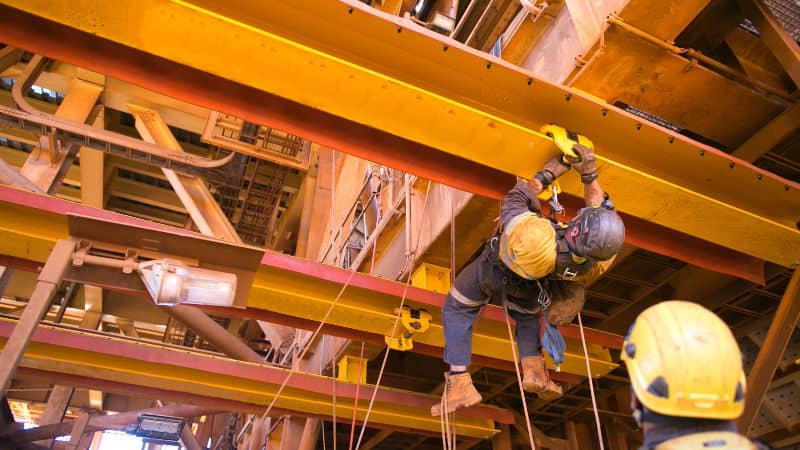
Construction and Rigging
Beam clamps serve as the critical equipment for lifting and moving heavy materials on construction sites. Construction crews attach lifting equipment like chain hoists, trolleys, and slings directly to the clamps on I-beams or H-beams for rigging operations.
This operation supports activities such as steel erection, concrete pouring, and material handling without compromising the beam’s strength.
Industrial and Mechanical Uses
Industries utilize beam clamps to support and organize essential systems along overhead steel structures. They secure pipes, ductwork, cable trays, electrical conduits, and HVAC components to beams. Factories employ clamps for mounting maintenance equipment, lighting fixtures, and machinery supports.
The clamps facilitate quick installation of utilities and secondary structures like mezzanine flooring or roofing panels. Manufacturing plants benefit from their ability to provide stable, adjustable mounting points without permanent alterations. This versatility makes them indispensable in environments requiring frequent modifications or expansions.
What is a Beam Clamp: Learn About Selecting Criteria
Proper use of a beam clamp requires selecting the correct clamp, performing a pre-use inspection, and verifying the condition of the beam. Correct positioning on the beam flange is essential for a foolproof attachment.
Installation Guidelines
Installation begins with positioning the clamp correctly on the beam flange. Loosen the threaded bolt and place the clamp onto the beam. Tighten the bolt again to ensure a firm grip on the beam flange. Attach the lifting equipment, such as a hoist or sling, to the clamp’s suspension point. Confirm the clamp and lifting device function correctly before initiating the lift.
The list below can make this process more straightforward:
- Loosen the bolt – This allows for placement on the beam.
- Position the clamp – Ensure it is centered on the beam flange.
- Tighten the bolt – This fixs the clamp firmly to the beam.
- Attach lifting gear – Always use the designated suspension point.
- Perform a test – Confirm functionality before any full lifting occurs.
Safety Considerations
- Pay attention to load capacity, never exceeding the manufacturer’s specified working load limit (WLL).
- Regularly inspect all clamps and lifting gear for signs of damage, wear, or corrosion.
- Use clamps made from materials suitable for the specific environment, such as stainless steel for corrosive conditions.
- Make sure all personnel receive proper training on correct installation techniques and safe lifting practices.
- Employ multiple clamps and additional equipment like spreader beams for heavy or large loads to distribute weight safely.
Advantages of Using Beam Clamps
Beam clamps provide a non-destructive, versatile, and safe method for connecting loads to structural beams. They eliminate the need for drilling or welding, preserving the beam’s structural integrity and load-bearing capacity.
Key Benefits in Design
Simplifies Installation: It can be easily installed for both temporary setups and permanent fixtures.
Distributes Loads Evenly: The design guarantees an even distribution of weight across the beam flange, minimizing stress concentrations and reducing the risk of structural failure.
Enhances Versatility: A single clamp model accommodates various beam sizes and supports numerous applications, including lifting, rigging, and supporting conduit, plates, or piping.
Promotes Reusability: Users can remove and redeploy beam clamps on different projects, unlike permanent welded fixtures.
Key Benefits in Applications
Adhering to Safety Regulations: Manufacturers design these clamps to meet rigorous safety standards, providing an anchor point for lifting and hoisting operations.
Providing Temporary Anchorage: Creating secure points for fall protection systems and temporary structural supports on construction sites.
Preserves Structural Integrity: Beam clamps grip the beam flange without drilling or welding, maintaining the beam’s original strength and stability.
Conclusion
Beam clamps offer a practical solution for countless industrial and construction tasks. They provide secure load support without compromising the beam through drilling or welding.
Their versatility across lifting rigging and safety applications makes them indispensable tools. Proper selection and usage ensure both efficiency and worksite safety.
Understanding these devices helps professionals maximize their potential while maintaining compliance with industry standards.
Frequently Asked Questions
Why are beam clamps considered safe and non-destructive?
They grip beams mechanically and have a sizable contact area with the beam, which reduces pressure per unit area. According to regulations, the beam it connects to is also made of durable modern materials like stainless steel and can withstand extreme weight, adding another layer of safety. Its safety is further proved by this model of beam clamp with an impressive 10-ton capacity.
What is the purpose of a beam clamp?
Beam clamps are used to safely secure heavy loads to structural beams in construction and industrial settings. They serve as anchor points for hoists, conduit, piping, safety cables, or fall protection systems. Their key purpose is to enable non-invasive, adjustable, and reusable attachments without damaging the beam.
What industries use beam clamps?
Beam clamps are widely used in construction, manufacturing, shipbuilding, utilities, and event rigging. They support tasks like lifting heavy equipment, organizing conduit and piping, providing fall protection anchors, and mounting temporary structures—offering versatility and safety across various applications.