
There are many parts in a set of lifting rigs, and their possible combinations are numerous. Even a simple component, when chosen and used correctly, can boost the quality and efficiency of the whole system.
Understanding these options helps you select the best tool for your task and maintain a safe and efficient worksite. In this blog, we at Grandlifting will explain how lifting clamps—the “tip of the spear” in material handling—work and how they are categorized.
What Are Lifting Clamps?
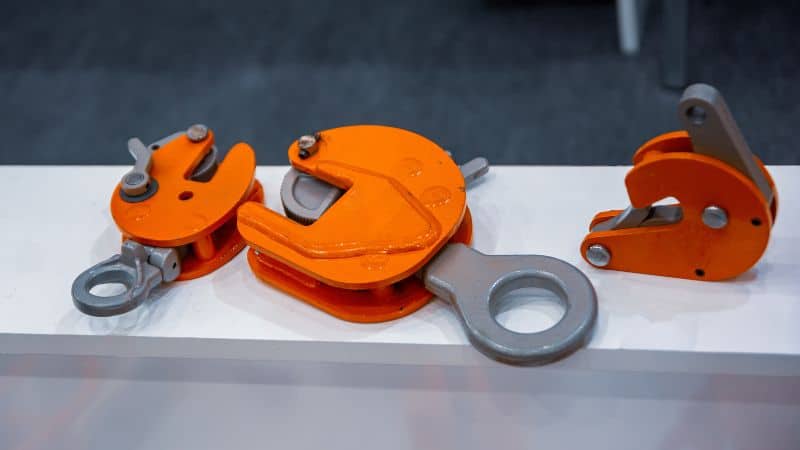
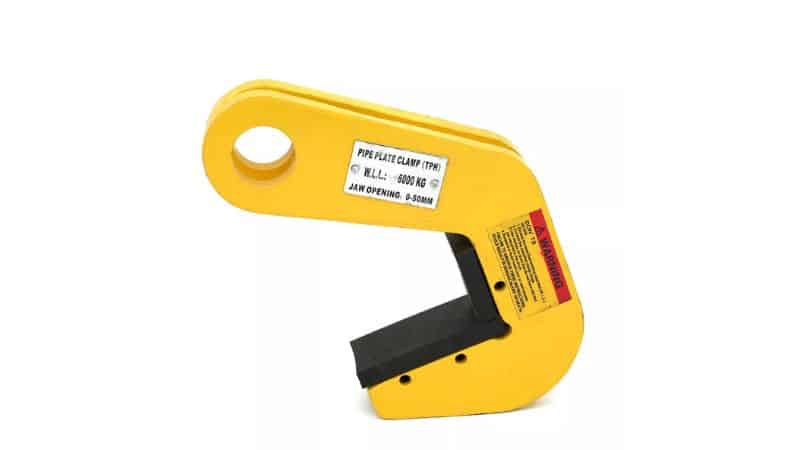
A lifting clamp is a robust mechanical device designed to securely grasp, lift, and transfer heavy materials in industrial settings. Typically made from high-strength forged or alloy steel, it features serrated or hardened jaws for a firm grip and a safety latch or locking mechanism for secure handling. The clamp’s main body is usually C-shaped or U-shaped, with a pivoting jaw and a lifting eye or shackle at the top to connect to cranes or hoists.
Core Components
Lifting clamps consist of several essential parts that work together to ensure secure load handling. Some variations’ compositions may be different, but their main design philosophy remains largely the same.
- Body: Forms the main structure and houses internal mechanisms.
- Jaw: Grips the material directly, often with serrated or textured surfaces.
- Lever: Activates the clamping action through manual or hydraulic operation.
- Pivot Pin: Allows the jaw to open and close smoothly.
- Lug: Provides the connection point for shackles or hooks.
Operating Principles
Lifting clamps are ingenious devices that employ fundamental mechanical principles to secure a powerful hold on a load.
Their operation begins with leverage, which multiplies the operator’s initial force to generate a significantly stronger grip. This force is then transferred through a cam action mechanism.
As tension is applied by the lifting equipment, the cam rotates into a locked position, further reinforcing the clamp’s hold.
To prevent slippage, the jaws are equipped with high-friction surfaces that bite into the material.
Finally, spring-loading plays a crucial role in maintaining constant pressure on the load throughout the entire lifting process, ensuring a stable and secure connection during movement.
Main Types of Lifting Clamps
Lifting clamps fall into three primary categories, each engineered for specific material orientations and handling tasks. These clamps ensure secure load attachment and improve operational safety across industrial applications.
Vertical Lifting Clamps
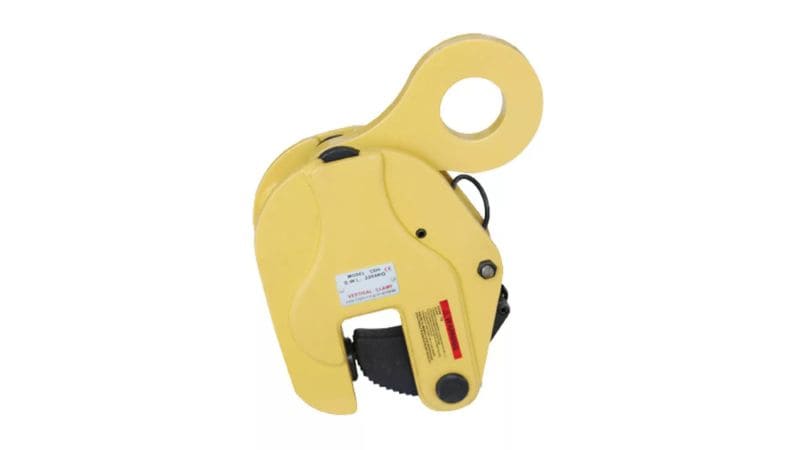
Vertical lifting clamps lift steel plates or sheets from a horizontal position to a vertical orientation. They feature a secure hoisting eye, safety locking mechanisms, and wear-resistant jaws. These clamps enable controlled, safe lifting, reduce injury risk, and improve handling efficiency.
Horizontal Lifting Clamps
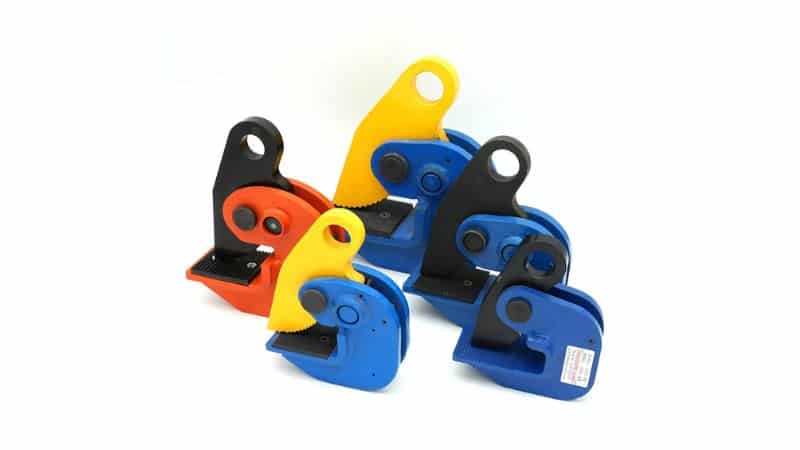
Horizontal lifting clamps move plates or sheets while maintaining a horizontal orientation. They typically operate in pairs, often with spreader beams, to grip a wider surface area securely. These clamps handle thinner, large-surface plates effectively, preventing damage during transport.
Beam Clamps
Beam clamps attach to steel beams or girders for lifting and positioning tasks. They grip structural members securely without causing damage, supporting both vertical and horizontal lifting applications. Construction sites and structural steelwork projects use beam clamps extensively for safe and efficient material placement.
Here is a chart to explain the three major types in a more straightforward form.
| Type | Application | Lifting Orientation | Typical Industries |
|---|---|---|---|
| Vertical Lifting Clamp | Lifting plates from horizontal to vertical | Vertical | Fabrication, construction, shipyards |
| Horizontal Lifting Clamp | Moving plates in horizontal position | Horizontal | Warehousing, metalworking |
| Beam Clamp | Lifting steel beams and girders | Vertical or horizontal | Construction, steel erection |
Choosing the Right Clamp for Your Job
Selecting the appropriate lifting clamp requires evaluating several critical factors. To put them into perspective, we will also demonstrate some examples of choosing the right clamps for your projects.
Load Capacity and Material
In terms of load capacity and material, workers should choose clamps with a Safe Working Load (SWL) exceeding the actual load by at least 25%, preferably made with high-strength steel components for heavy loads. Corrosion-resistant finishes like galvanizing or epoxy coating protect the clamp in harsh environments. Material compatibility dictates the clamp type for specific shapes like plates, pipes, or girders, and proper matching to load thickness and curvature prevents slippage and material damage during lifting operations.
We will provide a few examples to contextualize the process of clamp choice for you:
Scenario 1: Loading steel plates into/from transport vehicles. To unload a heavy plate from a truck and stand it up on its edge, vertical lifting clamps are the only safe choice. Their cam-action mechanism is engineered to engage and hold the load securely as it rotates from horizontal to vertical.
Scenario 2: Laying steel plates onto machinery for further processing. If you need to take that same plate from the truck and place it flat onto a laser cutting bed, you would use a pair of horizontal lifting clamps with a spreader beam. This setup distributes the weight to prevent the plate from bending and maintains a secure grip on the larger surface area.
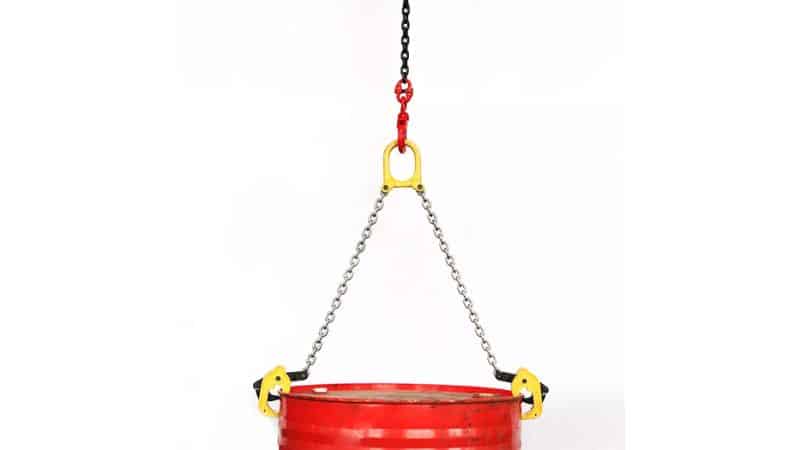
Scenario 3: Moving other objects with curves or irregular shapes. In industrial settings, there are bound to be barrels, drums, pipes and other irregularly shaped items that require lifting operations, hence the need for specialized clamps. When purchasing them, be sure to look for keywords such as “pipe lifting clamp“, “drum lifter clamp“, “barrel clamp“, etc.
Safety Features and Certifications
Manufacturers design clamps to meet international standards, including CE, GS, and ISO. Mechanical locking mechanisms and serrated jaws secure the load and reduce accidental drops. Non-marring pads protect sensitive or finished surfaces from clamp damage. Ergonomic designs improve operator safety and reduce physical effort during attachment and release. These features ensure compliance with global safety regulations for material handling tasks.
These features could benefit your project greatly; let us show you some possibilities:
Scenario 1: Overhead Beam Placement. A worker can lift an extremely heavy girder dozens of feet in the air in seconds with proper rigging. This feat entirely relies on the beam clamp’s internal locking mechanism and the safety latch on its shackle. These features prevent the load from disengaging due to shifting or contact with other structures.
Scenario 2: Moving post-processed parts with delicate finishes. Mirror-finish stainless steel and electroplated metal surfaces are incredibly susceptible to damage. Without proper padding, the claw can ruin a part with surface treatments by leaving dents and scratches all over the contact area. So non-marring clamps with pads are essential in such situation.
Maintenance, Troubleshooting, and Proper Training
To ensure safety and prevent damage, you should regularly inspect, clean, and properly store lifting clamps. This chapter will provide more details from three view points, so keep reading and learn more about them!
Routine Maintenance Procedures
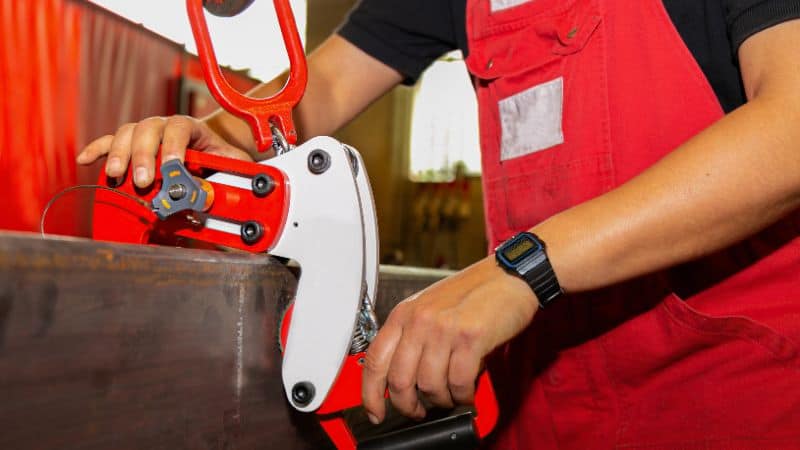
Regular maintenance ensures your lifting clamps remain safe and reliable. Establish a consistent schedule for these essential tasks:
Visual inspections should be conducted before each use and every month. The inspector should look for signs of wear, cracks, or deformation in the body, jaw, and lever mechanisms. Remember to document all inspections and maintenance actions.
Workers should clean the clamps whenever needed. Remove dirt, grease, and debris that can interfere with operation or hide damage. What’s worth mentioning is that some cleaning solutions could damage the clamp’s protective coatings, so you should always check their chemical properties before use.
Proper storage also extends clamp life. Be sure to store clamps in a dry, secure location protected from environmental elements.
Common Mistakes and Solutions
Operational errors frequently occur in materials handling, and it is critical for inspectors and on-site workers to address them in advance to prevent serious damage, injuries, and halts in work progress:
Obviously, using damaged equipment and/or exceeding rated capacity are critical errors. No matter what cost considerations are, never use clamps with visible cracks, excessive wear, or deformed components, and never exceed the Safe Working Load (SWL), not even temporarily.
Besides these two evident errors, there are some other inappropriate handlings that could bring potential risks:
Incorrect load engagement causes many failures, so ensure the jaw fully contacts the material and isn’t positioned on edges or welds.
Using clamps for unintended purposes also results in unforeseen consequences. Never employ vertical clamps for horizontal lifting or use standard clamps on finished surfaces. Match the clamp type specifically to your application requirements.
Improper sling angles affect capacity. Side-loading or angular lifts can drastically reduce actual safe working load. Lift vertically whenever possible and consult manufacturer guidelines for angular lifting.
Operator Training Requirements
Proper training ensures safe clamp operation:
All operators must receive specific training on the types of clamps they will use. This includes understanding capacity limits, proper engagement techniques, and inspection requirements.
Training should cover both normal operations and emergency procedures. Operators must know how to respond if a load shifts or equipment malfunctions during lifting operations.
Regular refresher training maintains competency. Schedule annual training updates and whenever new equipment types are introduced to your facility.
Document all training sessions and maintain records of operator qualifications. Only authorized, trained personnel should operate lifting equipment.
Conclusion
In this article, we demonstrate the various aspects of the types of lifting clamps: what they are, how to use them, and how to choose them. With the fresh knowledge and a clear understanding, you are now ready to make well-informed choices for your projects, so why not browse our extensive lists of lifting clamps at Grandlifting? Check our website for more information!
Frequently Asked Questions
Are there other types of lifting clamps?
There are several other types of lifting clamps, whose definitions overlap with the three main types to a certain degree because of different categorization standards. They include:
- Screw Clamps: Durable clamps used with ratchet lever hoists for precise positioning of steel and other materials.
- Pipe Clamps: Designed to secure pipes, cables, or cylindrical objects, commonly used in plumbing and electrical work.
- Girder Clamps: Specialized for lifting and transporting girders, often used in construction.
- Drop Test Clamps: Used to simulate drops and impacts to test the durability of products or structures.
- Rail Lifting Clamps: Designed for lifting and moving railway components like rails and sleepers.
- Pitching Clamps: Used in roofing to hold tiles or shingles securely during installation.
- Pulling Clamps: Employed to grip and lift pilings, commonly in marine or construction environments.
- Plate Lifting Clamps (Vertical Plate Clamps): Specifically for lifting and moving metal plates vertically.
How do environmental factors affect the use of lifting clamps?
Environmental conditions are critical for safety. In extreme cold, standard steel can become brittle and prone to fracture. In highly corrosive environments (e.g., chemical plants, marine applications), stainless steel clamps are often required to prevent weakening from rust. Always check the manufacturer’s specifications for the clamp’s intended service environment and temperature range.
Can I use a lifting clamp with any type of lifting equipment?
While clamps are designed for use with cranes and hoists, some specialized clamps can be adapted for use with other equipment like forklifts. However, this is highly dependent on the clamp’s design and manufacturer’s instructions. Using a standard clamp with an excavator, for instance, can expose it to dangerous dynamic forces and shock loads it wasn’t rated for. Always consult the manufacturer before using a clamp with non-standard equipment.